

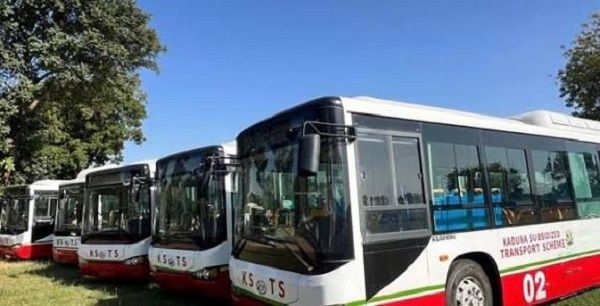
The Kaduna State Government is set to introduce a Bus Rapid Transit (BRT) system that will operate with 120 Compressed Natural Gas (CNG)-powered articulated buses as part of efforts to transform public transportation and ease persistent traffic challenges across the state.
The proposed BRT scheme will run along a 24-kilometre corridor and is expected to combine dedicated bus lanes with modern passenger facilities, including bus stops, shelters and terminals.
Beyond its transportation objectives, the project is also being presented as an employment-generating initiative, with authorities projecting between 10,000 and 20,000 jobs could be created within the corridor and its supporting operations.
The Acting Director-General of the Kaduna State Transport Regulatory Authority (KADSTRA), Engr. Inuwa Ibrahim, disclosed the development during a one-day media engagement on the proposed project in Kaduna.
Ibrahim explained that the government had already completed the planning and design stages of the BRT scheme and was now preparing for the implementation phase.
According to him, the scale of the project means its economic impact would extend beyond the movement of passengers, as a range of workers would be required to keep the system running.
He listed drivers, mechanics and other operational and maintenance personnel among those expected to benefit from the employment opportunities that will emerge from the project.
“We are expecting to have about 10 to 20,000 jobs just for this BRT corridor of just 24 kilometres,” Ibrahim said.
The KADSTRA chief added that the planned deployment of 120 articulated buses and the construction of supporting facilities would create additional economic activities along the route.
CNG buses expected to cut transport costs
A major feature of the proposed transport system is the use of CNG as the fuel source for the buses.
Ibrahim described CNG as a “cheaper and cleaner” option compared with conventional fuel, saying its adoption would provide commuters with a more affordable transportation alternative while helping to reduce emissions.
The use of gas-powered buses is also expected to support the state’s efforts to reduce the environmental impact associated with urban transportation.
The government intends for the BRT to provide an alternative capable of moving large numbers of people efficiently, thereby reducing dependence on individual vehicles.
The project is being described as the first BRT system in Kaduna State and the second of its kind in Nigeria after the BRT system in Lagos.
When completed, the service is expected to offer commuters a more structured form of mass transportation, with dedicated infrastructure designed to reduce delays and improve the overall efficiency of movement along the corridor.
Project designed around existing roads
Advanced engineering consultant Idris Akinremi said the BRT scheme was conceived as a way of addressing congestion without depending entirely on the expansion of existing roads.
He explained that the project would make substantial use of the current road network, with approximately 80 per cent of the corridor expected to retain its existing carriageways.
Rather than embarking on extensive demolition to create additional lanes, BRT infrastructure would be integrated into the existing road design where possible.
Akinremi said technical and social assessments conducted during the planning process showed that demolishing properties in areas where road expansion would be difficult would not be economically justified.
He maintained that the approach would allow the state to introduce a modern public transport system while limiting unnecessary disruption to properties and communities along the route.
According to the consultant, the project is being designed with international standards and best practices in mind.
Consultant questions continuous road expansion
Akinremi also argued that simply increasing the number of road lanes does not provide a permanent solution to traffic congestion.
He explained that as road capacity increases, more people may eventually begin using private vehicles, meaning that newly expanded roads could also become congested.
“As I said, you don’t gain efficiency by simply expanding roads because they will be filled to capacity,” he said.
He cited Abuja as an example, noting that the existence of relatively wide roads has not prevented the city from experiencing significant traffic congestion.
For the consultant, the solution lies in developing a mass-transit system capable of moving a large number of commuters without requiring a corresponding increase in road space.
Akinremi said an efficient BRT service could persuade motorists to leave their cars at home and use public transportation instead.
“The project will discourage putting cars on the roads. This will reduce traffic on the road; once people see this, they will abandon their cars,” he said.
He further explained that if a large proportion of commuters who currently drive could be moved through a dedicated BRT system, existing roads would be used more efficiently.
“If you put a BRT there, 80 per cent of those who would otherwise drive will park their vehicles without expanding the road. What do you have? Efficiency,” he said.
First phase expected to cover 17 kilometres
While the overall proposed corridor is about 24 kilometres, Akinremi disclosed that the initial section of the BRT route was expected to cover approximately 17 kilometres.
He noted, however, that the exact scope would be determined after the final design process is completed.
The proposed infrastructure will include dedicated lanes, passenger shelters, terminals and designated bus stops intended to provide a more organised commuting experience.
The state government expects the combination of modern transport infrastructure and CNG-powered buses to improve the movement of residents while supporting cleaner urban transportation.
The employment component is another significant aspect of the initiative, with thousands of direct and indirect opportunities expected to emerge from the operation and maintenance of the buses and related facilities.
If implemented as planned, the Kaduna BRT could therefore represent a broader urban mobility project rather than simply a bus deployment programme.
Officials say the scheme is intended to address several challenges at once, including traffic congestion, transportation costs, environmental pollution and limited employment opportunities.
With planning and design reportedly completed, attention is now shifting towards implementation of the project, which authorities hope will provide Kaduna residents with a faster, more organised and affordable public transportation option.
The success of the scheme will ultimately depend on the completion of the proposed infrastructure, effective management of the BRT corridor and the ability to attract commuters who currently rely heavily on private vehicles and conventional transport services.
About The Author
