NGX Records Sharp Decline in Trading Activity
Trading activity on the Nigerian Exchange declined sharply during the week ended May 29, 2026, as the two-day Eid al-Adha public holidays reduced market participation and compressed the trading calendar.
According to exchange data, investors traded 2.398 billion shares worth N111.48 billion in 241,313 deals during the week. This represented a 38.12 per cent decline in volume and a 31.08 per cent drop in value compared with the previous week, when 3.875 billion shares valued at N161.76 billion changed hands.
The decline reflected the impact of the shortened trading week rather than a deterioration in investor sentiment, analysts said.
Despite weaker turnover, the NGX All-Share Index advanced 0.27 per cent to close at 250,385.47 points, pushing total market capitalisation to N160.51 trillion.

The modest gain suggested investors remained cautiously optimistic about market fundamentals and ongoing reforms designed to improve market efficiency.
Why the T+1 Settlement Reform Matters
While the drop in turnover attracted attention, market participants were equally focused on a major structural change that took effect on June 1.
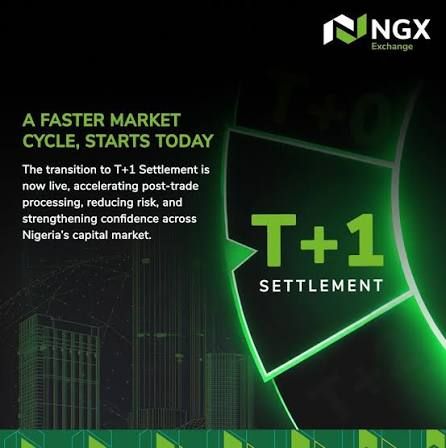
Nigeria’s capital market officially migrated from a T+2 settlement cycle to a T+1 system, meaning stock transactions are now completed one business day after execution rather than two.
The reform aligns Nigeria more closely with major global markets that have accelerated settlement timelines to improve efficiency, reduce counterparty risk and increase liquidity.
Under the previous T+2 model, investors had to wait two business days before funds or securities became available following a transaction.
With T+1, capital can be redeployed more quickly, potentially boosting market activity and making the Nigerian market more attractive to institutional investors.
“The transition to T+1 represents another important milestone in the evolution of Nigeria’s capital market infrastructure,” said Shehu Shantali, Managing Director and Chief Executive Officer of the Central Securities Clearing System.
“It reflects the market’s readiness to embrace reforms that enhance efficiency, strengthen investor confidence, improve liquidity and align Nigeria more closely with leading global markets.”
Market operators spent months upgrading systems and implementing straight-through processing technology ahead of the migration.
Industry stakeholders expect the reform to improve settlement efficiency and reduce operational friction across the market.
Financial Stocks Dominate Trading
The Financial Services sector remained the dominant driver of activity on the exchange.
The sector recorded 1.656 billion shares valued at N48.23 billion across 94,812 deals, accounting for 69.07 per cent of total traded volume and 43.26 per cent of market value.
Services followed with 265.45 million shares worth N4.53 billion, while the Information and Communications Technology sector posted 101.85 million shares valued at N9.16 billion.
Three stocks — Fidelity Bank, Access Holdings and The Initiates Plc — accounted for 903.68 million shares worth N19.23 billion, representing nearly 38 per cent of total market turnover.
Their performance underscored continued investor appetite for banking and financial services stocks amid expectations of improved earnings and stronger liquidity conditions.
Winners and Losers
Market breadth remained negative despite the overall index gain.
Thirty-four stocks advanced during the week, while 51 declined and 61 remained unchanged.
International Energy Insurance emerged as the best-performing stock, gaining 32.55 per cent to close at N4.52 per share.
Sovereign Trust Insurance rose 20.61 per cent to N2.75, while Tantalizers gained 18.40 per cent to close at N4.89.
On the downside, Dangote Sugar Refinery fell 18.22 per cent to N71.15, making it the week’s worst-performing stock.
The Initiates Plc also declined 15.98 per cent after previous weeks of heavy trading activity.
Corporate Fundraising Activity Continues
Beyond secondary market trading, capital-raising activities remained active.
Dangote Sugar Refinery commenced trading under the rights issue code RR26DANGSU as part of its effort to raise fresh capital.
The company is offering more than 8.09 billion ordinary shares at N60 per share through a rights issue that allows shareholders to acquire two new shares for every three shares currently held.
The offer is scheduled to close on June 24, 2026.
Meanwhile, the debt market expanded further following the listing of supplementary units of Federal Government bonds issued in May.
The additional listings increased the outstanding volumes of the 16.2499 per cent FGN APR 2037 and 22.60 per cent FGN JAN 2035 bond series, providing deeper liquidity for institutional investors.
Read Also: Kogi kidnapping: Army rescues victims after bandits abduct passengers
Trump tells Americans to ‘sit back and relax’ after Iran Peace talks stall
Could T+1 Trigger Higher Market Activity?
Analysts believe the full impact of the settlement reform may become visible in the coming months.
Faster settlement cycles typically improve liquidity by allowing investors to recycle funds more quickly and reduce the time capital remains locked in pending transactions.
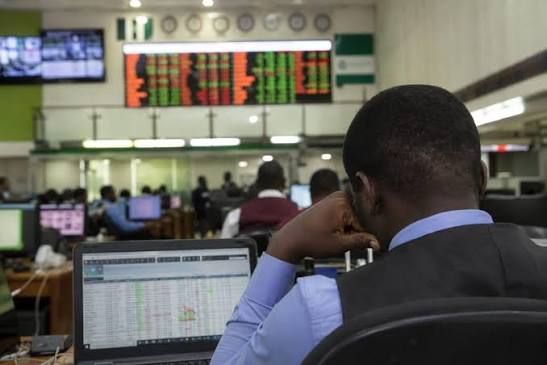
Global markets that have adopted shorter settlement windows have generally recorded improvements in operational efficiency and reductions in settlement risk.
For Nigeria, the reform arrives at a time when policymakers are seeking to deepen the capital market, attract foreign investment and strengthen confidence in domestic financial assets.
Independent analysts believe the reform could improve Nigeria’s competitiveness among frontier and emerging markets seeking foreign capital.
“Faster settlement cycles generally improve liquidity and reduce operational risks for investors. Over time, T+1 should make the Nigerian market more attractive to both domestic and foreign portfolio investors, particularly institutional funds that prioritise settlement efficiency,” said Johnson Chukwu, Group Chief Executive Officer of Cowry Asset Management Limited.
He noted that while the immediate impact may be modest, shorter settlement timelines typically encourage more active trading and quicker capital redeployment across the market.
The Securities and Exchange Commission has described the migration as a key step in modernising market infrastructure and improving competitiveness.
Analysts say sustained improvements in liquidity, investor participation and foreign portfolio inflows could help determine whether the reform achieves its long-term objectives.
How Nigeria Compares With Global Markets
Nigeria’s migration to T+1 places it alongside several major markets that have adopted faster settlement cycles in recent years.
The United States, Canada and Mexico transitioned to T+1 settlement in 2024 as part of a coordinated effort to improve market efficiency and reduce systemic risk. India, one of the world’s fastest-growing capital markets, had already implemented a phased T+1 framework before completing its nationwide rollout.
Market experts say Nigeria’s adoption of the model reflects a broader global trend toward faster settlement systems that allow investors to access cash and securities more quickly.
By aligning its post-trade infrastructure with international standards, Nigeria could improve its appeal to foreign portfolio investors seeking efficient market access and lower transaction risks.
Timeline: Nigeria’s Move to T+1 Settlement
Late 2025: Nigeria adopts T+2 settlement framework.
Q1 2026: Market operators begin testing systems for accelerated settlement.
May 2026: Final readiness assessments conducted by regulators and market infrastructure providers.
May 29, 2026: Final trading session under T+2 settlement.
June 1, 2026: Official launch of T+1 settlement across NGX, NASD OTC and Lagos Commodities and Futures Exchange.
What Investors Should Watch This Week
Several developments could determine whether the market builds on the momentum generated by the T+1 transition:
Early T+1 Settlement Performance
Investors will closely monitor whether trades are settling smoothly under the new framework and whether any operational issues emerge during the first full trading week.
Banking Sector Activity
Financial stocks accounted for more than 69 per cent of total market turnover during the previous week. Sustained activity in banking names such as Fidelity Bank and Access Holdings could provide direction for the broader market.
Dangote Sugar Rights Issue
The ongoing rights issue remains one of the largest corporate fundraising exercises currently on the exchange and may influence liquidity flows across the market.
Foreign Portfolio Participation
Analysts will be watching for signs that the T+1 transition improves foreign investor participation, particularly in highly liquid banking and industrial stocks.
Fixed-Income Market Demand
Demand for Federal Government bonds and money market instruments could continue to shape capital allocation decisions as investors balance equity opportunities against attractive fixed-income yields.
FAQ
What is T+1 settlement?
T+1 settlement means a stock transaction is completed one business day after the trade date, allowing investors to receive cash or securities faster.
Why is T+1 important for investors?
The system improves liquidity, reduces settlement risk and allows investors to redeploy funds more quickly.
Did the NGX market fall during the week?
No. Although trading volume dropped by more than 38 per cent due to public holidays, the NGX All-Share Index still gained 0.27 per cent.
Which sector recorded the highest trading activity?
Financial Services remained the most active sector, accounting for more than 69 per cent of total traded volume during the week.
Read more @ireport247news
About The Author