


IBADAN, June 1 — Nigeria energy sector delivered a rare combination of positive signals in April and May 2026, as the Nigerian National Petroleum Company Limited reported a sharp increase in profits while Dangote Petroleum Refinery reduced its petrol loading price amid falling global crude oil prices.
The developments come at a critical period for Africa’s largest oil producer, where policymakers are seeking to increase crude production, strengthen government revenues, expand gas infrastructure and reduce pressure on households struggling with elevated fuel and energy costs.
According to NNPC’s latest operational and financial report, the state-owned energy company posted revenue of N4.97 trillion in April, up from N2.77 trillion in March, representing a month-on-month increase of approximately 79 per cent.
Profit after tax also climbed significantly to N481 billion from N276 billion during the same period, reflecting stronger operational performance across key business segments.
At the same time, Dangote Petroleum Refinery reduced its petrol gantry price by N25 per litre, lowering the loading cost from N1,275 per litre to N1,250 per litre.
Industry stakeholders say the two developments, although occurring in different segments of the petroleum value chain, point to broader shifts taking place within Nigeria’s energy landscape.
Key Takeaways
- NNPC revenue surged 79% to N4.97 trillion in April 2026.
- Profit after tax climbed 74% to N481 billion.
- Crude oil production increased to 1.68 million barrels per day.
- Government remittances reached N3.71 trillion between January and April.
- Dangote Refinery cut its petrol loading price by N25 per litre.
- Falling crude oil prices are creating expectations of lower fuel costs.
- Analysts say consumers may benefit if marketers pass savings through the supply chain.
For investors, the figures suggest improving performance in the upstream sector. For government officials, they indicate stronger revenue generation.
For ordinary Nigerians, the key question is whether lower refinery prices and stronger industry performance will eventually translate into meaningful reductions in the cost of living.
NNPC Delivers Strongest Monthly Performance in Recent Months
The most striking feature of NNPC’s April report was the scale of the improvement in both revenue and profitability.
The company generated N4.97 trillion in revenue during the month under review, nearly N2.2 trillion higher than the N2.77 trillion recorded in March.

Profit after tax increased by approximately 74 per cent to N481 billion.
The performance reflects a combination of stronger production volumes, improved operational efficiency and favourable market conditions.
Key Metric March 2026 April 2026
Revenue N2.77tn N4.97tn
Profit N276bn N481bn After Tax
CrudeOil 1.56mbpd 1.68mbpd Production
Gas 7.6 bscf/d 7.7 bscf/d. Production
Government N2.89tn N3.71tn Remittances (YTD)
The report showed that crude oil and condensate production increased to 1.68 million barrels per day from 1.56 million barrels per day in March.
Natural gas production remained broadly stable at approximately 7.7 billion standard cubic feet per day.
Energy analysts say the production increase is particularly significant because Nigeria has struggled for years to consistently meet production targets due to crude theft, pipeline vandalism, underinvestment and operational disruptions.
“Every increase in production has an immediate impact on revenue, export earnings and government finances,” said an energy economist based in Abuja.
“The improvement in NNPC’s earnings reflects a combination of stronger production performance and operational efficiencies across the value chain,” said Muda Yusuf.
“The critical issue now is whether those gains can be sustained through continued investment and infrastructure improvements.
Government Revenue Receives a Major Boost
NNPC’s financial performance also carries important implications for federal finances.
The company disclosed that it remitted N3.71 trillion to the Federal Government between January and April 2026, up from N2.89 trillion recorded after the first quarter.
Those remittances include taxes, royalties, dividends and other statutory payments.
At a time when the government is attempting to reduce fiscal pressures, improve infrastructure spending and strengthen public finances, stronger earnings from the national oil company provide an important source of support.
Oil-related revenues remain a critical component of Nigeria’s fiscal structure despite repeated efforts to diversify the economy.
As a result, improvements in NNPC’s profitability are closely watched by investors, credit-rating agencies and development finance institutions.
Gas Infrastructure Projects Move Closer to Completion
Beyond earnings, NNPC highlighted progress on strategic gas infrastructure projects that could influence Nigeria’s energy future for decades.
The company announced the successful crossing of the River Niger segment of the OB3 gas pipeline project, one of the country’s most important gas transportation initiatives.
Work also continued on the Ajaokuta-Kaduna-Kano Gas Pipeline Project, commonly known as AKK.
Both projects form part of the government’s broader strategy to increase domestic gas utilisation, support industrialisation and reduce dependence on imported fuels.
Industry experts argue that gas infrastructure may ultimately prove more transformative than short-term fluctuations in oil revenues.
Nigeria possesses one of the largest proven natural gas reserves in the world, yet large sections of the country still face supply constraints due to infrastructure limitations.
“The future of Nigeria’s energy sector increasingly depends on gas,” said a Lagos-based energy consultant.
“Crude oil remains important, but long-term industrial growth will require reliable gas transportation and distribution networks.”
Dangote Refinery Cuts Petrol Prices
While NNPC’s results reflected developments in production and corporate performance, Dangote Refinery’s latest move directly affected fuel pricing.
The refinery reduced its petrol gantry price by N25 per litre, lowering the cost from N1,275 to N1,250.
According to industry sources, the reduction was driven primarily by falling crude oil prices in international markets.
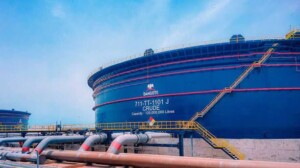
Crude oil serves as the principal feedstock for fuel production, meaning changes in global oil prices often influence refinery economics.
The adjustment represents one of the first major downward pricing moves since months of elevated crude prices pushed fuel costs higher across Nigeria.
Although the reduction may appear relatively modest, market participants say it could have wider implications if current trends continue.
Why Crude Oil Prices Are Falling
The latest decline in petrol prices cannot be understood without examining developments in the international oil market.
Earlier in the year, crude prices surged above $100 per barrel amid geopolitical tensions and fears of supply disruptions linked to developments around the Strait of Hormuz.
The strategic waterway handles a substantial share of globally traded oil, making any disruption a major concern for energy markets.
However, signs of easing tensions and renewed diplomatic engagement have helped calm investor fears in recent weeks.
As expectations of severe supply disruptions declined, crude prices retreated from earlier highs.
That decline has begun feeding through to downstream fuel markets, including Nigeria’s domestic petroleum sector.
Industry observers say refiners generally adjust prices when movements in crude costs become sufficiently significant.
The latest reduction by Dangote appears to reflect that process.
Will Petrol Prices Fall at Filling Stations?
For consumers, the most important question is whether lower refinery prices will lead to cheaper fuel at retail stations.

The answer depends on multiple factors.
Retail fuel prices are influenced not only by refinery costs but also by transportation expenses, storage charges, depot pricing, distribution margins and foreign exchange movements.
As a result, reductions at the refinery gate do not always translate immediately into lower pump prices.
Nevertheless, energy analysts believe the latest adjustment could create downward pressure across the supply chain.
“If crude prices remain lower and refinery prices continue declining, competition among marketers could eventually lead to reductions at the retail level,” said a petroleum market analyst.
The timeline, however, remains uncertain.
Could Petrol Prices Fall Below N1,200 Per Litre?
The reduction announced by Dangote Refinery has intensified speculation that petrol prices could fall further if global crude oil prices continue their downward trend.
Several factors will determine whether additional reductions become possible:
Global Crude Oil Prices
Crude oil remains the single biggest determinant of refining costs.
Further declines in international oil prices could create room for additional reductions.
Exchange Rate Stability
Because parts of the petroleum supply chain remain exposed to foreign exchange costs, a stable naira would support lower fuel prices.
Distribution Costs
Transportation, storage and logistics expenses continue to influence final pump prices.
Competition Among Marketers
Increased competition among suppliers could force retailers to pass more savings to consumers.
Analysts say a sustained decline in crude prices would significantly improve the likelihood of retail petrol prices moving closer to N1,200 per litre or below in some markets.
What It Means for Inflation and Household Budgets
Fuel prices affect almost every aspect of Nigeria’s economy.
Transportation costs, food distribution expenses, manufacturing operations and logistics networks all depend heavily on energy prices.
According to Ayodele Oni, lower refinery prices alone may not immediately translate into lower retail prices.
“Consumers could see gradual relief if global crude prices remain stable and distribution costs do not rise significantly. However, transport costs, exchange-rate movements and marketer margins remain important variables,” he said.
When fuel becomes more expensive, businesses often pass those costs on to consumers.
Conversely, lower fuel prices can help moderate inflationary pressures.
Economists therefore view the latest refinery price adjustment as potentially positive for the broader economy, particularly if it contributes to a sustained downward trend.
For households already facing elevated food prices and cost-of-living pressures, even modest reductions in transport and energy costs can provide some relief.
However, experts caution that meaningful improvements will depend on the persistence of lower crude prices and continued efficiency gains within the domestic energy sector.
Read Also: Why Cooking Gas Prices Keep Rising in Nigeria Despite Increased Local Supply
Political deepfakes raise alarm as 16.5 Million UK adults exposed before elections
Can Nigeria Benefit From Both Higher Profits and Lower Fuel Costs?
One of the most interesting aspects of the current situation is that Nigeria may be positioned to benefit from both stronger energy-sector earnings and lower domestic fuel costs.
Normally, falling oil prices reduce revenues for oil-producing countries.
However, because Nigeria is simultaneously expanding refining capacity and attempting to improve operational efficiency, some analysts believe the country could partially offset lower crude revenues through improved domestic value addition.
The emergence of large-scale refining capacity, led by Dangote Refinery, has altered the structure of the domestic petroleum market.
Instead of relying heavily on imported refined products, Nigeria increasingly processes crude locally.
That shift can improve energy security, reduce import dependence and create additional economic activity within the country.
At the same time, stronger production performance at NNPC supports government revenues and foreign exchange earnings.
The combination creates a more balanced energy ecosystem than existed in previous years.
Challenges Remain
Despite the encouraging developments, significant challenges continue to confront the sector.
NNPC acknowledged delays affecting the Trans Ramos Pipeline project due to integrity and leak-detection concerns.
Pipeline reliability remains a major issue for the industry.
Security concerns, crude theft, infrastructure deficits and regulatory uncertainty also continue to affect investment decisions.
In the downstream sector, marketers remain vulnerable to fluctuations in crude prices, exchange rates and logistics costs.
Analysts warn that sustained progress will require continued reforms, infrastructure investment and policy consistency.
What Investors Will Watch Next
The coming months are likely to be critical for Nigeria’s energy sector.
Investors will monitor:
- Crude oil production levels
- Global oil-price movements
- Dangote Refinery pricing decisions
- AKK pipeline progress
- OB3 project completion
- Government revenue trends
- Fuel inflation data
- Foreign investment into the energy sector
These indicators will help determine whether the recent positive developments represent a temporary improvement or the beginning of a more sustained recovery.
Frequently Asked Questions
Why did NNPC’s profit increase?
NNPC reported stronger revenues, higher crude production and improved operational performance during April 2026, helping profit after tax rise to N481 billion.
Why did Dangote Refinery reduce petrol prices?
The refinery cited lower crude oil prices in international markets, which reduced production costs and allowed a N25-per-litre reduction.
Will petrol prices fall further in Nigeria?
Further reductions will depend on global oil prices, exchange-rate stability and distribution costs across the supply chain.
How much revenue did NNPC generate in April?
The company reported revenue of N4.97 trillion in April 2026.
What is the significance of the AKK and OB3 gas projects?
Both projects are expected to improve gas transportation, support industrial growth and strengthen Nigeria’s long-term energy security.
Outlook: A Sector Showing Signs of Transformation
Taken together, NNPC’s stronger earnings and Dangote Refinery’s price reduction suggest that parts of Nigeria’s energy sector are entering a new phase.
Production is improving.
Government revenues are rising.
Strategic gas infrastructure projects are advancing.
Domestic refining capacity is increasing.
And fuel pricing is beginning to respond more directly to global market conditions.
The benefits have not yet fully reached consumers, and significant structural challenges remain.
But for the first time in several years, the industry is showing simultaneous signs of stronger corporate performance and potential consumer relief.
Whether that momentum can be sustained may become one of the most important economic stories in Nigeria during the remainder of 2026.
Read more @ireport247news
About The Author
