No Nigerian Firm Can Handle Deep Offshore Drilling – Minister Lokpobiri Warns
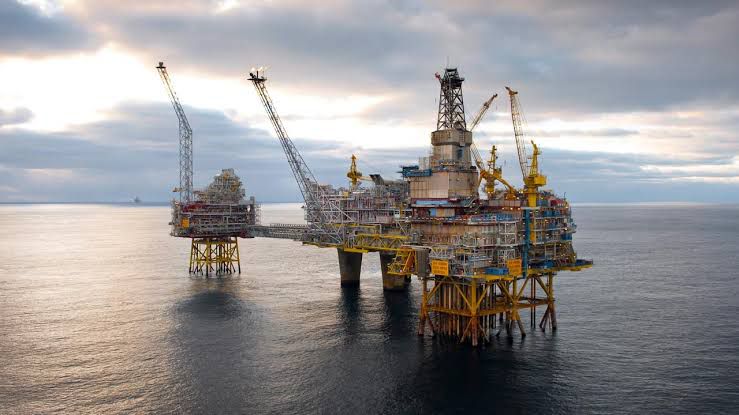
The Minister of State for Petroleum Resources (Oil), Senator Heineken Lokpobiri, has sounded a cautionary note over the capacity of Nigerian companies to undertake Nigerian deep offshore drilling, asserting that local firms currently lack the technical capability to operate in deep offshore waters.
His remarks were made at the Practical Nigerian Content Forum organized by the Nigerian Content Development and Monitoring Board (NCDMB) in Yenagoa, Bayelsa State.
Lokpobiri emphasized that strengthening local capacity should not be misconstrued as displacing international oil companies (IOCs).
“Strengthening local capacity and local content shouldn’t be misunderstood as the substitution of the IOCs. The space in Nigeria is mature. We have enough work for everybody,” he stated.
Nigerian Deep Offshore Drilling: Local Capacity Limitations
According to the minister, Nigerian firms often outsource contracts awarded to them to foreign companies, a practice that escalates the cost of oil and gas production in the country.
“No Nigerian company, as of today, can go and do any work deep offshore. No Nigerian service company can go and do drilling deep offshore.
So if we misapply the local content law and we give drilling jobs to Nigerians, they will outsource it to the ‘big boys’, inflating costs and reducing global competitiveness,” Lokpobiri explained.
He also defended the issuance of waivers for some contracts to foreign companies, citing the inability of domestic firms to handle certain operations.
“Rather than giving a Nigerian a job that he will still outsource to foreigners, I take that cost and give it directly to the foreigner so that our pricing can be competitive,” the minister said.
He reiterated that Nigerian companies can focus on land, swamp, and shallow water projects where capacity exists.
Addressing Industry Challenges and Misconceptions
Lokpobiri noted that some members of the Petroleum Technology Association of Nigeria (PETAN) opposed his approach because he refused to allocate them jobs they could not execute.
“PETAN members don’t like me because I am ensuring competitiveness and removing middlemen. We cannot give Nigerian companies jobs that they cannot do,” he stressed.
He recounted a personal encounter with a foreign minister who highlighted Nigeria’s high production costs, even surpassing those in countries at war.
“I was thoroughly embarrassed, and it became my duty to address these inefficiencies to maintain Nigeria’s competitiveness in global oil markets,” Lokpobiri said.
Expansion of Drilling Capacity in Nigeria
Highlighting recent achievements, the minister disclosed that the number of operational rigs in Nigeria had surged under the current administration.
“When this government came, we had perhaps 14 rigs. Today, we have over 60 rigs, with more than 40 active. Continuous drilling is vital, as oil fields naturally decline each year.
Investments are being made to scale up production and meet both domestic and international energy needs,” Lokpobiri added.
He also underscored Nigeria’s vast energy potential, noting that adequate scaling of production is critical to meeting domestic demand and fulfilling global obligations.
PETAN’s Perspective on Costs and Local Content
Contrasting views emerged from PETAN President, Wole Ogunsanya, who argued that Nigeria’s oil and gas service costs remain among the lowest in Africa.

Speaking at the same forum, he distinguished between capital expenditures and operating costs, emphasizing that Nigeria’s CAPEX is competitive.
Ogunsanya cited evacuation and security as primary drivers of production cost increases, noting that pipeline vandalism forces companies to use vessels and barges at elevated expenses.
“Local content policies subsidize oil and gas production, but some portfolio companies without operational assets exacerbate costs,” he added.
Implications for Nigerian Deep Offshore Drilling
The minister’s candid remarks highlight a structural challenge within Nigeria’s oil and gas sector: the limited capacity of domestic firms to execute deep offshore projects.
This has implications for policy, investment, and local content application.
While shallow water and onshore projects can be reliably managed by Nigerian companies, deep offshore operations require specialized expertise, technology, and capital, often necessitating collaboration with international firms.
The discussions at the NCDMB forum underscore the need for strategic capacity building and policy refinement to enhance competitiveness and ensure Nigeria remains an attractive destination for oil and gas investment.
The insights shared by Minister Lokpobiri on Nigerian deep offshore drilling underscore the delicate balance between supporting local industry and maintaining global competitiveness.
While Nigeria possesses significant energy resources and has expanded its drilling capacity under the current administration, bridging the gap in local technical capability remains a priority for policymakers and industry stakeholders alike.
About The Author