Netanyahu warned of 7 October Hamas attacks more than a week before the devastating assault, according to a new book by Haaretz journalists, which claims the Israeli prime minister received a direct warning from UAE President Mohamed bin Zayed Al Nahyan but failed to alert his security chiefs or take preventive action.
The explosive allegation has intensified political pressure on Benjamin Netanyahu as Israel approaches a crucial election, with opposition leaders demanding answers about what the prime minister allegedly knew before the Hamas-led assault and why the information was not passed to the country’s security establishment.
The report, published by Haaretz, says the warning came approximately a week and a half before 7 October 2023, when Hamas fighters launched an unprecedented attack on southern Israel that killed more than 1,200 people and resulted in 251 others being taken hostage.
According to the account, bin Zayed contacted Netanyahu directly from the presidential palace in Abu Dhabi during a telephone conversation lasting about 45 minutes. The Emirati president allegedly told Netanyahu that Hamas leader Yahya Sinwar was preparing a major military operation and expressed concern that the planned assault could destabilise the wider Middle East.
The allegation forms part of a new book titled Hostages: 843 Days of Abandonment, written by Haaretz reporters. Its authors say their investigation draws on dozens of sources in Israel and other countries, including senior officials with knowledge of events surrounding the period before the Hamas attack.
Netanyahu Rejects Warning Allegation
Netanyahu has strongly rejected the report, describing the claim as an “absolute lie” and denying that he spoke with the UAE president about an impending Hamas attack during the period identified by the journalists.
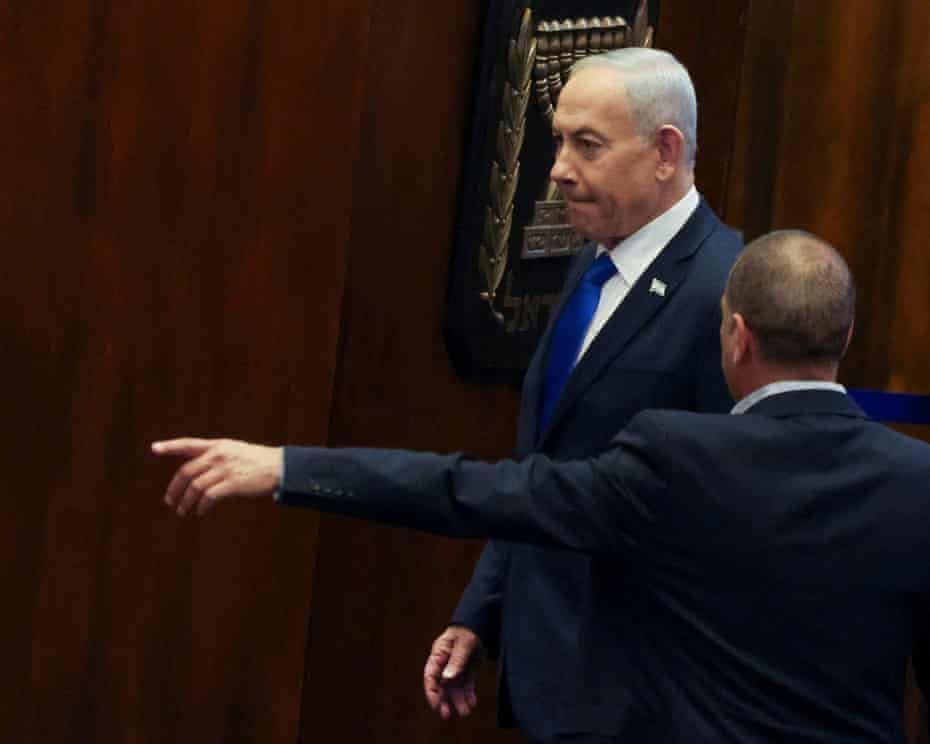
The Israeli prime minister has already faced intense criticism over the intelligence and security failures that preceded 7 October, with opponents arguing that multiple warning signs were available but were not acted upon sufficiently to prevent the assault.
The latest allegation could therefore deepen an already bitter political dispute over accountability. Opposition leaders have questioned whether Netanyahu received information about Hamas preparations and, if so, why senior military and intelligence officials were allegedly not informed.
Haaretz also reported that bin Zayed maintained communication with senior Israeli figures, including Netanyahu and President Isaac Herzog. According to the account, a UAE diplomat provided Netanyahu with a secure telephone that enabled conversations with the Emirati leadership.
The reported communication is significant because the United Arab Emirates established diplomatic relations with Israel in 2020 under the Abraham Accords, creating closer political and security contacts between the two countries.
Sinwar Allegedly Described a Coming “Earthquake”
The book’s authors also report that Sinwar had previously communicated with a former Palestinian official about Hamas’s preparations, describing the planned operation as something that would cause a “terrifying operation” and an “earthquake.”
Sinwar, who became one of the most prominent figures in Hamas’s leadership and was later killed by Israeli forces, was regarded by Israel as a central architect of the 7 October assault.
The reported warnings have renewed questions about whether Israeli authorities underestimated Hamas’s capabilities and intentions before the attack. The assault exposed major failures across Israel’s intelligence, military and political systems and triggered a prolonged regional conflict.
The subsequent Israeli military campaign devastated large parts of Gaza and caused tens of thousands of Palestinian deaths, according to figures cited in the report. Fighting also spread beyond Gaza, involving Israel and armed groups or state actors connected to conflicts in Lebanon and Iran.
Opposition Demands Investigation Into Netanyahu
Several Israeli opposition parties have seized on the allegations, demanding a full examination of Netanyahu’s actions before the attack and seeking to establish precisely when he received information about Hamas preparations.
In a joint statement, opposition leaders questioned why the alleged warning was not communicated to Israel’s security establishment and why stronger measures were not taken to protect civilians.
Gadi Eisenkot, a former senior military commander and one of Netanyahu’s leading political rivals, accused the prime minister of repeatedly avoiding responsibility for the security failures surrounding 7 October.
“Netanyahu received dozens of warnings for 7 October and ignored them all. He is unfit,” Eisenkot wrote on X, arguing that the latest allegations added to a broader pattern of warnings that he believes were disregarded.
Eisenkot has emerged as a major challenger to Netanyahu ahead of Israel’s October elections, making the dispute over the prime minister’s actions before the Hamas attack particularly politically significant.
Former prime minister Naftali Bennett, who is also contesting the election, went further by saying Netanyahu bears “personal and direct responsibility” for the deaths suffered during the 7 October attack.
Bennett argued that Netanyahu should no longer remain in office, reflecting the growing intensity of opposition criticism over the government’s handling of the events leading up to the assault.
Yair Golan, leader of the centre-left Democrats party, also accused Netanyahu of failing to protect Israel and said explanations previously offered about not being awakened early enough on the morning of the attack could no longer settle questions about his responsibility.
Calls Grow for Independent State Inquiry
The controversy comes as many Israelis continue to demand an independent state commission to investigate the failures that allowed Hamas to penetrate the border, attack communities and military positions, kill civilians and soldiers, and seize hostages.
Supporters of such an investigation argue that Israel needs an independent assessment capable of examining decisions made by political leaders, military commanders and intelligence agencies without interference from the government.
Opposition parties have pledged that establishing such a commission would be among their first priorities if they win power. They favour a mechanism whose members would be appointed through Israel’s Supreme Court, rather than being controlled by the government currently facing scrutiny.
Read also: Trump bombardier ban threat: Canadian jetmaker must build in US
Netanyahu’s government has rejected the opposition’s preferred arrangement, leaving the question of accountability politically contentious more than two years after the original attack.
The latest claims about Netanyahu warned of 7 October Hamas attacks could consequently become an important issue in the election campaign, particularly if opposition parties succeed in turning the allegations into a wider debate about leadership, intelligence failures and national security.
The prime minister’s supporters are likely to challenge the credibility and interpretation of the reported conversation, while opponents are expected to demand documentary evidence and testimony capable of establishing exactly what information Netanyahu received before 7 October.
At the centre of the controversy is a question that has remained unresolved since the attack: whether Israel’s catastrophic failure to prevent Hamas’s assault was simply the result of intelligence and operational breakdowns, or whether political leaders received information that should have prompted more decisive action.
For Netanyahu, the allegation adds another layer to an already extensive debate over his leadership. For his political opponents, it provides a fresh opportunity to argue that the prime minister must answer directly for decisions taken before the deadliest attack in Israel’s history.
Until the allegations are independently established, however, the reported UAE warning remains a claim contained in investigative reporting and a newly published book, rather than a conclusively established finding of an official inquiry.
About The Author