

Finland and Norway defend Putin talks after their leaders held a 90-minute telephone conversation with Russian President Vladimir Putin, triggering divisions among European leaders over diplomacy, Ukraine’s future and the prospects for ending the war.
Finnish President Alexander Stubb and Norwegian Prime Minister Jonas Gahr Støre said their discussions were intended to convey messages directly to Moscow ahead of anticipated negotiations involving Russia, Ukraine and the United States in Abu Dhabi.
The leaders initially expected the conversation to last 20 minutes, but it continued for approximately 90 minutes. Støre described the exchange as “substantive, focused on the issues at hand, and professional.”
However, he acknowledged that the discussions had not resolved the fundamental disagreements between the countries, while reiterating Norway’s commitment to Ukraine’s right to defend itself against Russia’s invasion.
The unusual diplomatic engagement has drawn mixed reactions across Europe, with some leaders supporting additional communication channels and others warning that independent initiatives could undermine European unity.
Støre Says Direct Communication With Putin Remains Necessary
Speaking to journalists in Helsinki on Tuesday, Støre defended the decision to contact Putin, arguing that communication with Moscow should not be restricted to the existing channels led by Washington.
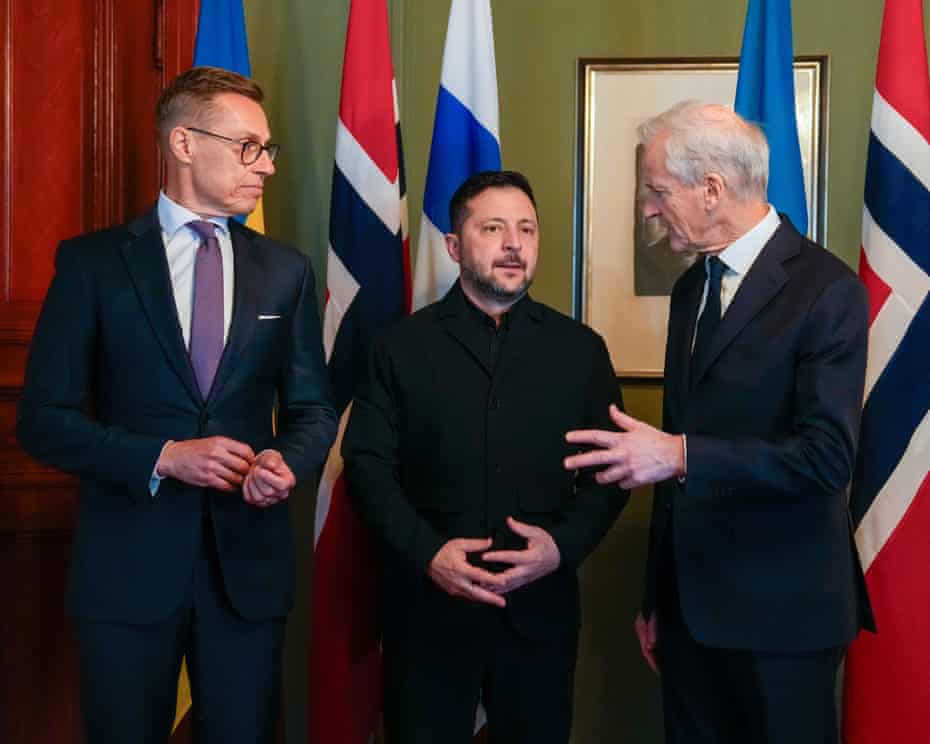
He explained that Putin repeated his established account of how the conflict developed from 2014, while the Finnish and Norwegian leaders presented their own positions on the war.
“Much of what he said was already known – he [Putin] recalled his views on how the conflict evolved since 2014 – and we stated our positions,” Støre said.
The Norwegian prime minister added that the conversation addressed practical concerns, including attacks on energy infrastructure and developments in the Black Sea.
Despite the discussion, he made clear that Norway had not changed its position on the war or abandoned its support for Kyiv.
“We stand with Ukraine, defend its right to self-defence, and emphasise the need for a diplomatic path to end this war in a lasting and just manner,” he said.
Støre also stressed that the two leaders had represented only their respective countries during the conversation, rather than claiming to speak on behalf of the European Union or the continent as a whole.
Norway Rejects Criticism Over Independent Diplomatic Initiative
The Norwegian leader pushed back against criticism from Denmark’s Prime Minister Mette Frederiksen, who expressed scepticism about the initiative and questioned whether it had been adequately coordinated with other European governments.
Støre said Finland and Norway had informed their partners and allies before the call and provided a detailed account afterwards.
He argued that maintaining direct communication could be valuable even while European countries continued to disagree with Moscow over the war.
“If one assumes that the current situation – where communication from the American administration to Moscow serves as the sole channel for discussing Ukraine outside of Ukraine – is the only way, then one is entitled to that view,” Støre said.
“I believe it is important that other voices are heard as well.”
He added that the two countries were acting consistently with the broader coalition of nations supporting Ukraine, rather than attempting to establish an alternative European position.
The discussions also followed earlier consultations hosted by Stubb and Støre in Oslo, which brought diplomatic attention to possible negotiations aimed at ending the conflict.
Sweden Warns Against Appeasing Russia in Peace Negotiations
Swedish Prime Minister Ulf Kristersson joined the European leaders expressing caution about the prospects of progress with Putin.
Kristersson insisted that any peace agreement must be achieved on Ukraine’s terms and argued that negotiations would only be useful if they produced a settlement that protected the country’s sovereignty and security.
Speaking to reporters, he said a settlement “must be brought about through strength, and not through appeasement towards Russia.”
The Swedish leader questioned whether previous European attempts to engage Moscow had delivered meaningful results.
“If talks lead to that, then talks are good,” Kristersson said.
“But my experience so far – based on the reports we received from German and French attempts at dialogue [with Moscow] – is that the results have been very, very modest.”
He added that Russia’s continued military operations gave him little reason to believe that Putin was genuinely seeking peace.
Kristersson nevertheless said he was interested in receiving further information about the latest diplomatic discussions, indicating that Sweden would continue to assess the initiative as developments unfolded.
His remarks reflected wider concerns among European governments that diplomatic engagement could produce limited results unless accompanied by sustained pressure on Russia.
Germany Insists Ukraine Must Participate in Any Peace Deal
German Chancellor Friedrich Merz also warned against attempts to end the war without Ukraine’s direct involvement, stressing that Kyiv must have a place at the negotiating table.
Speaking during an event in Singapore, Merz said diplomatic efforts involving the United States and Russia could not produce a legitimate settlement if Ukraine was excluded.
He said any negotiations should involve Russia, Ukraine, the United States and European countries.
Merz warned against a situation in which major powers determined Ukraine’s future without the participation of the country directly affected by the war.
He argued that continued support for Kyiv was essential not only to protect Ukraine’s territorial integrity but also to preserve Europe’s wider political and security order.
“As long as he [Putin] does not want to end the war, we will support Ukraine,” Merz said.
The German chancellor also described the conflict as a challenge to Europe’s political foundations, arguing that the consequences extended beyond the immediate battlefield.
His intervention reinforced a central concern among European leaders: that any agreement negotiated principally between Washington and Moscow could leave Ukraine vulnerable to future aggression.
The question of European participation is also significant because a peace settlement could have lasting implications for continental defence, security guarantees and relations between Russia and neighbouring countries.
Poland Reports Cautious Optimism Ahead of Abu Dhabi Talks
Polish Prime Minister Donald Tusk offered further details about the diplomatic contacts surrounding the Finnish-Norwegian call with Putin.
Tusk said he had been consulted before the conversation, alongside other partners, including Ukrainian President Volodymyr Zelenskyy and the United States.
According to the Polish leader, the discussions were intended to establish working contacts ahead of possible negotiations in Abu Dhabi.
The proposed trilateral talks involving Russia, Ukraine and the United States were provisionally scheduled for 4 November, according to the report.
Tusk confirmed that Stubb briefed him after the conversation with Putin and indicated that both sides had maintained their established positions.
He described the European assessment of the exchange as one of “very restrained optimism” regarding the possibility of progress.
The Polish prime minister warned against excessive expectations, saying Russia’s objectives remained clearly defined and that European leaders should not assume an agreement would be easy to achieve.
He also said Stubb and Støre had stressed to Putin that the security of NATO’s northern and eastern flanks was non-negotiable.
Tusk reiterated that the renewed diplomatic contacts would not change Europe’s support for Ukraine or its position on the security arrangements needed to protect the country.
He said he would remain in contact with leaders who believed an agreement could be achieved, or at least that a ceasefire might be secured before winter.
Zelenskyy Demands Concrete Steps to Reduce Escalation
Ukrainian President Volodymyr Zelenskyy responded to the diplomatic developments by calling for practical measures to reduce attacks on energy facilities and other critical infrastructure.
With winter approaching, Ukraine faces renewed concerns over the effects of Russian strikes on electricity supplies, transport systems and civilian infrastructure.
Zelenskyy said he had discussed the situation with Stubb and Støre, including preparations for the planned Abu Dhabi talks and the possible role of European partners in supporting diplomacy and defence.
“Finland and Norway, as countries that border Russia, have a particular interest in sound and reliable security arrangements,” he said.
The Ukrainian president also stressed the need for Russia to stop prolonging the conflict.
“There must be peace, de-escalation is needed, and Russia must stop dragging out the war,” Zelenskyy said.
His comments underlined Kyiv’s insistence that diplomatic discussions must be accompanied by meaningful changes in Russia’s military conduct.
The Ukrainian government has repeatedly argued that negotiations cannot succeed if Moscow continues attacks while participating in diplomatic exchanges.
Russia Continues Attacks Despite Localised Ceasefire
The diplomatic discussions are taking place as Russia and Ukraine implement a localised ceasefire intended to facilitate a humanitarian operation in the Russian-occupied town of Oleshky.
The arrangement is intended to allow assistance and rescue efforts to proceed in the town, where the humanitarian situation has raised serious concerns.
Kyrylo Budanov, head of Zelenskyy’s office, confirmed that the ceasefire was operating and said Ukraine’s parliamentary commissioner for human rights, Dmytro Lubinets, had travelled to the area to coordinate the operation.
Budanov stressed that the mission needed to be carried out safely and successfully, describing every Ukrainian life as priceless.
However, the local ceasefire has not halted Russia’s wider military campaign.
According to Zelenskyy, Russia launched 16 ballistic missiles and more than 280 drones overnight, with at least 15 people injured in Kyiv. Attacks were also reported across several other Ukrainian regions.
The Ukrainian president accused Russia of targeting energy facilities, logistics networks and ordinary urban infrastructure.
He also argued that delays in the delivery of air-defence interceptor packages for Patriot and NASAMS systems were helping Russia continue its attacks.
“Every such delay means another Russian strike on one facility or another,” Zelenskyy said.
The continuing attacks illustrate the challenges facing negotiators seeking to secure a broader ceasefire while fighting and infrastructure strikes persist.
Putin Blames NATO and European Union for Prolonging the War
The Kremlin’s account of the telephone conversation offered a different interpretation of the conflict and highlighted the substantial gap between Moscow and European capitals.
According to the Russian statement, Putin discussed what the Kremlin described as the underlying causes of the invasion and insisted that any settlement must take Russian interests fully into account.
The Russian president called for “full and unconditional considerations of the legitimate interests of the Russian Federation” in a peace agreement.
Putin also accused the European Union and NATO of pursuing what he described as confrontational policies that were prolonging hostilities.
These positions contrast sharply with the stance of European leaders, who have repeatedly condemned Russia’s invasion and insisted that Ukraine’s sovereignty must be respected.
The competing interpretations underscore why the latest diplomatic initiative has produced limited public signs of agreement on the central issues.
Although the leaders agreed to maintain contact, there was no indication that Putin had accepted Ukraine’s principal demands or that the parties had reached a breakthrough on the terms of a settlement.
UK Defence Chief Warns NATO Must Prepare for Possible War With Russia
Away from the diplomatic discussions, British Defence Secretary Wes Streeting warned that the United Kingdom and NATO must prepare for the possibility of a direct military confrontation with Russia.
Speaking in Warsaw alongside Polish Defence Minister Władysław Kosiniak-Kamysz, Streeting accused Putin of testing NATO’s resolve through military pressure, hybrid threats and what he described as state-sponsored terrorism.
“We have to be ready for a scenario in which the United Kingdom and the Nato alliance finds itself at war with Russia,” Streeting warned.
Read also: Reform UK overseas donations: 79% of party funding came from donors based abroad
https://ireport247news.com/reform-uk-overseas-donations-79-of-party-fundin/
He stressed that preparing for such a possibility did not mean Britain wanted a war with Russia or held hostility towards the Russian people.
“Not because we want war – we have no quarrel with the Russian people, and we have no desire for war with Russia; Nato is a defensive alliance,” he said.
Streeting argued that NATO must take Russia’s actions seriously despite assurances from Putin that he does not intend to provoke a wider conflict.
He also reaffirmed Britain’s commitment to defending NATO territory and supporting Ukraine, while announcing that British forces would participate in major exercises next month as part of the multinational force for Ukraine.
His remarks highlighted the continuing tension between diplomatic efforts to end the war and military preparations intended to deter further Russian aggression.
Diplomatic Divisions Persist as Europe Awaits the Next Move
The telephone conversation between Putin, Stubb and Støre has reopened debate over how European governments should engage with Moscow while maintaining support for Ukraine.
Finland and Norway argue that direct communication can help convey messages and explore possible routes towards a settlement. Critics, however, fear that independent diplomatic initiatives could weaken a coordinated European approach.
Sweden and Germany have emphasised that any agreement must protect Ukraine’s interests, while Poland has urged caution despite acknowledging limited optimism about the planned negotiations.
Meanwhile, Zelenskyy continues to demand concrete de-escalation, particularly around attacks on energy infrastructure, as Russia’s military operations persist.
With talks provisionally expected in Abu Dhabi in early November, the immediate test will be whether renewed diplomatic contacts can produce tangible progress towards a ceasefire and a just, lasting peace.
For now, the 90-minute conversation has reopened a channel of communication, but the fundamental disagreements over Ukraine’s future, Russia’s demands and Europe’s security remain unresolved.
About The Author


