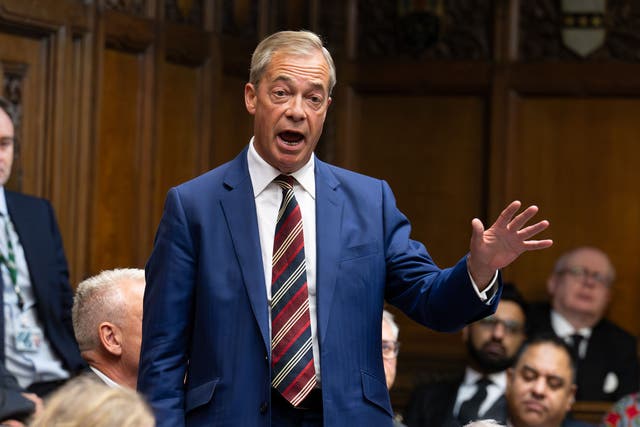
Reform UK overseas donations accounted for nearly 80 per cent of the party’s donations during the 2025–2026 reporting period, with an analysis revealing that wealthy individuals and companies based abroad supplied the overwhelming share of the money received by Nigel Farage’s political movement.
An investigation by The Independent, published on Tuesday, October 27, 2026, found that 79.41 per cent of donations received by Reform UK during the period came from individuals or companies that had been based overseas within the previous two years.
The findings have intensified scrutiny of the party’s finances and renewed concerns about the potential influence of overseas-based donors on British politics.
The analysis of data from the Electoral Commission found a substantial difference between Reform UK and the country’s two major established parties. Labour received just 0.15 per cent of its donations from individuals or companies based abroad during the same period, while the Conservatives received 3.57 per cent.
Although the findings do not establish that any donations were illegal, the scale of Reform UK’s reliance on overseas-based financial supporters has prompted fresh questions about political funding, transparency and the government’s proposed reforms to electoral law.
Reform UK overseas donations dwarf those received by rival parties
The figures provide a detailed picture of the financial support received by Reform UK during the 2025–2026 reporting period and highlight the extent to which its donations differed from those of Labour and the Conservatives.
According to The Independent, overseas-based donors accounted for 79.41 per cent of Reform UK’s donations during the period examined.
The analysis included individuals who had been based abroad during the previous two years, as well as companies whose controlling directors were living overseas.
Labour’s overseas-based donations represented 0.15 per cent of its total, while the corresponding figure for the Conservatives stood at 3.57 per cent.
The difference has attracted political attention because donations help parties finance campaigns, develop policy proposals, communicate with voters and organise their activities across the country.
Large contributions can provide a political organisation with considerable financial resources, making transparency over the identity and circumstances of donors an important part of public debate.
However, the figures must be understood within their proper context. The analysis identified where donors or relevant company directors had been based; it did not establish that every donation from an overseas-based individual or company breached electoral law.
The distinction is important because questions about the geographical residence of donors are not automatically proof of unlawful funding.
Nevertheless, the findings have placed Reform UK’s financial arrangements under increased scrutiny, particularly as the government considers tighter rules governing donations from British citizens living abroad and people who have recently returned to the country.
Ben Delo and Christopher Harborne among major donors
Two prominent cryptocurrency billionaires, Ben Delo and Christopher Harborne, were among the major financial supporters identified in the report.
Delo, who had previously been based in Hong Kong before returning to the United Kingdom earlier in 2026, donated £8 million to Reform UK during the reporting period.
Harborne, who had been based in Thailand, contributed £15 million, according to the analysis.
Together, their contributions represented £23 million of the overseas-linked donations examined by The Independent.
The report also noted that Reform UK received two additional donations worth £36 million each from Delo and Harborne during the previous month.
Those two contributions, totalling £72 million, were excluded from the newspaper’s analysis because they fell outside the reporting period.
The separate donations have nevertheless intensified attention on the party’s fundraising arrangements and the rules governing large political contributions from people who have lived overseas.
The proposed changes to electoral law could have implications for whether Reform UK can retain the additional £72 million, depending on the final legislation, its commencement provisions and how the rules apply to the donors involved.
The government has argued that changes are needed to ensure people making substantial financial contributions to British political parties have a meaningful connection to the country.
However, the precise legal consequences will depend on the legislation ultimately enacted and the circumstances surrounding the individual donations.
The fact that a donor previously lived overseas does not, by itself, establish that a contribution was unlawful under the rules applicable when it was made.
Labour questions transparency surrounding Reform UK funding
The findings prompted criticism from Labour Party chair Bridget Phillipson, who questioned the scale of Reform UK’s reliance on wealthy overseas-based supporters.
In comments to The Independent, Phillipson said: “The scale of Reform’s reliance on donations from wealthy overseas backers raises further questions about the party’s financial affairs.
“The public deserves to know exactly who is bankrolling Nigel Farage’s party, what interests these donors are seeking to advance, and whether those interests align with the priorities of the British people.
“While Farage pushes ever more extreme policies to try and distract from the sleaze and scandal engulfing Reform, this Labour government is working to strengthen our political finance laws and better protect our democracy from foreign influence.”
Her remarks reflect Labour’s argument that political donations should be subject to stronger safeguards to prevent wealthy individuals with limited current connections to Britain from exerting disproportionate influence through financial contributions.
The criticism also places Reform UK’s fundraising practices within a wider political debate about the relationship between money, transparency and democratic accountability.
However, Phillipson’s comments represent Labour’s political position on the issue. The donation figures themselves do not establish that the donors sought to advance particular interests or that their contributions affected Reform UK’s policies.
Determining whether financial supporters receive political influence would require evidence beyond the size or geographical circumstances of their donations.
Reform UK has faced questions about its funding arrangements, but the allegations surrounding the party must be distinguished from proven breaches of electoral law.
The party was contacted for comment by The Independent.
Government considers tighter rules on political donations
The British government is examining proposals to strengthen residency requirements governing political donations amid concerns about the potential influence of overseas-based financial supporters.
Ministers have already moved towards introducing a proposed £100,000 cap on donations to political parties from British citizens living abroad.
According to the report, the proposed restriction would also apply during the first 12 months after an expatriate returns to the United Kingdom.
The government is considering additional requirements intended to establish whether major donors maintain an ongoing presence in Britain.
Government sources indicated that the details of the enhanced test would be announced later.
The proposed reforms are designed to ensure that individuals making substantial contributions to British political parties have a meaningful connection to the country rather than relying solely on formal eligibility.
Such changes could have significant implications for parties that receive large donations from wealthy British citizens who have spent extended periods living overseas.
However, the proposals raise questions about how residency should be defined, what evidence donors would need to provide and how the rules would apply to contributions already received.
The government has indicated that the changes would be backdated to March 2026, potentially affecting the treatment of donations made before the new restrictions formally take effect.
The precise impact on Reform UK’s funding would depend on the final legislation and its application to the donations in question.
Government denies targeting Nigel Farage’s party
The proposed reforms have generated debate over whether the government’s approach could disproportionately affect Reform UK because of its recent large donations from Delo and Harborne.
The two cryptocurrency billionaires gave the party £36 million each last month, bringing the combined value of those contributions to £72 million.
The possibility that new residency restrictions could affect the donations has raised questions about whether Reform UK would be permitted to retain and use the money.
However, the prime minister’s official spokesperson previously rejected the suggestion that the proposed checks were specifically designed to prevent Farage’s party from accessing the funds.
The spokesperson said the government wanted to ensure that people contributing substantial sums to political parties had a stake in the United Kingdom.
“There are multiple precedents under successive administrations, particularly to address the risk of people taking action immediately to avoid the new rules,” the spokesperson said.
The government’s position is that the proposals concern the integrity of political funding rather than the electoral interests of a particular party.
Nevertheless, the reforms could become politically contentious because their practical effects may differ significantly between parties, depending on where their major donors live and how much money they contribute.
Reform UK’s financial position has attracted particular attention because of the size of its recent donations and the proportion of its earlier funding linked to people or companies based overseas.
The debate is likely to continue as ministers clarify the proposed residency test and Parliament considers the details of the legislation.
Other overseas-based donors contributed substantial sums
The analysis also identified several other individuals and companies that contributed significant amounts to Reform UK during the reporting period.
Among them was Timothy Mallott, the chief operating officer of the Europe, Middle East and Africa division of financial technology and brokerage firm BGC Group.
The report noted that Mallott’s Companies House profile listed him in Hong Kong, while his LinkedIn profile placed him in Dubai.
He made several donations worth tens of thousands of pounds to Reform UK.
The party also received £100,000 from Lucas Bitencourt, a British entrepreneur, investor and founder of asset management firm Arbra Partners. His Companies House profile listed him in Portugal.
Another contribution of £45,000 came from Flow Lloyds HOLDCO Limited, a UK-registered holding company operating in the insurance sector whose British director resides in Italy.
The inclusion of companies whose controlling directors were based abroad formed part of the methodology used in the newspaper’s analysis.
These examples illustrate the range of financial arrangements involved in the figures, from donations by individuals to contributions made through UK-registered companies.
However, the reported locations of donors and directors should not be treated as evidence of wrongdoing in themselves.
The central issue is whether the arrangements comply with the applicable rules and whether the proposed reforms would introduce additional requirements that affect the eligibility of particular donors.
The findings have nevertheless increased attention on how political parties identify donors, verify eligibility and disclose contributions under British electoral law.
Allegations over foreign donations create further pressure
Reform UK has also faced separate allegations concerning attempts to disguise donations from foreign sources, a controversy that overshadowed the party’s conference in Birmingham the previous month.
The controversy led to the resignations of Nigel Farage’s chief of staff and longtime aide, Dan Jukes, and the party’s policy director, James Orr.
The allegations followed video footage obtained by Channel 4 and investigative group Verbatim through a sting operation.
The footage appeared to show senior Reform figures discussing ways to disguise donations originating from foreign sources.
Members of Verbatim reportedly posed as an American donor and his son. They had paid for polling allegedly commissioned by Reform UK and were seeking to channel money to the party.
Under the electoral rules described in the report, donations to a political party must come from eligible sources, including UK-registered voters or companies registered in the United Kingdom.
The allegations prompted questions about the party’s procedures for handling prospective donations and ensuring compliance with electoral law.
Farage has maintained that he and his aides “had done nothing illegal” and said that no money changed hands.
Reform UK subsequently conducted its own investigation, which concluded the previous week that the party had not breached electoral law when senior figures discussed how foreign donations might be disguised.
The allegations and the party’s internal findings are separate from the newspaper’s analysis of donations linked to overseas-based individuals and companies.
The donation figures do not, on their own, prove that any contribution was illegal or that the events captured in the footage resulted in an unlawful payment.
Political funding debate likely to intensify
The findings are likely to add to the wider debate about political donations in Britain, particularly the role of wealthy individuals and the safeguards designed to protect the electoral system from improper financial influence.
Reform UK’s reliance on overseas-linked donations during the reporting period contrasts sharply with the figures recorded for Labour and the Conservatives.
The separate £72 million in donations from Delo and Harborne has also placed the government’s proposed reforms under greater scrutiny because the legislation could affect how large contributions from returning expatriates are treated.
For the government, the challenge is to establish rules that protect the integrity of political funding while applying them fairly and transparently.
For Reform UK, the issue concerns the legal status of its donations, the transparency of its fundraising arrangements and the public confidence needed by any party seeking electoral support.
Ultimately, the decisive questions will be whether the proposed legislation becomes law, how its provisions are drafted and how the relevant authorities apply them to individual cases.
The Independent’s analysis has revealed the scale of Reform UK’s overseas-linked donations, but it has not established that the contributions examined were illegal.
About The Author