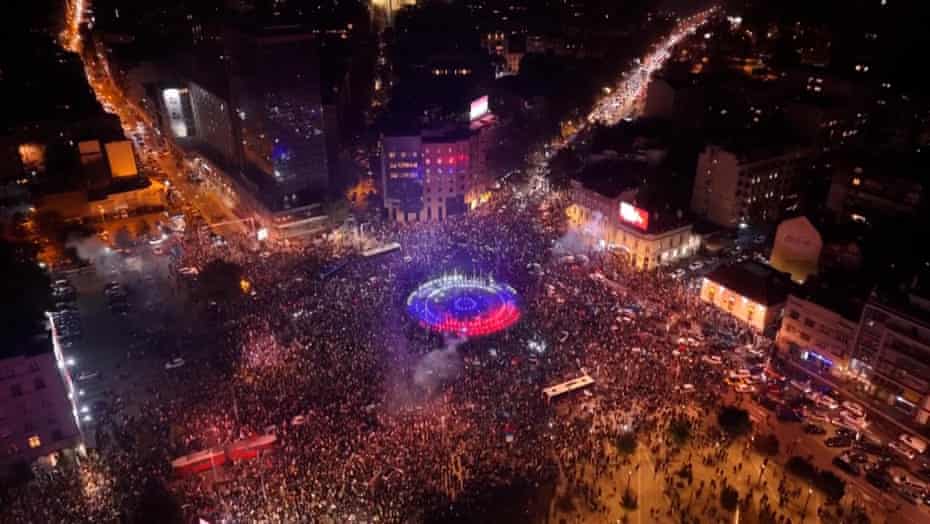
Serbia student election victory has triggered celebrations across Belgrade after the opposition Student List defeated Aleksandar Vučić’s ruling bloc, marking a dramatic political shift and raising hopes for democratic reforms, stronger institutions and greater media freedom.
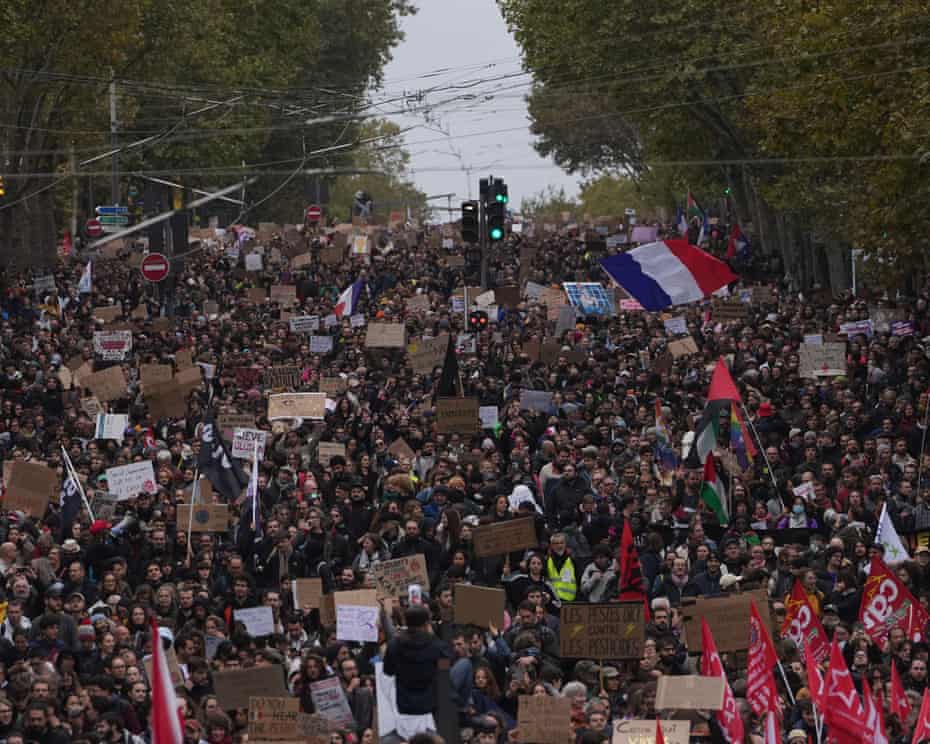
Thousands of jubilant supporters flooded the streets after Vučić conceded defeat in Sunday’s parliamentary election, ending a turbulent political chapter shaped by protests, allegations of authoritarianism and growing demands for accountability from the government.
The result represented a remarkable reversal for hundreds of thousands of demonstrators who had spent nearly two years challenging the ruling establishment through peaceful protests and demanding fundamental political changes.
One demonstrator captured the extraordinary moment, saying: “It’s very strange that on the very streets where the police beat us, on the streets where we retreated countless times in the face of the gendarmerie, we are now standing here as the victors.”
The celebrations reflected more than an electoral breakthrough. For many protesters, the outcome symbolised the possibility of reclaiming democratic institutions after years of political tensions, confrontations with security forces and concerns about government influence.
Serbia Student Election Victory Delivers Parliamentary Majority
Preliminary results indicated that the Student List secured a commanding lead over Vučić’s political bloc, positioning the student-backed opposition to take control of the country’s parliament.
With 96.9 per cent of polling stations processed, the Student List received 52.6 per cent of the votes, compared with 39.22 per cent for Vučić’s bloc, according to figures cited in the Guardian’s live coverage of the election.
The preliminary projection by the Centre for Elections and Democracy, known as CeSID, suggested that the Student List would secure 140 parliamentary seats, comfortably exceeding the 126 required for a majority.
Vučić’s bloc was projected to win 103 seats, while national minority parties were expected to occupy the remaining seven seats. No other political party crossed the three per cent electoral threshold.
The projected majority gives the incoming parliamentary bloc considerable influence over legislation, government formation and institutional reforms, although translating electoral success into lasting political change will require sustained commitment.
Voters Demand Accountability and Democratic Reforms
The result represents a significant setback for Vučić, whose political influence has dominated Serbian public life for years and attracted criticism from opponents concerned about democratic standards.
The election victory followed an extended period of student-led demonstrations, which mobilised citizens frustrated by government accountability, corruption concerns and the state of democratic institutions.
For the protesters, the ballot offered an opportunity to transform street demonstrations into political representation, creating a pathway for demands that had previously been expressed through marches and public gatherings.
However, the election result does not automatically resolve the challenges facing Serbia. The incoming authorities must still demonstrate their willingness to strengthen accountability, protect civil liberties and ensure that public institutions operate independently.
Election Monitors Identify Problems Despite Opposition Victory
Although the preliminary results favoured the Student List, election monitors identified several shortcomings that could undermine public confidence in the electoral process if left unresolved.
Raša Nedeljkov of Serbia’s Centre for Research, Transparency and Accountability, known as CRTA, said the presence of numerous domestic observers helped prevent manipulation at polling stations.
He explained that a record-high number of domestic observers participated in monitoring the vote, with approximately 15,000 involved, three times the number recorded in 2023.
According to Nedeljkov, ordinary citizens also participated in the administration of polling stations, helping improve scrutiny and reduce opportunities for electoral interference.
He acknowledged the contribution of international observers but noted that their role differed from that of domestic monitoring organisations, particularly regarding the sustained observation of broader systemic abuses.
CRTA Calls for Urgent Electoral System Reform
Despite the improvements, Nedeljkov highlighted concerns involving voter identification, the use of ultraviolet lamps and the organisation of polling stations.
He called for urgent reforms, arguing that restoring public confidence in the electoral system must become a priority for the country’s incoming legislative and executive authorities.
“Re-establishing the integrity of elections should be among the top priorities of the new legislative and executive authority and seen as the foundation for the recovery of democratic institutions in Serbia,” he said.
Nedeljkov also warned that future elections must not be characterised by the misuse of public resources or attempts to control the flow of political information.
“Serbia should never again participate in elections that … were marked by the misuse of state and public resources,” he said.
He further raised concerns about attacks on the media, social media manipulation and attempts to discredit election observers, describing an environment in which political competition had been affected by unequal access to information.
According to Nedeljkov, state capture by Vučić’s ruling party continued to influence the electoral environment through alleged voter intimidation and state-media propaganda.
Read also: Houthis claim attacks on Saudi oil pipeline and Riyadh airport as Yemen conflict escalates
https://swiftreportnow.com/houthis-claim-attacks-on-saudi-oil-pipeline/
He illustrated the imbalance by pointing to Vučić’s extensive television appearances, saying: “You had one political leader [Vučić] who had public addresses in our media more than 500 times, on camera, live, on average 30 minutes. Give me a country in the world, except North Korea, that has this kind of [single-party] dominance in the media.”
His assessment underlined the importance of ensuring that future elections provide competing political movements with fair opportunities to communicate with voters.
International Leaders Welcome Serbia’s Political Shift
The Student List’s projected victory attracted congratulations from several European leaders, who described the result as an opportunity to strengthen democracy, improve accountability and advance Serbia’s relationship with Europe.
Ukraine’s President Volodymyr Zelenskyy welcomed the development, describing it as a new chapter in the country’s history and expressing hope for closer cooperation between Kyiv and Belgrade.
“There have been changes in Serbia – a victory of the Student List @studentblokade. And this is clearly a new chapter in the history of the country and its people,” Zelenskyy said.
He added that Ukraine hoped Serbia would continue respecting its people, statehood and independence while expanding cooperation between the two countries.
German Chancellor Friedrich Merz also congratulated the Student List, highlighting its emphasis on the rule of law, the fight against corruption and fundamental freedoms.
“We will actively support Serbia’s European path,” Merz said, signalling support for reforms that could strengthen the country’s European integration ambitions.
Sweden’s caretaker Prime Minister Ulf Kristersson similarly described the result as an opportunity to advance democracy, accountability and the rule of law.
Estonia’s Foreign Minister Margus Tsahkna also welcomed the outcome, saying the Serbian people had made their voices heard and expressing readiness to support stronger democratic institutions and media freedom.
Reporters Without Borders Welcomes Opportunity for Media Freedom
Press freedom organisation Reporters Without Borders welcomed Vučić’s defeat, describing it as a significant opportunity to improve conditions for independent journalism.
The organisation characterised the former president as a “press freedom predator” and praised journalists who continued working despite what it described as years of political oppression.
“The defeat of press freedom predator Aleksandar Vucic by the opposition movement Student List in the Sunday parliamentary election offers a historic opportunity to restore media freedom. RSF hails the courageous work of all journalists who resisted Vucic’s oppression for more than a decade,” the organisation said.
The statement highlighted the importance of protecting journalists, ensuring editorial independence and preventing political authorities from exercising disproportionate influence over public information.
For Serbia’s incoming authorities, rebuilding trust between the government, journalists and the public could become one of the most consequential tests of their democratic credentials.
Russia Watches Closely as Serbia Prepares for Change
Moscow has also reacted to the election outcome, expressing hope that Serbia’s incoming leadership would recognize the benefits of maintaining cooperation with Russia.
The Kremlin said it hoped the country’s new rulers would understand that continued engagement with Moscow served Serbia’s national interests.
Vučić had maintained close relations with Russia despite the full-scale invasion of Ukraine, frequently advocating dialogue and preserving ties with Moscow even as relations between Russia and European governments deteriorated.
The Student List’s victory could change the tone of Serbia’s foreign relations, but a dramatic policy reversal is not guaranteed.
Serbia maintains important economic and energy connections with Russia, while public opposition to sanctions against Moscow remains substantial.
More than 60 per cent of the Serbian public reportedly opposes imposing sanctions on Russia, complicating any attempt by a new administration to pursue a substantially different approach.
The Student List’s manifesto also indicated that it intended to preserve Serbia’s traditional partnership with Russia and oppose punitive measures against Moscow.
Consequently, the election may produce changes in diplomatic style without necessarily ending the country’s established economic and energy relationships.
Serbia Faces Challenge of Turning Victory Into Lasting Change
The projected parliamentary majority gives the Student List an opportunity to translate public dissatisfaction into institutional reform, but the scale of expectations creates considerable pressure.
Restoring electoral integrity, confronting corruption, protecting media freedom and strengthening the independence of public institutions will require more than campaign promises or celebratory speeches.
The incoming authorities must also demonstrate that political power can change hands without institutions becoming instruments of another dominant political movement.
The election monitors’ preliminary findings suggest that strengthening electoral administration should remain an immediate priority, particularly regarding voter identification, transparency and safeguards against the misuse of public resources.
Meanwhile, international support could help Serbia pursue democratic reforms and deepen its European relationships, provided domestic political leaders maintain a clear commitment to accountability and fundamental freedoms.
For the citizens who spent nearly two years protesting, the election represents a remarkable achievement. Yet their greatest test may begin after the celebrations end.
Serbia student election victory has created an opening for political transformation, but its lasting significance will depend on whether the incoming leadership delivers credible reforms, protects democratic freedoms and restores public confidence in government.
About The Author