
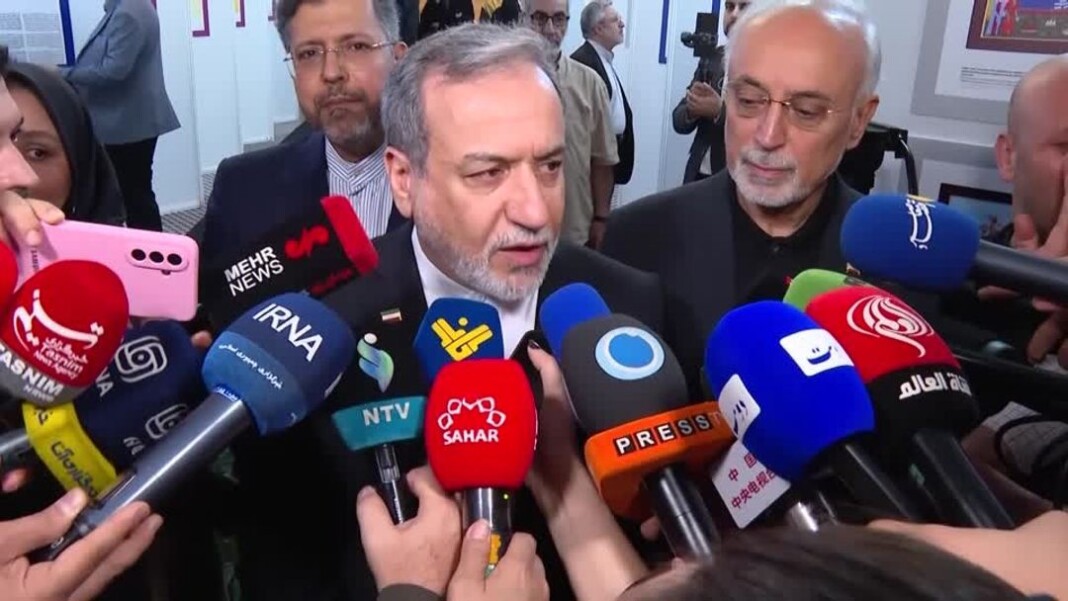

Iran ties Hormuz reopening to US concessions as Tehran says the strategic waterway will not fully reopen until Washington meets several demands, including compensation, sanctions relief and an end to military threats.
Iran Sets Conditions For Hormuz Reopening
Iran has linked any Hormuz reopening to concessions from the United States, raising fresh uncertainty over when commercial vessels can safely resume normal passage through the crucial maritime route.
Iranian Foreign Minister Abbas Araqchi said an agreement with Oman concerning new shipping lanes through the Strait of Hormuz was approaching its final stage.
However, Tehran has made clear that an agreement with Oman alone would not automatically lead to the reopening of the waterway.
Araqchi said the proposed arrangement would establish shipping routes to be used after Washington satisfies conditions set by Tehran.
According to Reuters, Iran and Oman are close to finalising arrangements intended to facilitate safer shipping through the strait, but Iran insists that wider issues with the United States must first be addressed.
Tehran Demands US Compensation
One of Iran’s most significant demands is compensation from the United States for damage Tehran says was caused by American attacks.
Araqchi said the reopening of the strategic waterway would depend partly on Washington providing compensation for the destruction caused during the conflict.

Iran’s position places the Strait of Hormuz at the centre of a broader diplomatic confrontation involving military action, sanctions, maritime restrictions and competing security demands.
Tehran has also demanded an end to further American threats and military action against Iran.
Mohammad Baqer Zolqadr, secretary of Iran’s top national security body, listed several additional conditions that Washington would have to address.
These include lifting sanctions, releasing frozen Iranian assets, ending what Tehran describes as aggression against its regional allies and removing the US naval blockade in the Gulf.
Trump Says US Is ‘Low-Keying’ Iran
Washington And Tehran Remain Apart
Despite the diplomatic messages being exchanged through intermediaries, Iran and the United States are not holding direct negotiations.
Araqchi said Tehran would not enter direct talks while Washington continues to violate what Iran considers an interim agreement reached in June.
The diplomatic stalemate leaves the proposed Hormuz reopening dependent on a complicated sequence of political and security decisions.
US President Donald Trump, meanwhile, described Washington’s approach to Iran as limited and cautious.
“We are only semi-negotiating with them,” Trump said, adding that the United States was watching Iran’s economic difficulties.
His comments suggest that Washington does not currently view the situation as requiring a full-scale return to direct negotiations.
For Tehran, however, the conditions go beyond the immediate question of shipping.
Iran wants guarantees concerning military pressure, sanctions, frozen assets and the wider regional conflict before allowing the waterway to return to normal commercial operations.
Hormuz Shipping Deal Faces Practical Challenges
New Shipping Lanes Could Reshape Gulf Traffic
The proposed arrangement with Oman could establish specific shipping lanes for vessels seeking to enter or leave the Gulf through the Strait of Hormuz.
But the proposed system faces practical questions from the international shipping industry.
Earlier discussions indicated that the arrangement could give Iran significant control over vessel traffic entering the Gulf through the strait.
Shipping sources have questioned whether such a system would be workable for commercial operators.
That uncertainty could continue to affect energy markets even if Iran and Oman formally announce an agreement.
The Hormuz shipping deal is therefore about more than reopening a waterway. It could determine how vessels are screened, directed and protected in one of the world’s most important energy corridors.

The United States has also indicated that its own actions would be linked to Iran’s implementation of its commitments.
A US official said Washington would lift its blockade of Iranian ports once commercial shipping could resume without impediments under the agreed arrangement.
Regional Attacks Add To Hormuz Uncertainty
The situation has been complicated further by attacks involving Iran and its regional allies.
The United Arab Emirates recently accused Iran of attacking a vessel associated with its state oil company.
Iran did not immediately comment on that allegation, while its Revolutionary Guard has previously attacked vessels it accused of attempting to cross the strait without Iranian permission.
Meanwhile, Houthi attacks have increased pressure on another crucial maritime route connecting the Red Sea and Gulf of Aden.
Houthis Target Saudi Arabia
The Iran-linked regional tensions have extended into Yemen, where the Houthis have targeted shipping and declared what they described as a naval blockade against Saudi Arabia.
The group said it attacked Saudi Aramco’s Jazan refinery, although Saudi authorities reported that a fire at the facility was extinguished without injuries and did not immediately attribute its cause.
The development came shortly after Saudi Arabia signed a defence agreement with Turkey and Pakistan amid growing regional instability.
Turkey’s Foreign Minister Hakan Fidan said the new alliance was not aimed specifically at Iran, describing it instead as a broader commitment to regional security.
Fighting has also intensified in Yemen.
Yemeni military authorities said a Houthi attack on the Red Sea port city of Mocha killed seven people, including military personnel and civilians.
The military said air defences intercepted 11 drones involved in the attack.
What Iran’s Hormuz Demand Means For Global Shipping
The Strait of Hormuz remains strategically important because of its role in the movement of oil and gas from the Gulf.
Any prolonged disruption can create uncertainty for energy traders, shipping companies and countries dependent on Gulf energy supplies.
That makes the question of Hormuz reopening considerably larger than a bilateral dispute between Iran and the United States.

The proposed agreement with Oman could provide a framework for restoring maritime traffic, but Tehran’s insistence on additional American concessions means the diplomatic process remains fragile.
For international shippers, the central question is whether any agreement will provide predictable and secure passage rather than simply create another temporary arrangement.
For Washington, the challenge is balancing pressure on Iran with the need to protect international shipping and energy flows.
For Tehran, reopening the waterway without receiving concessions could undermine its negotiating position.
A Delicate Path Ahead
Iran’s latest position therefore leaves the Strait of Hormuz caught between diplomacy and confrontation.
Read also: Spain checks 200 Italy arrivals in border controls after migration row
An Oman-mediated shipping arrangement may be nearing completion, but the broader conditions demanded by Tehran could determine whether the deal actually translates into unrestricted commercial traffic.
Until those disputes are resolved, hopes for a swift Hormuz reopening remain uncertain.
The coming negotiations could determine not only when vessels return to normal passage but also how maritime security and political influence are managed across the Gulf.


