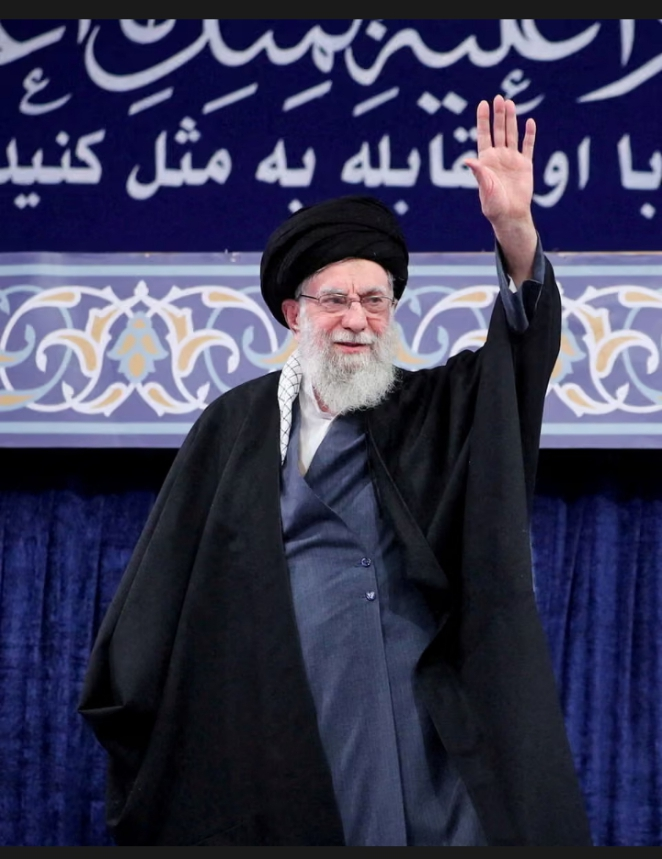
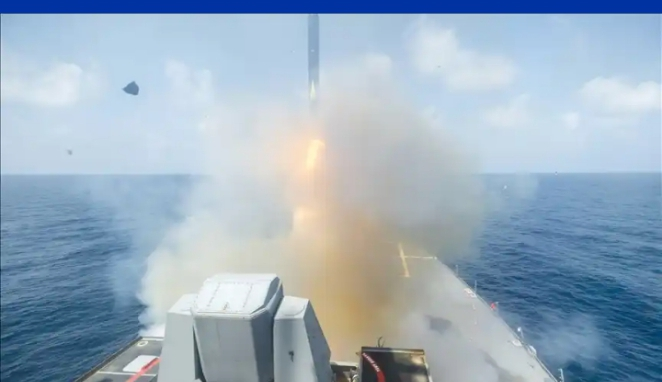
Tensions inside Iran’s political and religious establishment have surged as Iran succession rumours swirl around key figures in the Islamic Revolutionary Guard Corps and parliament.
Among those at the center of attention are Ahmad Vahidi, a senior security official, and Hossein Taeb, recently appointed to a commanding role in the Islamic Revolutionary Guard Corps.
Taeb, who formerly led the IRGC Intelligence Organisation, is seen as a hardline figure with extensive influence in shaping internal security policies.
Alongside them, Mohammad Bagher Ghalibaf, the speaker of parliament and former IRGC commander, wields considerable sway in legislative matters that intersect with Iran’s political hierarchy, underscoring the growing prominence of IRGC leadership in national decision-making.
Much of the speculation revolves around Mojtaba Khamenei, whose potential succession has been debated for over a decade.
Critics argue that a hereditary transfer of power would challenge the Islamic Republic’s revolutionary principles, which mandate that the Assembly of Experts selects the most qualified candidate to serve as supreme leader.
Reformists have consistently resisted such moves. In 2022, Mir Hossein Mousavi highlighted the persistent rumours, stating, “News of this conspiracy have been heard for thirteen years. If they are not truly pursuing it, why don’t they deny such an intention once and for all?”
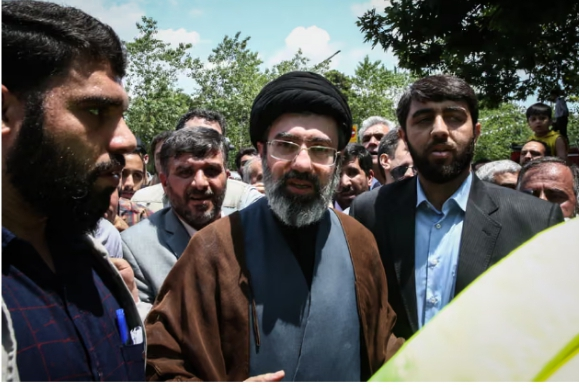
His comments reflect ongoing scepticism about the influence of entrenched security and political elites over succession decisions.
The Assembly of Experts, the clerical body constitutionally empowered to select the supreme leader, has responded to speculation by dismissing doubts as “meaningless” and emphasizing its commitment to choosing only “the most qualified and the most suitable” candidate.
This institutional assurance comes as the building in Qom, one of Shia Islam’s principal seats of power and associated with the assembly, was reportedly struck by Israeli forces.
According to IRGC-affiliated media, the building was empty during the Israeli strike Qom, but the attack nonetheless heightened concerns over regional instability and the vulnerability of Iran’s key leadership centres.
Analysts note that figures such as Vahidi, Taeb, and Ghalibaf, who straddle the military, intelligence, and political spheres, are likely to play pivotal roles in any transition period.
Their positions within IRGC leadership and parliament ensure that they remain central to both security and political decision-making, reinforcing their influence amid Iran succession rumours.
The speculation surrounding Mojtaba Khamenei further underscores how succession debates are intertwined with domestic power dynamics, security priorities, and Iran’s broader regional challenges.
As tensions with Israel and other adversaries rise, the interplay between the Assembly of Experts, the IRGC, and senior political figures will continue to shape the country’s political trajectory, highlighting the fragility and complexity of Iran’s succession landscape.
The renewed focus on Iran succession rumours comes at a time when internal factionalism is becoming increasingly visible. Hardline conservatives and reformists continue to clash over the concentration of power within the IRGC leadership and the potential influence of Mojtaba Khamenei over future policy directions.
Observers note that the alignment between military elites like Vahidi and Taeb and key political figures such as Ghalibaf suggests a consolidation of authority that could marginalize reformist voices, even as the Assembly of Experts publicly asserts its independence in selecting the supreme leader.
The delicate balance between institutional procedure and political reality remains a central concern for both domestic stakeholders and international analysts monitoring Iran’s strategic trajectory.
Regional implications of these internal developments are also significant. The Israeli strike Qom, while not causing casualties, highlights the vulnerability of critical political and religious sites amid rising tensions in the Middle East.
Security analysts warn that any miscalculation could escalate hostilities and further complicate succession debates, placing additional pressure on IRGC leadership to assert stability.
Meanwhile, international scrutiny of the Assembly of Experts’ decisions continues, as foreign governments and observers attempt to gauge the future of Iran’s leadership amid speculation over Mojtaba Khamenei’s role.
Read also: Trump under fire from Democrats, Israel pounds Lebanon
These dynamics underscore how succession discussions are not purely internal matters but are deeply intertwined with regional security, military posture, and the perception of Iran’s governance on the global stage.
About The Author