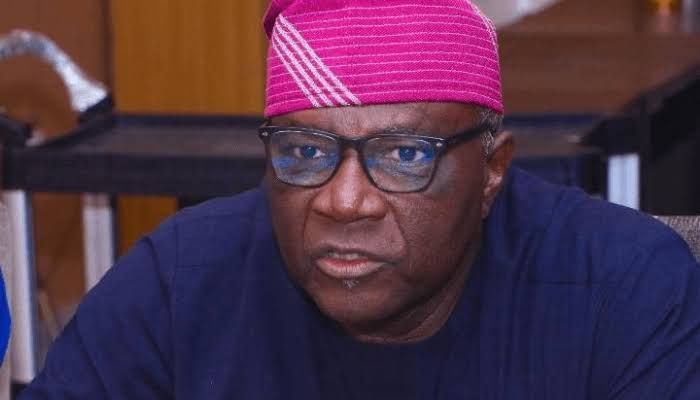
Former Chief of Staff to the late President Muhammadu Buhari, Professor Ibrahim Gambari, has offered fresh insight into one of the most debated political questions ahead of the 2023 presidential election — whether Buhari secretly endorsed a successor.
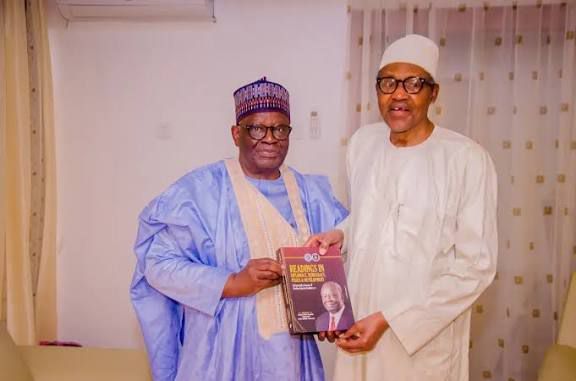
Speaking during an interview on Channels Television’s Politics Today, Gambari stated unequivocally that Buhari did not anoint or favour any individual to take over from him, despite widespread speculation within political circles at the time.
According to him, the president made his position clear directly to all 19 northern state governors in a private meeting.
Gambari explained that the discussion occurred after the northern governors had collectively resolved that power should rotate to the South in line with Nigeria’s informal zoning arrangement.
The governors had not only agreed internally but had also signed a declaration openly supporting a southern presidency ahead of the 2023 polls.
Following that decision, the governors requested a meeting with Buhari to seek clarification on a sensitive issue — whether the president had a preferred successor whom they were expected to support.
According to Gambari, Buhari’s response was firm and unambiguous.
“He did not believe he should impose or anoint any candidate,” Gambari said, stressing that Buhari deliberately chose not to interfere in the succession process.
Recounting how the meeting was initiated, Gambari said Buhari initially asked why the governors wanted to see him.
When informed that they were seeking guidance on whether he had a chosen candidate, Buhari reportedly made it clear that the decision was not his to make.
Gambari, who was present throughout the meeting, said he could only speak based on what he personally witnessed, noting that the governors themselves were living witnesses to Buhari’s position on the matter.
The revelation sheds new light on the Buhari succession debate, which dominated political discourse in the build-up to the All Progressives Congress (APC) presidential primaries in 2022.
At the time, rumours were rife that Buhari quietly backed certain aspirants, fuelling internal party tensions and speculation across the country.
Several high-profile figures contested the APC ticket, including former Minister of Transportation Rotimi Amaechi and former Vice President Yemi Osinbajo, both of whom were widely believed to enjoy varying degrees of presidential goodwill. However, Gambari’s account suggests that Buhari intentionally stayed neutral.
Instead of backing a specific individual, Buhari appeared more concerned with ensuring a smooth transition of power and preserving party unity, particularly after northern leaders had publicly committed to a southern presidency.
That neutrality, however, did not stop intense lobbying and political manoeuvring within the APC.
The party’s presidential primary in June 2022 became one of the most competitive in Nigeria’s history, culminating in the emergence of Bola Ahmed Tinubu, former Lagos State governor and long-time party leader, as the APC flagbearer.
Tinubu later went on to win the 2023 presidential election, defeating Atiku Abubakar of the Peoples Democratic Party (PDP) and Labour Party candidate Peter Obi in a fiercely contested race.
Gambari’s comments appear aimed at correcting what he described as persistent misconceptions about Buhari’s role in the transition.
According to him, Buhari deliberately avoided influencing the outcome, believing that democracy within the party should be allowed to take its course.
Political analysts say the clarification is significant, especially given the continued debates over zoning, regional balance, and internal party democracy.
The Buhari succession issue has remained a reference point in discussions about leadership transitions and elite consensus in Nigeria’s political system.
Observers also note that the northern governors’ early endorsement of a southern presidency played a critical role in shaping the political landscape ahead of the election.
Their collective stance helped calm tensions over power rotation and reinforced the expectation that the North would relinquish power after eight years of Buhari’s presidency.
Gambari’s account further underscores Buhari’s leadership style — one marked by restraint in party politics, even when pressure mounted from political allies seeking direction.
As Nigeria reflects on the 2023 transition, the former Chief of Staff’s revelations offer a rare insider perspective on how key decisions were made behind closed doors and why Buhari chose to distance himself from the contest.
In the end, the Buhari succession narrative, as told by Gambari, suggests that the former president prioritised institutional process over personal preference — a decision that continues to shape political conversations long after his exit from office.
Ireport247news