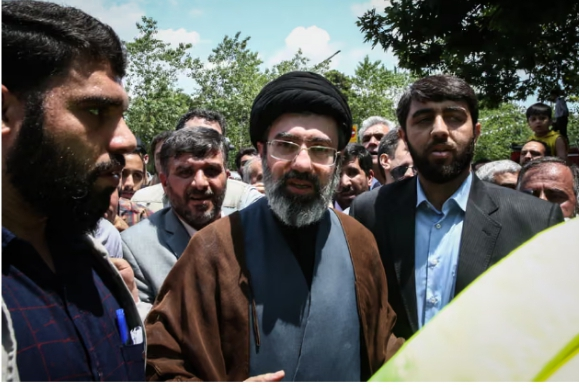
Iran state funeral for Khamenei postponed amid overwhelming demand, according to a report by Tasnim News Agency, which cited officials in Tehran as saying preparations need to be expanded to accommodate the scale of expected attendance.
The ceremony for Ayatollah Ali Khamenei had originally been scheduled to take place tonight in the Iranian capital, drawing thousands of mourners to the Tehran Grand Mosque. However, authorities announced a postponement, attributing the decision to what they described as “overwhelming demand” from across the country and the need to expand logistical infrastructure.
In a statement carried by Tasnim, the Islamic propagation coordination council of Tehran province said the delay was necessary to ensure adequate infrastructure and logistical arrangements for the anticipated crowds.
Officials emphasized that the level of interest in attending the ceremony exceeded initial projections, prompting a reassessment of venue capacity, crowd management strategies and safety protocols.
“The Tehran Grand Mosque was scheduled to host our dear people from tonight for a farewell to the pure body of the martyred cleric and our great Imam,” the statement said.
“But due to the overwhelming demand from across the country and the widespread desire of the people for a grand attendance at this ceremony, as well as the need to provide the necessary infrastructure, the event has been postponed.”
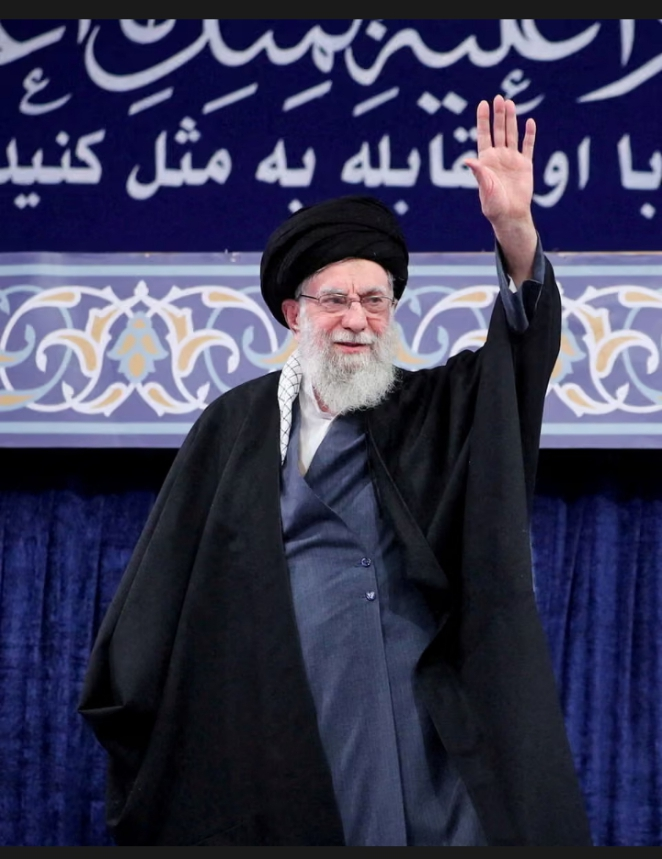
The council added that the high volume of requests to attend, combined with the need to prepare sufficient facilities to safely host large numbers of mourners, made it necessary to reschedule the event for a more suitable time. No revised date was immediately announced in the report, though officials indicated that further details would be communicated once expanded arrangements are finalized.
The postponement underscores the magnitude of the moment for the Islamic Republic. As Iran’s supreme leader for more than three decades, Khamenei occupied the highest political and religious authority in the country. His passing marks the end of a significant chapter in Iran’s post-revolutionary history, and the state funeral is widely expected to serve as both a spiritual farewell and a reaffirmation of institutional continuity.
Large state funerals in Iran are carefully choreographed national events that blend religious ritual with political symbolism. They typically include prayers led by senior clerics, public processions, and addresses by leading officials.
Organizers must coordinate security forces, medical teams, transportation authorities and volunteer groups, particularly when attendance is expected to reach into the hundreds of thousands.
In this case, officials appear to have determined that the original plan centered on the Tehran Grand Mosque would not be sufficient to accommodate the anticipated crowds.
Expanding infrastructure could involve designating additional public spaces, establishing overflow areas with live broadcasts, reinforcing transportation networks and deploying more extensive crowd-control measures.
Tehran has previously witnessed massive public gatherings during moments of national significance. Roads leading into the capital often become congested as mourners travel from other provinces, sometimes arriving by bus convoys organized through local religious institutions. Ensuring that such movements occur safely requires coordination across multiple layers of government and security services.
The official explanation for the postponement focused squarely on public demand. By emphasizing the “widespread desire” of citizens to participate, authorities framed the delay as a practical step to guarantee inclusive access rather than a disruption. Such messaging is likely intended to reinforce a narrative of unity and collective mourning.
At the same time, analysts note that the broader regional climate may add complexity to planning. Iran has been navigating heightened tensions with external adversaries, and any major gathering in the capital inevitably raises security considerations.
While the statement did not reference security threats, large-scale events in politically sensitive periods typically involve heightened alert levels.
Religious scholars inside Iran have described the funeral as a moment of national reflection. Mosques across the country have reportedly been preparing to hold parallel ceremonies, allowing those unable to travel to Tehran to pay their respects locally.
In past instances of national mourning, cities such as Mashhad, Qom and Isfahan have hosted significant commemorative events, drawing large congregations.
The decision to postpone rather than proceed with limited attendance suggests that organizers anticipate turnout far exceeding the capacity of a single central venue. Expanding preparations may also involve coordination with state broadcasters to ensure nationwide live coverage, enabling millions more to follow the ceremony remotely.
Khamenei’s leadership spanned critical periods in Iran’s modern history, including regional conflicts, nuclear negotiations and shifting domestic political dynamics.
As supreme leader, he served as commander-in-chief of the armed forces and held ultimate authority over key state institutions. His funeral is therefore expected to carry deep political resonance, symbolizing both an end and a transition.
International reaction to the news of the postponement has so far been muted, with foreign governments awaiting confirmation of a new schedule.
Diplomatic delegations often attend high-profile state funerals, and any revised date could influence travel plans for officials considering participation.
Within Iran, images broadcast by state media showed preparations underway in central Tehran before the postponement was announced. Workers had been seen arranging seating areas and installing sound systems around the mosque complex.
The decision to delay suggests that planners concluded additional space and facilities were required to manage the anticipated influx.
Public mourning rituals in Iran often include recitations of prayers, distribution of food and water to attendees, and processions carrying symbolic banners. Volunteers typically play a major role in assisting elderly mourners and directing crowds. Scaling such efforts upward requires time and resources, which officials now appear determined to secure before proceeding.
The Islamic propagation coordination council indicated that the ceremony would be held “at a more suitable time,” though it did not specify whether the venue would remain the same or be moved to a larger open area. In previous national events, authorities have utilized expansive public squares or major thoroughfares to accommodate vast crowds.
Read also: Trump orders action to safeguard uninterrupted energy transit amid Middle East crisis
For many Iranians, attending the funeral in person is viewed as both a religious duty and a civic gesture. Expressions of mourning are often intertwined with affirmations of loyalty to the state’s foundational ideals. Ensuring that as many citizens as possible can participate may therefore be considered a priority for organizers.
As the country awaits a revised schedule, attention remains focused on Tehran. Transportation hubs are expected to experience increased traffic once a new date is announced, and authorities will likely issue guidance regarding routes, security checkpoints and recommended arrival times.
While the postponement represents a logistical adjustment, it does not diminish the scale of the planned observances. On the contrary, officials’ emphasis on overwhelming demand suggests that the eventual ceremony could surpass initial expectations in both attendance and visibility.
Further announcements are anticipated in the coming hours or days, providing clarity on timing and arrangements. Until then, preparations continue behind the scenes, with organizers working to ensure that the rescheduled event reflects the magnitude of the moment in Iran’s political and religious history.
About The Author