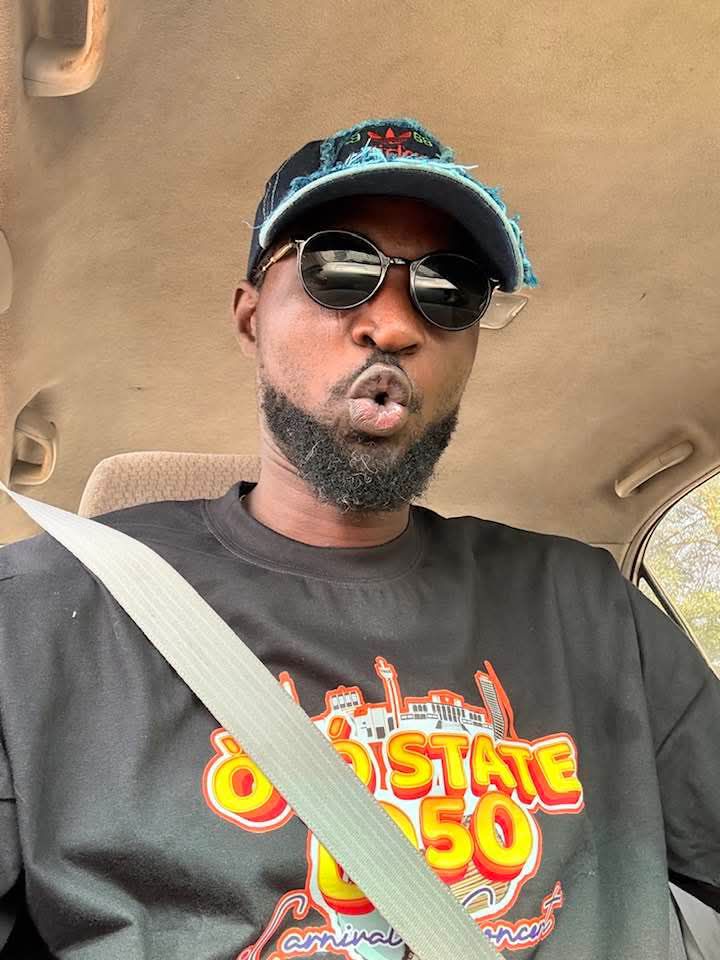
Idris Animasaun, an architect and advocate for social change, has voiced serious concerns about the selective enforcement of road safety regulations in Nigeria, describing it as biased and inconsistent.
In a letter to the Nigerian Tribune, Animasaun highlighted the growing credibility gap in the nation’s road safety system.
He wrote, “The challenge with road safety enforcement in Nigeria is not the absence of laws but the selective manner in which they are applied.
“Across cities, private car owners are routinely stopped, fined, and scrutinised, while commercial vehicle operators—who transport far more passengers and pose a greater collective risk—often operate with minimal oversight.”
He noted that this imbalance has fostered a distorted culture of enforcement. In Ibadan, the capital of Oyo State, tricycle (Keke) and Micra drivers are frequently treated as untouchable within the road safety ecosystem.
Overloading, unsafe vehicle conditions, and reckless driving practices have become normalized—not because they are acceptable, but because enforcement rarely reaches them with the same rigor applied to private motorists.
The consequences, Animasaun explained, are evident daily. Vehicles meant for a limited number of passengers are often stretched far beyond capacity: two passengers crammed into a front seat designed for one, or three or more squeezed into a back seat intended for two.
Tricycles and Micras are routinely loaded with goods, fuel containers, building materials, livestock, and other unsafe items, transforming them into mobile hazards.
He posed a critical question to the public: what is the most dangerous overload you have witnessed a Micra or Keke carry, and why was it allowed on the road?
Adding to the problem, commercial operators have learned to exploit enforcement loopholes.
Many deliberately shift heavy and unsafe operations to evenings and late nights, fully aware that most road safety officials work fixed daytime hours.
“When enforcement confines itself to office hours, lawlessness simply waits until the office doors close,” Animasaun observed.
He argued that road safety cannot thrive on selective courage.
“As long as enforcement targets only the easy cases while ignoring systemic risks, lives will continue to be lost unnecessarily.
“True reform requires honesty about where the real dangers lie, and the courage to enforce laws evenly, consistently, and without fear or favour,” he stressed.
Animasaun concluded with a sobering reflection: “Until then, we must ask ourselves—are we truly managing road safety, or are we merely performing it?”
Ireport247news
About The Author