The Hezbollah-Israel escalation widens dramatically as cross-border attacks intensify and Israeli airstrikes pound targets across Lebanon, including densely populated districts of Beirut. After days of mounting tensions, both sides appear to be moving beyond limited retaliation toward a sustained confrontation that is reshaping the security landscape along the Israel-Lebanon frontier.
The Lebanese armed group Hezbollah continued targeting northern Israel with salvoes of rockets and what it described as suicide drones aimed at military bases and gatherings of troops.
Hezbollah-affiliated media outlets claimed responsibility for striking three Israeli Merkava tanks that had entered southern Lebanon and for downing an Israeli drone in Lebanese airspace.
The claims could not be independently verified, but they reflect the scale and ambition of the group’s operations as hostilities deepen.
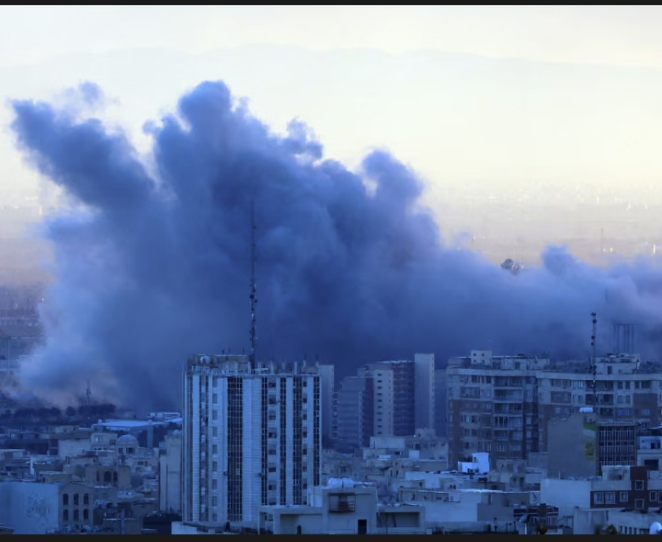
In response, Israel launched wide-ranging Beirut airstrikes and strikes elsewhere in southern Lebanon, targeting what it described as Hezbollah infrastructure and command nodes.
Explosions rattled the Lebanese capital into the early hours of Wednesday, sending plumes of smoke over residential districts and shattering windows in neighborhoods already scarred by previous rounds of violence.
Residents reported sleepless nights as jets roared overhead and successive blasts echoed across the city.
One of the most controversial strikes hit a hotel in Hazmieh, south-east of Beirut, approximately 700 metres from the presidential palace.
The attack, carried out without prior warning according to local witnesses, intensified fears that civilian sites are increasingly at risk. The suburb of Hazmieh, typically known for its commercial buildings and residential complexes, has now become part of the widening battlefield.
Lebanon’s health ministry announced that at least six people were killed in the latest wave of strikes, pushing the death toll since Monday to more than 50. Hospitals in the south and in Beirut reported being stretched by a steady influx of wounded civilians, including women and children.
Emergency crews worked through the night to extract survivors from damaged buildings, while residents scrambled to locate missing relatives amid the chaos.
The humanitarian consequences are mounting rapidly. Authorities said that at least 58,000 people have been displaced from their homes across southern Lebanon and parts of Beirut’s southern suburbs.
Schools have been converted into temporary shelters, and families are seeking refuge with relatives in safer areas.
A state of panic has gripped communities, with rumours of evacuation orders prompting mass departures from certain neighbourhoods, many of which later proved unfounded. Traffic gridlock clogged key highways as residents fled what they feared could become sustained bombardment.
The broader regional picture adds to the sense of volatility. A photograph circulated showing people standing next to an Iranian missile that fell near Qamishli International Airport in Syria. Although the precise circumstances surrounding the missile’s trajectory remain unclear, the incident underscores how multiple theatres are being drawn into the conflict.
The presence of Iranian-linked weaponry outside Lebanon and Israel illustrates the interconnected nature of the regional security architecture and the potential for spillover.
Military analysts warn that the Hezbollah-Israel escalation widens beyond symbolic exchanges and is beginning to resemble the early stages of a broader campaign.
Hezbollah’s use of coordinated rocket barrages and drones signals an effort to overwhelm Israeli air defences and stretch military resources. For Israel, the expansion of targets to include urban strongholds and strategic sites indicates a determination to degrade Hezbollah’s operational capacity decisively.
For civilians on both sides of the border, however, strategic calculations offer little comfort. Northern Israeli communities have faced repeated alerts and shelter orders as rockets streak overhead.
In Lebanon, particularly in the south and in Beirut’s densely populated suburbs, the psychological toll is palpable. Families who lived through previous wars fear a return to the kind of prolonged destruction seen in past conflicts.
The displacement crisis in southern Lebanon is particularly acute. Many of the affected towns rely on agriculture and small-scale commerce, both of which have been disrupted by ongoing shelling and the risk of further strikes.
Aid organisations are struggling to assess needs amid fluid security conditions. Access to some villages remains restricted due to ongoing hostilities and unexploded ordnance.
The strike near the presidential palace in Hazmieh has also sparked political controversy within Lebanon. Critics argue that targeting areas in close proximity to key state institutions risks undermining national stability at a moment when the country is already grappling with economic hardship and political paralysis.
Supporters of a firm response to Hezbollah, however, contend that Israel is deliberately applying pressure to disrupt what it views as entrenched militant infrastructure embedded within civilian areas.
Diplomatic efforts to contain the violence have so far yielded limited results. International actors have called for restraint, warning that the Hezbollah-Israel escalation widens the risk of a regional conflagration involving additional states and non-state actors. With tensions already high across the Middle East, the prospect of further escalation has raised alarm in foreign capitals.

Hezbollah’s claims of destroying Israeli Merkava tanks, if confirmed, would represent a symbolic victory for the group, reinforcing its narrative of deterrence and resistance. For Israel, maintaining operational superiority and preventing cross-border infiltration remain central objectives. The contest is not merely tactical but deeply political, tied to domestic pressures and long-standing rivalries.
Meanwhile, in Beirut, daily life has been profoundly disrupted. Businesses have shuttered in affected districts, and schools have suspended classes. Social media has become a primary source of real-time updates, though it has also amplified misinformation, contributing to the panic-driven evacuations witnessed in recent days.
Authorities have urged residents to rely on official channels and avoid spreading unverified claims.
The risk of miscalculation looms large. As each side responds to the other’s actions with increased force, the margin for error narrows. A strike that causes high civilian casualties, damages critical infrastructure, or inadvertently involves foreign personnel could tip the confrontation into an even more dangerous phase.
Read also: CIA working to arm Kurdish forces to spark uprising in Iran
For now, the Hezbollah-Israel escalation widens in both geographic scope and intensity. Southern Lebanon and northern Israel remain flashpoints, but the reverberations are being felt far beyond the immediate frontlines. The sight of an Iranian missile near Qamishli International Airport serves as a stark reminder that the conflict’s contours extend into neighbouring states, linking multiple arenas of instability.
Whether diplomatic channels can halt the slide toward a full-scale war remains uncertain. What is clear is that the current trajectory carries profound risks for civilians, regional stability, and an already fragile Middle Eastern order. As airstrikes continue and rockets fly, the human cost mounts, and the path back to de-escalation grows ever more complex.
Keyphrases List:
Hezbollah-Israel escalation widens,
Beirut airstrikes,
southern Lebanon displacement,
Israeli Merkava tanks,
regional war fears
About The Author