Hamas leadership vote is set to determine the group’s military and political direction as the Palestinian movement conducts internal elections at a moment widely described by analysts as existential.
The Hamas leadership vote is unfolding amid sustained Israeli military pressure, the devastation of Gaza, and growing international efforts to reshape post-war governance in the territory.
Reports indicate that voting has already taken place among Hamas members inside Gaza, while ballots are also being cast in the West Bank, Israeli prisons, and within the diaspora.
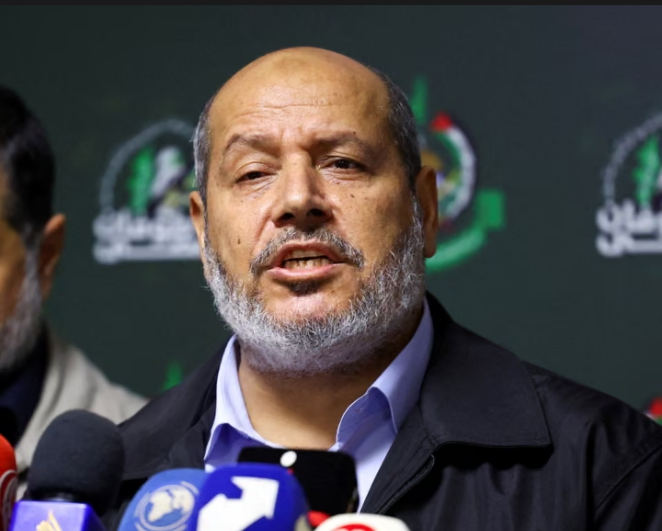
These votes will determine delegates to the movement’s 50-member Shura Council, the body responsible for selecting the politburo and appointing an interim leader. The process is expected to stretch over several weeks due to security concerns and operational secrecy.
The outcome of the Hamas leadership vote carries exceptional weight because much of the group’s senior leadership has been eliminated during the conflict.
Israeli operations have killed key figures including Yahya Sinwar, the group’s former Gaza leader, and Mohammed Deif, its long-time military chief. The loss of these figures has forced Hamas to reassess both its command structure and its long-term strategy.
Two senior figures are widely viewed as frontrunners. Khalil al-Hayya is seen as representing continuity with Hamas’s hardline posture.
Though not a military commander, he is regarded as closely aligned with the Gaza leadership and with Iran, one of the movement’s principal regional backers.
Analysts describe him as favoring armed resistance as the core of Hamas’s identity. “For this camp, giving up weapons would be seen internally as defeat,” one regional observer said.
The alternative path is represented by Khaled Meshaal, a founding member of Hamas and its longest-serving leader. Meshaal, who has operated largely from exile in recent years, is viewed as more pragmatic and politically flexible.
Analysts say he may push for a long-term political arrangement with Israel, short of formal recognition, and possibly renewed engagement with the Palestinian Authority.
“Meshaal believes Hamas must adapt to survive,” said a former Israeli intelligence official. “Otherwise, it risks being sidelined entirely.”
The leadership decision will also shape Hamas’s response to international diplomacy, including a US-backed Gaza plan associated with President Donald Trump.
The proposal reportedly envisions a technocratic Palestinian body administering Gaza while overseeing Hamas’s gradual disarmament. While some Hamas figures have signaled openness to relinquishing heavier weapons under certain conditions, fighters on the ground are expected to resist surrendering personal arms.
Despite severe losses, Hamas has been working to reassert administrative control in Gaza during the current ceasefire. Reports suggest the group has resumed tax collection on goods entering the territory and replaced local officials in ministries and districts, signaling an effort to remain a central governing actor regardless of the leadership outcome. “This is about survival, not just ideology,” a regional security source said.
Public sentiment in Gaza remains deeply conflicted. Anger over the destruction caused by the war has not necessarily translated into rejection of Hamas among its membership, raising questions about how far grassroots opinion will influence the final outcome of the Hamas leadership vote.
“There is enormous frustration,” said a Middle East analyst based in Washington. “But frustration does not automatically produce political alternatives.”
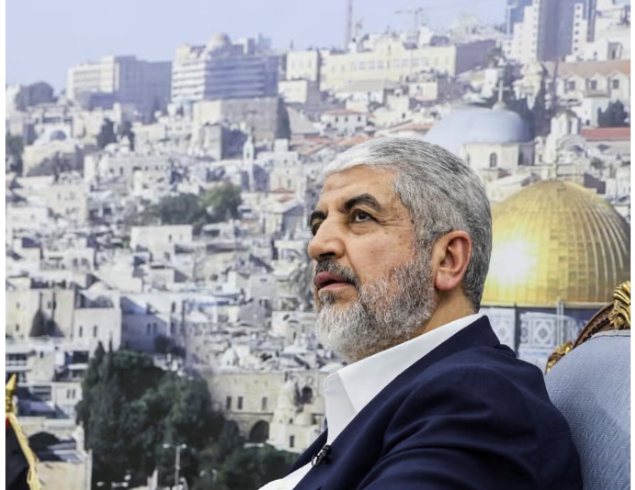
Security remains a defining feature of the process. The vote is being conducted under extreme secrecy due to the risk of assassination, with senior roles increasingly viewed as life-threatening positions. “Who wants to lead Hamas now, knowing they are likely already on a hit list?” one analyst asked.
As the process continues, the Hamas leadership vote is increasingly seen as a turning point that will determine whether the movement doubles down on armed resistance, pivots toward political accommodation, or attempts an uneasy balance between the two in a radically altered regional landscape.
Read also: RSF drone strike in Sudan kills three aid workers, wounds four in Kordofan
About The Author