Gaza Rafah crossing reopens for limited traffic, marking a significant development for residents awaiting movement, humanitarian access, and medical evacuations after months of restricted border operations.
The Rafah border crossing connects Gaza with Egypt and remains the only exit point that does not pass through Israeli-controlled territory, making its reopening symbolically and practically important.
Officials confirmed that the crossing resumed operations on Monday, allowing carefully managed entry and exit for civilians under strict coordination between Egyptian and Israeli authorities.
An Israeli security official stated that the reopening enables movement of residents for both departures from Gaza and returns, following procedures outlined in ceasefire arrangements.
The reopening follows prolonged closure during intense fighting, which left thousands of Palestinians stranded and limited humanitarian deliveries into the besieged coastal enclave.
Rafah has long served as a critical gateway for aid convoys, medical teams, and patients seeking life-saving treatment unavailable inside Gaza’s damaged healthcare system.
According to regional officials, only limited traffic is currently permitted, with priority given to humanitarian cases and individuals approved through established coordination mechanisms.
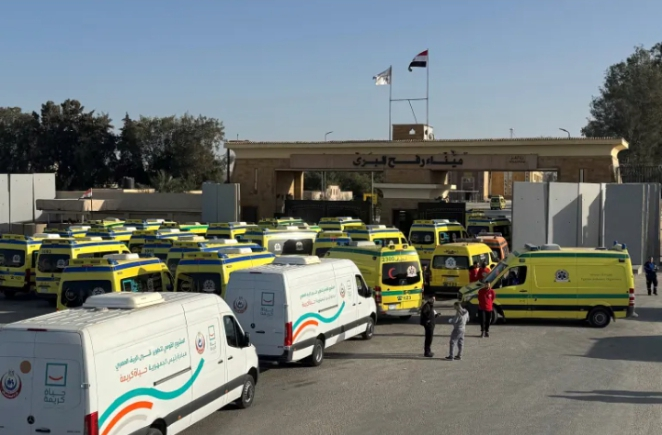
Ambulances were seen waiting on the Egyptian side of the crossing, underscoring the urgency surrounding medical evacuations for wounded and critically ill patients.
Health authorities in Gaza say many hospitals remain overwhelmed, with shortages of fuel, medicines, and specialized equipment following months of bombardment and infrastructure damage.
The reopening is tied to the second phase of a ceasefire brokered by the United States, which halted active hostilities between Israel and Hamas in October.
That agreement outlined steps aimed at easing humanitarian conditions, including restoring limited border access and facilitating aid flows under international monitoring.
Diplomatic sources say Egypt played a central role in mediating arrangements for Rafah, coordinating with international partners and security officials on both sides.
Egypt has historically controlled the Rafah crossing and considers stability there essential for regional security and humanitarian management along its northeastern border.
For Gaza residents, the reopening represents cautious relief after extended isolation that prevented travel for education, medical treatment, and family reunification abroad.
Many Palestinians had been registered for travel before the conflict escalated, leaving applications frozen and families separated for months without clear timelines.
Aid organizations welcomed the announcement but warned that limited traffic would not meet the scale of Gaza’s humanitarian needs without further expansion.
The United Nations has repeatedly emphasized that unrestricted humanitarian access is necessary to address food insecurity, displacement, and public health risks across Gaza.
International relief agencies say thousands of trucks carrying aid remain queued, awaiting clearance to enter through Rafah and other crossings.
Food supplies in Gaza have been critically low, with residents relying heavily on aid distributions amid disrupted agriculture and collapsed local markets.
Water infrastructure damage has worsened sanitation conditions, raising fears of disease outbreaks in densely populated shelters and temporary camps.
Medical evacuations through Rafah are considered vital, as many patients require complex surgeries or treatments unavailable due to damaged facilities and shortages.
Doctors in Gaza have described performing procedures without adequate anesthesia, electricity, or sterile environments, highlighting the humanitarian urgency.
The limited reopening also has political significance, reflecting fragile confidence-building measures under the ceasefire framework.
Analysts note that sustained operation of Rafah will depend on continued compliance with ceasefire terms and security assurances demanded by Israel.
Israeli officials have insisted that crossings remain subject to inspections to prevent weapons transfers, a key concern raised throughout the conflict.
Hamas has welcomed the reopening but called for full and permanent access, arguing that partial measures fall short of civilian needs.
Residents traveling through Rafah face extensive screening and documentation checks, contributing to slow movement and long waiting periods.
Families waiting on both sides of the border expressed cautious optimism, hoping the reopening signals broader easing of restrictions.
Egyptian authorities have increased security presence near the crossing to manage flows and prevent disorder as traffic resumes.
Regional observers say Rafah’s operation often reflects the broader political climate surrounding Gaza and ceasefire negotiations.
Past closures have frequently followed security incidents or breakdowns in talks, making sustained access uncertain.
The current reopening comes amid ongoing diplomatic efforts to stabilize the ceasefire and advance negotiations on longer-term arrangements.
International pressure has mounted on all parties to prioritize humanitarian considerations over political and military objectives.
Western governments and regional actors have urged expanded access, warning that humanitarian collapse could destabilize neighboring countries.
For Gaza’s economy, even limited border movement offers a lifeline, enabling some trade, employment opportunities, and supply replenishment.
Read also: Russian drone attack on bus carrying mine workers in Ukraine leaves nation in mourning
Small businesses inside Gaza have struggled to operate due to shortages of raw materials and unreliable electricity.
Aid officials caution that without consistent border access, reconstruction efforts will remain stalled despite international pledges.
Rebuilding homes, hospitals, and schools requires sustained inflows of construction materials currently restricted under security controls.
The Rafah crossing’s status will likely remain a key indicator of ceasefire durability in the coming weeks.
Any disruption could quickly reverse humanitarian gains and intensify civilian suffering, aid groups warn.
For now, the reopening provides a measure of hope to a population exhausted by conflict and isolation.
Whether that hope translates into lasting relief depends on political will, security cooperation, and continued international engagement.
About The Author