

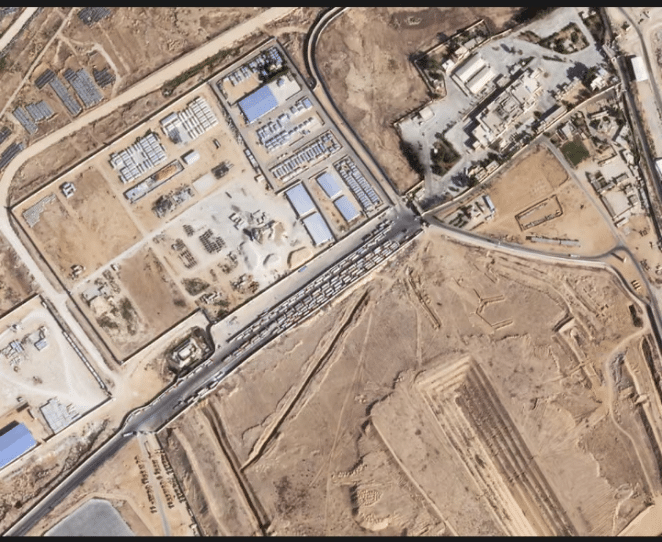
The Rafah border crossing between Gaza and Egypt will remain closed until further notice, Israel announced, complicating fragile efforts to uphold the ongoing Israel-Gaza ceasefire.
Officials confirmed that reopening the Rafah border crossing depends on Hamas returning all hostage remains under the terms of the ceasefire. This condition has now become central to negotiations.
The statement followed earlier reports from the Palestinian embassy in Cairo suggesting Rafah might reopen soon, raising false hopes for thousands trapped within the devastated enclave.
Israel’s government, led by Benjamin Netanyahu, said Hamas must first meet its obligations under the Israel-Gaza ceasefire, particularly regarding the recovery and return of deceased Israeli captives.
On Saturday, the Israeli military said the Red Cross received two sets of hostage remains as part of the current ceasefire mechanism, bringing the total to twelve.
The exchange process remains politically charged in both Israel and Gaza, with emotions running high among families desperate for closure after years of conflict and enduring loss.
The truce, brokered by regional mediators, includes terms on humanitarian aid deliveries, prisoner exchanges, and the reopening of essential crossings, notably the Rafah border crossing between Egypt and Gaza.
However, Israeli officials insist that Rafah will not reopen until Hamas complies fully with the ceasefire. This stance effectively prolongs the isolation of Gaza’s population.
For Palestinians, the prolonged closure of the Rafah border crossing means no access to Egypt for medical treatment, study, or family visits — a lifeline severed by ongoing restrictions.
Before the Gaza war, Rafah served as Gaza’s main passage to the outside world, especially for the sick and injured who depended on Egypt’s hospitals for survival.
Since May 2024, Israel has controlled Gaza’s side of the crossing. Its closure has left millions in worsening conditions amid deep shortages of medicine and fuel.
Aid agencies say the blockade undermines the Israel-Gaza ceasefire by worsening humanitarian suffering. Convoys of humanitarian aid remain stuck, with limited deliveries allowed through Israeli-controlled routes.
Palestinian health authorities accuse Israel of returning bodies with identification numbers instead of names. Families now search hospital lists and online photographs to find their loved ones.
“Just like they took their captives, we want ours,” said Iman Sakani at Nasser Hospital, where families waited for news of returned hostage remains.
Israel says it returned fifteen Palestinian bodies to Gaza on Saturday, bringing the total number of returned remains to one hundred and thirty-five under the ceasefire.
The Gaza war has killed more than 68,000 Palestinians, according to Gaza’s health ministry. Thousands remain missing, many believed buried under rubble from repeated bombardments.
Rescue workers continue to search ruins daily. Each new discovery fuels anger and exhaustion, as families dig through debris for traces of their relatives and belongings.
Hamas militants’ attack on southern Israel on 7 October 2023 triggered the Gaza war, killing around 1,200 Israelis, mostly civilians, and abducting 251 hostages.
Israel’s subsequent invasion devastated Gaza’s cities. Entire districts were flattened, infrastructure destroyed, and the territory’s once-fragile economy effectively erased by months of relentless fighting.
Former US President Donald Trump warned Hamas that Israel could resume military operations if it fails to return all hostage remains agreed under the ceasefire terms.
Hamas says it remains committed to the truce, but recovering hostage remains has been hindered by massive destruction and the presence of unexploded ordnance across Gaza.
The group claims that some remains are in areas now controlled by Israeli troops, complicating retrieval efforts and risking renewed clashes that could undermine the ceasefire.
Hamas urged mediators to pressure Israel into easing border restrictions and increasing humanitarian aid supplies for Gaza’s two million residents suffering from disease and hunger.
Aid organisations warn that conditions inside Gaza are deteriorating rapidly, with hospitals overwhelmed and water supplies contaminated amid the continued Rafah border crossing shutdown.
International diplomats have urged both sides to honour the Israel-Gaza ceasefire. They argue that sustained dialogue and access to humanitarian aid are crucial to avoiding a wider collapse.
The United Nations says Gaza’s civilian population faces “unimaginable suffering”. UN teams remain unable to deliver essential materials due to security obstacles and political disagreements.
Egypt, which jointly managed the Rafah border crossing before the war, has expressed frustration over the stalemate, saying Israel’s control violates prior coordination agreements.
Cairo continues to host backchannel talks, pressing Israel and Hamas to exchange bodies and prisoners, while also demanding that the Rafah border crossing reopen for aid convoys.
The Biden administration publicly supports reopening Rafah but privately shares Israel’s concerns over Hamas’s compliance with ceasefire obligations and the secure passage of goods.
Israeli security officials maintain that Hamas must demonstrate goodwill before Rafah can reopen. “Trust has been broken, and rebuilding it requires tangible action,” said one Israeli diplomat.
In Gaza, despair deepens as residents line up for scarce supplies. People say the closed Rafah border crossing symbolises the world’s failure to end their long isolation.
At the heart of the crisis lies a political stalemate: Hamas demands relief and recognition, while Israel insists on security guarantees before making any territorial or policy concessions.
Analysts warn that continued closure of the Rafah border crossing could derail the fragile Israel-Gaza ceasefire, risking a slide back into full-scale confrontation within weeks.
Despite mounting pressure from regional allies, Netanyahu’s government remains firm that reopening Rafah will follow, not precede, Hamas’s fulfilment of the hostage remains agreement.
With diplomatic channels strained and aid agencies warning of famine, the Rafah border crossing stands as both a physical and political barrier dividing two exhausted populations.
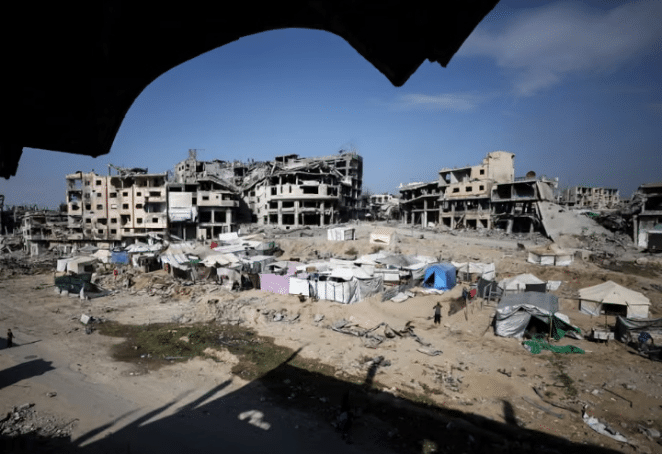
For Gaza’s civilians, every extra day of closure means fewer medical evacuations, dwindling food stocks, and rising despair over whether peace will ever take hold again.
International observers fear that without concrete progress, the tenuous Israel-Gaza ceasefire could unravel, reigniting the Gaza war and setting the region back years in peace efforts.
As negotiations stall, both sides cling to narratives of loss and justice. But until the Rafah border crossing reopens, ordinary people will continue paying the heaviest price.