The US Senate vote on Trump Venezuela military action comes as lawmakers consider a Democratic effort to limit the president’s authority following the dramatic seizure of Nicolás Maduro.
The resolution, introduced by Democratic senator Tim Kaine, would require the White House to seek congressional approval before launching additional military operations against Venezuela.
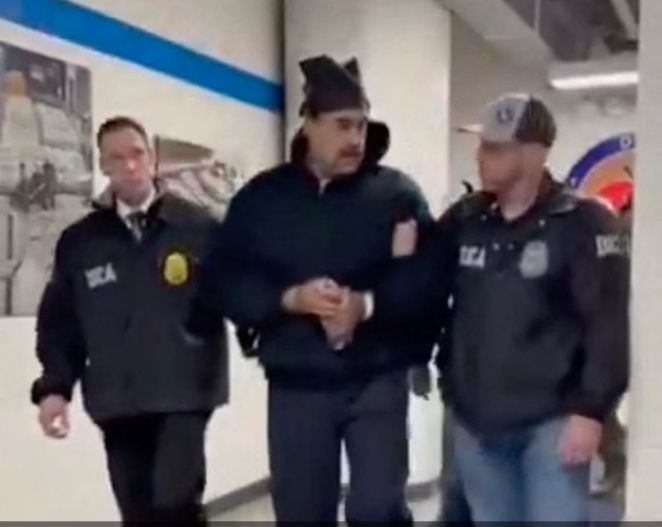
Democrats argue the president bypassed Congress when US special forces conducted a weekend raid in Caracas that resulted in Maduro’s capture and transfer to New York.

Maduro is now facing multiple federal charges, including allegations of narco-terrorism, money laundering and conspiring to flood US streets with illegal drugs.
Kaine said the vote was necessary to reassert Congress’s constitutional role, particularly after American service members were injured during the operation.
“Congress needs to tell the American public where it stands when force is used without consultation,” Kaine said during remarks on the Senate floor.
He stressed that war should remain a last resort, warning against decisions made solely at the discretion of one individual in the executive branch.
The resolution invokes the War Powers Act, which allows Congress to limit military engagement unless explicit authorization is granted.
Trump did not notify lawmakers before the operation, fueling criticism among Democrats who say the raid risked escalating a broader regional conflict.
Republicans, however, have largely defended the president, framing the operation as a decisive blow against an authoritarian leader accused of international criminal activity.
House speaker Mike Johnson praised the administration, saying Maduro’s arrest demonstrated American strength and global leadership.
“The world is safer because Maduro is now in the hands of the US justice system,” Johnson told reporters after a classified briefing.
Defense secretary Pete Hegseth and secretary of state Marco Rubio briefed lawmakers from both parties on the intelligence behind the operation.
Several Republicans described the raid as lawful, targeted and proportionate, arguing it sent a warning to hostile regimes.
Supporters also cited previous US airstrikes on Venezuelan vessels accused of trafficking narcotics toward North America.
Those strikes, authorized last year, remain controversial after reports that more than 100 people were killed.
Military analysts and human rights groups have questioned whether the boats posed an imminent threat to the United States.
Further scrutiny followed revelations that two survivors of an earlier strike were killed rather than detained, intensifying ethical and legal concerns.
Despite Republican backing, the Senate resolution has attracted limited bipartisan support.
Senators Rand Paul and Lisa Murkowski are the only Republicans to consistently back similar efforts to curb presidential war powers.
Read more here: Democrats decry Venezuela attack as Republicans defend Trump after Senate briefing
Paul warned that unchecked executive authority risks normalizing perpetual emergencies.
“The danger is not just this president, but the precedent it sets for the next one,” Paul said.
Democrats face internal divisions as well.
Pennsylvania senator John Fetterman publicly praised the operation, calling it beneficial for Venezuelans suffering under Maduro’s rule.
“I don’t understand why acknowledging a successful military action is controversial,” Fetterman wrote on social media.
Even so, Democratic leaders insist the issue transcends partisan politics and centers on constitutional accountability.
Gregory Meeks, ranking Democrat on the House foreign affairs committee, criticized the administration’s shifting justifications.
“We went from drugs to regime change to oil,” Meeks said, questioning the consistency of the administration’s rationale.
Meeks said lawmakers still lack sufficient legal justification for the use of force.
He indicated plans to introduce another war powers measure if the Senate effort fails.
Previous resolutions attempting to rein in Trump’s military authority have fallen short, though margins have been narrow.
Republicans hold a majority in the Senate, making passage of the measure unlikely.
Still, Democrats argue the vote itself sends an important signal to voters and future administrations.
The debate also reflects growing unease over US military actions beyond Venezuela.
Kaine said lawmakers were considering similar resolutions covering Nigeria, Cuba, Mexico and Colombia.
Trump has either authorized strikes or issued threats toward each of those countries within the past year.
Critics warn such actions risk entangling the United States in multiple conflicts without clear congressional oversight.
Administration officials counter that speed and secrecy are essential in combating transnational crime networks.
They argue congressional delays could undermine national security operations.
Public opinion remains divided, with some Americans applauding the capture of Maduro while others fear deeper foreign entanglements.
Venezuela’s interim leadership condemned the raid as a violation of sovereignty and demanded Maduro’s return.
Regional governments have issued cautious statements, urging restraint while calling for respect for international law.
The White House has remained defiant, insisting the operation was legal and necessary.
Trump has repeatedly framed his Venezuela policy as part of a broader campaign against drug trafficking and authoritarianism.
As the Senate prepares to vote, the outcome may not alter immediate policy, but it underscores mounting institutional tension.
Regardless of the result, lawmakers on both sides acknowledge the debate over war powers is far from settled.
The vote is expected to conclude Thursday, setting the stage for further legal and political battles over presidential authority.