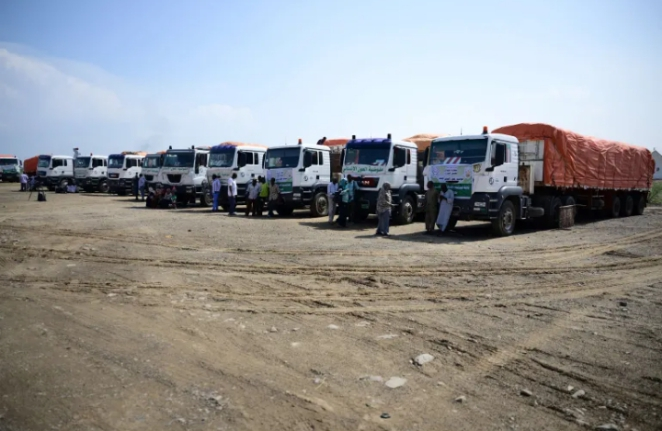
An RSF drone strike in Sudan has killed at least three aid workers and wounded four others after targeting a humanitarian convoy in South Kordofan state, highlighting the escalating danger for civilians in the ongoing civil war.
The convoy, carrying food and relief supplies, was attacked while en route to Kadugli and Dilling on Thursday.
The Sudan Doctors Network condemned the attack as a “blatant violation of international humanitarian law,” noting this was the second assault on aid operations in less than a month.
Earlier, a United Nations convoy in Al-Rahad was shelled, raising fears for the safety of humanitarian workers across the region.
The RSF, allied with the Sudan People’s Liberation Movement–North, has focused on seizing territory in Kordofan following its expulsion from Khartoum in March 2025.
South Kordofan and neighboring North Kordofan have seen heavy clashes, with civilians trapped in conflict zones as both sides vie for control.
UN investigations reveal the RSF has engaged in systematic attacks on non-Arab communities in el-Fasher, with actions described as bearing the “hallmarks of genocide.”
The Independent International Fact-Finding Mission reported killings, sexual violence, and conditions designed to destroy specific groups, primarily targeting the Zaghawa and Fur communities.
The Sudan Doctors Network urged the international community to pressure RSF leaders to allow safe humanitarian corridors and hold perpetrators accountable.
Meanwhile, the United States imposed sanctions on senior RSF commanders for their role in the el-Fasher siege, describing their campaign as “horrific.”
Aid efforts have been severely disrupted across Sudan due to repeated drone strikes. Humanitarian agencies warn that continued attacks risk worsening the civilian crisis, which has already displaced millions and left thousands dead since the conflict began in April 2023.
Despite government claims that the Sudanese Armed Forces (SAF) have broken long-standing sieges in key towns, RSF drones continue to threaten aid convoys, markets, and civilian areas.
Observers stress that the humanitarian crisis in Kordofan and Darfur remains critical, with urgent international intervention needed to protect civilians and aid workers.
Humanitarian organizations have struggled to deliver aid safely in Sudan, with many convoys forced to reroute or delay operations due to the threat of drone attacks.
Local volunteers report that communities in remote areas are facing severe shortages of food, clean water, and medical supplies, while the ongoing conflict prevents effective distribution of what aid does arrive.
The repeated targeting of aid convoys has sparked outrage among both local and international humanitarian groups, who warn that civilians are being used as pawns in the conflict.
The RSF’s use of drones has added a new dimension to the conflict, enabling rapid strikes on both military and civilian targets without direct engagement.
Experts on Sudanese security note that such attacks not only increase civilian casualties but also hamper efforts to stabilize the region, as fear and insecurity discourage local populations from seeking essential services.
Aid agencies emphasize the need for reliable corridors that can operate without interference, as even brief disruptions can have life-threatening consequences for displaced families.
Meanwhile, international observers have called for increased diplomatic pressure on both the RSF and Sudanese Armed Forces to halt attacks on civilians and ensure compliance with humanitarian law.
Regional powers and the United Nations are being urged to facilitate dialogue, provide logistical support for aid operations, and hold accountable those responsible for attacks on humanitarian workers.
The worsening situation in Kordofan and Darfur underscores the urgent need for coordinated action to prevent further civilian suffering and a potential escalation of the civil war.
Read also: Trump orders Pentagon files on aliens, UFOs to be released
About The Author