A total of 117 repentant terrorists from Borno State have successfully completed the Disarmament, Rehabilitation, and Reintegration (DRR) program under Nigeria’s Operation Safe Corridor initiative, marking a significant milestone in the nation’s counter-insurgency and community stabilisation efforts.
The Director of Defence Information, Major General Samaila Uba, confirmed the graduation on Thursday, February 19, 2026, in a statement following a high-level stakeholders’ meeting convened by Defence Headquarters at the Nigerian Army Resource Centre.
The meeting aimed to finalise the mechanisms for transferring rehabilitated individuals to relevant national and state authorities, facilitating their smooth reintegration into society.
Operation Safe Corridor, which was launched in 2016, is central to Nigeria’s counter-insurgency strategy.
It complements military operations by offering surrendered fighters a structured pathway for disarmament, deradicalisation, and vocational and psychosocial rehabilitation.
The programme’s primary goal is to prevent former insurgents from returning to violence, thereby consolidating the gains achieved through ongoing military efforts in affected regions.
Brigadier General Y. Ali, the Coordinator of Operation Safe Corridor, announced that the 117 repentant terrorists completed their rehabilitation at Mallam Sidi Camp in Borno State.
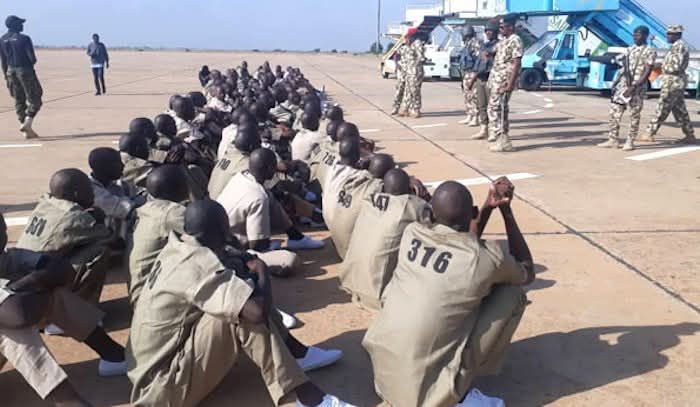
He described their graduation as a strong demonstration of improved collaboration between federal and state authorities in the areas of reception, monitoring, and community reintegration.
“Providing operational updates, the Coordinator disclosed that 117 clients from Borno State have successfully completed the DRR process at Mallam Sidi Camp, reflecting strengthened federal–state harmonisation in reception, monitoring, and community reintegration,” the statement read.
Brigadier General Ali further highlighted that the success of the programme indicates the growing effectiveness of structured rehabilitation initiatives.
Beyond the North East, Operation Safe Corridor has now been expanded to other regions affected by insecurity, including the North West, where a DRR camp established last February has achieved a notable stabilisation milestone.
Efforts are also underway in Zamfara State to recalibrate the existing facility into a comprehensive Victim Healing, Rehabilitation, and Reintegration framework.
This model will incorporate psychosocial support, community reconciliation programmes, livelihood assistance, and structured monitoring to ensure long-term success in rehabilitating former insurgents and reintegrating them into their communities.
In the North Central region, Brigadier General Ali revealed that Benue State has formally requested the establishment of a DRR camp.
Defence Headquarters has already evaluated proposed locations, but approval is contingent on alignment with national standards for infrastructure, security, and sustainability.
These measures are intended to ensure that future camps are secure, effective, and sustainable.
The high-level stakeholders’ meeting included a wide array of participants, demonstrating the multi-layered and international dimensions of counter-insurgency and rehabilitation.
Representatives from federal ministries, state governments, and the Office of the National Security Adviser attended, alongside delegates from neighbouring countries—Burkina Faso, Chad, Niger, and Cameroon.
International partners were also represented at the meeting, including the International Committee of the Red Cross, the International Organization for Migration, Norway, the United Kingdom, the European Union, and the Foreign, Commonwealth, and Development Office.
Their involvement highlights the regional and global importance of coordinated efforts to rehabilitate repentant terrorists and support stabilisation in affected areas.
Delivering the keynote address, the Chief of Defence Staff and Chairman of the Operation Safe Corridor National Steering Committee, General Olufemi Oluyede, who was represented by the Chief of Defence Operations, Major General Jamal Abdusalam, emphasised that Operation Safe Corridor remains a core pillar of Nigeria’s security architecture.
He noted that while kinetic operations are essential to create space for stability, structured rehabilitation and reintegration are crucial to sustaining security gains and preventing a return to violence.
“Military offensives create the environment for peace, but lasting stability depends on structured rehabilitation of former combatants,” he said.
“Operation Safe Corridor provides that balance by combining security enforcement with deradicalisation, vocational training, and psychosocial support for repentant terrorists returning to civilian life.”
Nigeria’s DRR programme now extends beyond the North East, with several other states affected by insurgency and banditry requesting the establishment of DRR camps.
These expansions reflect the government’s commitment to a holistic counter-insurgency approach that prioritises both security and societal recovery.
The graduation of the 117 repentant terrorists from Borno State serves as a testament to the programme’s effectiveness in transforming lives and promoting community cohesion.
As these individuals return to their communities under carefully monitored reintegration plans, authorities hope that their experiences will discourage others from engaging in violent extremism while encouraging broader societal reconciliation.
Operation Safe Corridor continues to serve as a model for combining military operations with strategic rehabilitation and reintegration programmes.
By focusing on the recovery and reintegration of former fighters, Nigeria aims to achieve sustainable peace, reduce recidivism, and strengthen regional security in collaboration with national and international partners.
With these efforts, the government signals that combating insurgency is not only about defeating armed groups militarily but also about fostering pathways for former combatants to become productive members of society.
The programme underscores that true security gains are achieved when the cycle of violence is broken, and repentant terrorists are offered a meaningful opportunity to reintegrate and contribute positively to their communities.
Ireport247news
About The Author