Donald Trump slaps brutal 10–15 day ultimatum-Trump Iran 10-15 day ultimatum has pushed tensions between Washington and Tehran to a critical point, with Iranian officials accusing the United States of deliberately steering the region toward a potentially catastrophic confrontation.
The warning followed remarks by Donald Trump, who publicly stated that Iran had between 10 and 15 days to reach what he described as a “meaningful deal” with Washington or face unspecified but severe consequences.
Iranian officials interpreted the statement as a direct threat of military action rather than diplomatic pressure.
Iran’s ambassador to the United Nations, Amir Saeid Iravani, moved quickly to internationalise the issue, submitting a formal letter to the UN Security Council warning that Trump’s rhetoric created a “real and immediate risk of military aggression” against Iran.
“Given the extremely volatile situation in the region and the persistent movement and buildup of military assets by the United States, such belligerent statements must not be dismissed as mere political theatre,” Iravani wrote.
He urged UN Secretary-General António Guterres and Security Council members to intervene diplomatically before the situation spirals further.
Iran stressed that it was not seeking confrontation. Officials in Tehran insisted the country would not initiate a conflict but made clear that any attack would trigger a broad and forceful response.
“Iran neither seeks tension nor war,” Iravani stated, “but it will respond decisively to any military aggression.”
The remarks highlighted Iran’s growing concern that Washington’s diplomatic track is being overshadowed by coercion and intimidation.
Tehran argues that meaningful negotiations cannot occur under the threat of force, particularly while US military deployments continue to expand across the Gulf region.
Trump’s comments were delivered during high-profile engagements in Washington, where he hosted dozens of world leaders for the first official gathering of his newly created Board of Peace.
Speaking to reporters, the US president oscillated between optimism and menace, suggesting diplomacy was possible while warning that time was running out.
“So now we may have to take it a step further, or we may not,” Trump said. “Maybe we’re going to make a deal. You’re going to be finding out over the next probably 10 days.”
Later, speaking aboard Air Force One, Trump doubled down on the ultimatum. “I would think that would enough time,” he said. “Ten, fifteen days, pretty much, maximum.”
Iranian officials responded with visible defiance. They accused Trump of attempting to strong-arm Tehran into concessions while preparing the groundwork for military escalation.
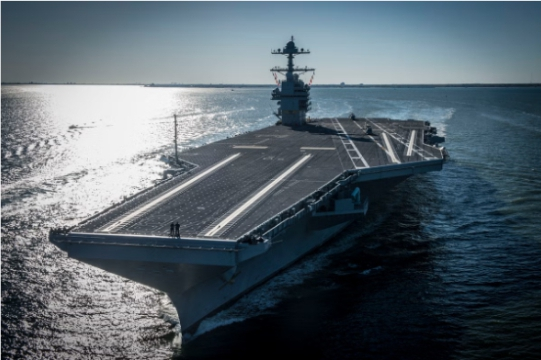
Iranian leaders pointed to the continued deployment of US aircraft carriers, fighter jets, and support assets near Iranian territory as evidence that Washington’s threats were not empty.
Tehran warned that any attack would not be limited to Iranian soil. Iranian officials stressed that US bases, facilities, and allied assets across the region would become legitimate targets in the event of hostilities, raising the spectre of a far wider conflict.
Despite the hostile rhetoric, diplomatic contacts between the two sides have not collapsed. Just days before Trump’s remarks, US and Iranian negotiators held a second round of indirect talks in Geneva, which both sides publicly described as cautiously constructive.
Iran’s foreign minister, Abbas Araghchi, said the discussions resulted in “good progress” and broad agreement on a set of guiding principles for future negotiations. He emphasised that dialogue remained the only viable path to resolving long-standing disputes over Iran’s nuclear programme and regional role.
Trump also acknowledged ongoing diplomatic engagement, telling reporters that his envoys, including Steve Witkoff and Jared Kushner, had held what he described as “very good meetings” with Iranian representatives. However, he insisted that talks must quickly produce tangible outcomes.
“We have to make a meaningful deal,” Trump said. “Otherwise, bad things happen.”
Iranian officials countered that Washington’s approach undermined trust and increased the risk of miscalculation. They argued that diplomacy conducted under explicit threats of force is inherently unstable and dangerous, particularly in a region already strained by multiple overlapping crises.
The continued US military buildup has become a focal point of Tehran’s criticism. American officials maintain that the deployments are defensive and intended to deter aggression, but Iran views them as provocative and destabilising.
Iran’s Supreme Leader, Ali Khamenei, weighed in with a pointed warning on social media, dismissing US displays of force as performative bravado. “The Americans constantly say they’ve sent a warship toward Iran,” he wrote. “A warship is a dangerous piece of military hardware. However, more dangerous than that warship is the weapon that can send that warship to the bottom of the sea.”
The escalation comes against the backdrop of deteriorating relations since late 2025, when Trump publicly promised further strikes on Iran if it attempted to rebuild elements of its nuclear or missile programmes.
Those remarks coincided with widespread protests inside Iran, which Trump openly encouraged, further inflaming tensions.
Although Trump appeared to briefly step back from the brink last month, suggesting Iran had made concessions under US pressure, the renewed ultimatum has reignited fears that Washington is preparing for military action if talks falter.
Iran insists that threats will not force capitulation. Officials argue that sustained pressure has only hardened positions and reduced the space for compromise. Tehran maintains that any durable agreement must be based on mutual respect and guarantees, not deadlines imposed from Washington.
As the countdown implied by Trump’s remarks continues, diplomats and regional observers warn that even a minor incident could trigger a rapid and uncontrollable escalation.
With military forces on high alert and political rhetoric intensifying, the coming days are widely seen as a critical test for diplomacy in one of the world’s most volatile flashpoints.
For now, Tehran’s message remains stark: diplomacy remains possible, but coercion risks dragging the Middle East into a crisis with consequences far beyond Iran and the United States.
Read more here: US military buildup in the Middle East intensifies as Trump sets Iran deadline
About The Author