The US military buildup in the Middle East intensifies as President Donald Trump sets a ten-day deadline to determine whether a nuclear deal with Iran is achievable.
The growing military presence signals heightened pressure on Tehran amid renewed nuclear negotiations and warnings that force remains an active option for Washington.
Speaking in Washington, Trump said clarity would emerge “within probably ten days,” adding that Iran could never be allowed to possess a nuclear weapon.
He warned that “bad things will happen” if Iran continued threatening regional stability, reinforcing a hardline stance that has defined his foreign policy approach.
Diplomatic talks held in Geneva earlier this week reopened dialogue between Washington and Tehran after months of escalating rhetoric and military maneuvering.
White House envoys met Iranian representatives to discuss uranium enrichment limits and potential sanctions relief tied to compliance.
Iran later indicated it would respond within two weeks, aligning closely with Trump’s publicly stated deadline.
Observers note the timeline mirrors previous ultimatums that ultimately preceded direct military action rather than prolonged negotiations.
Last summer, Trump gave himself two weeks to decide on striking Iranian facilities before authorizing air raids days later.
Those strikes targeted underground enrichment infrastructure and temporarily degraded Iran’s nuclear capabilities without eliminating them entirely.
Analysts say sufficient American military assets are already positioned to initiate an aerial campaign if diplomacy collapses.
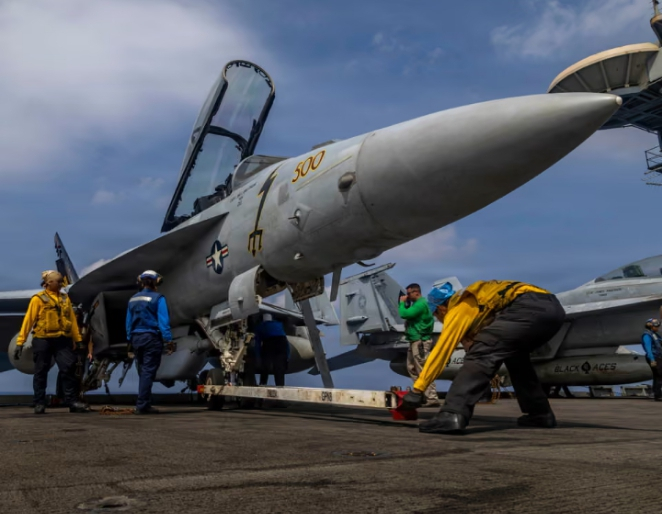
The aircraft carrier USS Abraham Lincoln has operated in the Arabian Sea for nearly a month.
Its strike group includes advanced fighter aircraft capable of sustained bombing missions across Iranian territory.
A second carrier group led by the USS Gerald R Ford is expected to enter the eastern Mediterranean.
Military planners suggest both carriers combined could generate several hundred sorties daily during a sustained operation.
A senior defence analyst described the buildup as “giving the president maximum military flexibility at short notice.”
Even without additional reinforcements, US aircraft already in the region could conduct over one hundred missions per day.
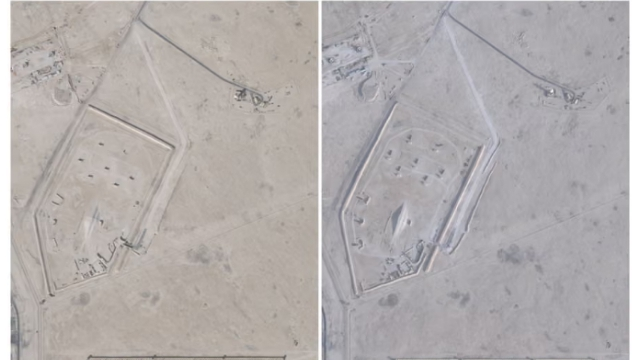
Satellite tracking has revealed an unusual concentration of surveillance and command aircraft deployed across Gulf airbases.
Six E-3 Sentry early warning aircraft were recently relocated to Saudi Arabia to support real-time battlefield coordination.
Such assets indicate preparation for complex air operations rather than limited symbolic strikes.
The core question, analysts argue, is what strategic objective Washington seeks to achieve through escalation.
Some believe the pressure is designed to coerce Iranian concessions rather than trigger outright war.
Others warn the buildup risks miscalculation, especially amid heightened regional tensions involving Israel and Gulf states.
Iran’s supreme leader Ali Khamenei has issued defiant warnings against US aggression.
He recently threatened that American warships could be sent “to the bottom of the sea” if Iran is attacked.
Iranian officials have emphasized their right to self-defence while rejecting demands to abandon enrichment entirely.
Despite prior strikes, uncertainty remains over the location of hundreds of kilograms of enriched uranium.
Experts say Iran theoretically retains enough material to produce multiple nuclear weapons if enrichment resumes unchecked.
Israel has urged Washington to focus beyond nuclear sites and target Iran’s ballistic missile infrastructure.
Iran is estimated to possess around two thousand ballistic missiles dispersed across dozens of launch bases.
Missile defence experts caution that even advanced interception systems cannot guarantee full protection against large volleys.
During last summer’s conflict, Iran significantly improved its missile penetration rate against Israeli defences.
The United States has reinforced regional air defence systems in anticipation of possible Iranian retaliation.
Patriot missile batteries were recently identified at major US installations in Qatar.
Destroyers positioned near Cyprus remain capable of intercepting missiles aimed at Israel or allied targets.

Iran’s mission to the United Nations has warned that US bases would be considered legitimate targets if hostilities begin.
In a letter to Secretary-General António Guterres, Tehran cited its right under international law.
European allies have expressed concern about being drawn into a broader conflict despite limited influence over US decisions.
The UK has already declined requests to allow its bases to support American bomber operations.
However, British officials acknowledge they may still be required to defend regional partners if attacked.
Royal Air Force jets have quietly redeployed to Qatar in a precautionary move.
Meanwhile, protests inside Iran that once raised hopes of regime change have been violently suppressed.
With domestic unrest contained, Washington’s focus has returned squarely to Iran’s nuclear ambitions.
Some analysts argue that a renewed bombing campaign would likely delay, not destroy, Iran’s long-term capabilities.
Others warn escalation could provoke asymmetric retaliation across the Middle East.
Oil markets and global shipping lanes remain particularly vulnerable to disruption.
Trump has framed the situation as a final opportunity for Iran to choose diplomacy over confrontation.
“We’ll know very soon,” he told reporters, “and they know what the alternative looks like.”
Whether the looming deadline produces compromise or conflict remains uncertain.
What is clear is that the military posture now in place leaves little room for prolonged ambiguity.
As one analyst put it, “This is pressure backed by unmistakable force.”
The coming days may determine not only the future of nuclear talks, but the stability of an entire region.
Read more here: Iran fortifies Parchin military site as US tensions rise
About The Author