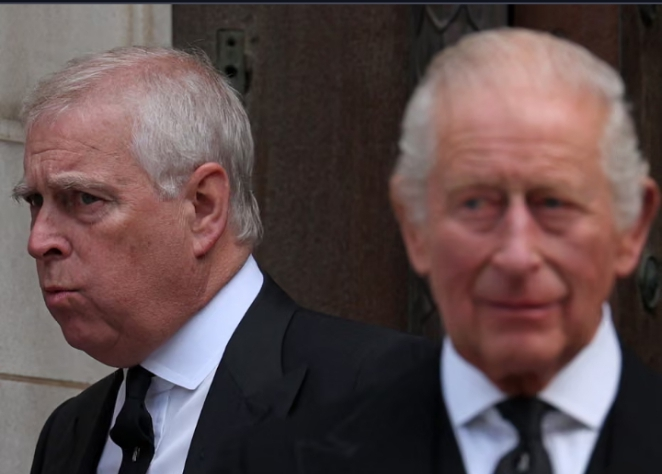
UK Parliament considers removing Andrew Mountbatten-Windsor from line of succession as ministers and senior lawmakers prepare for a potential constitutional move that could permanently bar the former prince from ever inheriting the British throne.
The issue has gained urgency following his recent arrest and questioning by police over allegations of misconduct in public office, reigniting public debate about accountability within the monarchy and the limits of royal privilege.
The government is understood to be weighing legislative options that would formally strip Andrew Mountbatten-Windsor of his place in the order of succession once any ongoing police investigation is concluded.
While no final decision has yet been made, multiple political parties have indicated that parliament will be forced to confront the matter directly if legal proceedings advance.
One senior government source was quoted as saying, “This is not a symbolic issue. Succession rights are defined in law, and if they are to be removed, parliament must act.”
Although Andrew relinquished his royal titles last year following renewed scrutiny of his long-standing association with Jeffrey Epstein, he technically remains eighth in line to the throne.
This position places him behind King Charles III, Prince William, Prince Harry, and their children. His continued inclusion has unsettled many lawmakers who argue that someone facing serious allegations should not retain even a theoretical path to becoming head of state.
Another complication lies in Andrew’s formal status as a counsellor of state, a constitutional role that allows designated senior royals to carry out official duties on behalf of the monarch if needed.
While palace officials have stressed that only working royals are considered for such responsibilities in practice, critics argue that his mere eligibility exposes weaknesses in the system. A Labour MP remarked, “The law has not kept pace with public expectations. The idea that someone in this position could remain a counsellor of state is deeply troubling.”
Removing Andrew from the line of succession would require an act of parliament and, crucially, agreement from other Commonwealth realms that share the British monarch as head of state.
Constitutional experts note that this makes the process complex but far from impossible. One former civil servant explained, “We have amended succession laws before. It requires coordination and political will, but the mechanisms already exist.”
The Liberal Democrats were among the first to publicly urge caution paired with resolve. Party leader Ed Davey said lawmakers must allow investigators to complete their work without interference but acknowledged that parliamentary action may ultimately be unavoidable.
“The police must be allowed to do their job without fear or favour,” he said. “But once that process is complete, parliament will have to consider whether it is acceptable for Andrew to remain anywhere near the line of succession.”
Conservative figures have echoed similar sentiments, stressing the importance of due process while recognising the gravity of the situation.
Shadow Scotland secretary Andrew Bowie stated that if wrongdoing were proven, lawmakers would be justified in acting decisively. “If he is found guilty, I believe parliament would be well within its rights to remove him from the line of succession,” Bowie said. “At the same time, we must be clear that he has not yet been convicted of anything.”
Read also: Jeffrey Epstein estate settlement reaches $35m in survivors’ lawsuit
Among Labour MPs, calls for action have been more direct. Rachael Maskell argued that the evidence already in the public domain raises serious constitutional questions. “From what we know, it is hard to justify his continued status in any formal royal capacity,” she said.
“Legislation should be prepared so that parliament can act swiftly if required.”
In Scotland, the debate has taken on an added political dimension. SNP Westminster leader Stephen Flynn warned that even a remote chance of Andrew becoming head of state was unacceptable.
“The public deserve absolute confidence in their institutions,” he said, “and that includes ensuring there is no pathway, however unlikely, for this to occur.”
Others have used the controversy to reopen broader arguments about the future of the monarchy itself. Labour MP Richard Burgon called for an independent inquiry into what senior royals may have known about Andrew’s links to Epstein, adding that the moment demands “a serious national conversation about whether the monarchy in its current form remains fit for purpose.”
The Green Party has taken a similar stance. Party co-leader Zack Polanski suggested that the case could accelerate calls for constitutional reform. “When public trust is damaged, people start asking deeper questions,” he said. “Issues like this don’t strengthen the argument for preserving the status quo.”
For Buckingham Palace, the situation remains delicate. While officials have emphasised that the monarch is cooperating fully with constitutional processes, there is an awareness that public patience is limited. One palace observer noted, “the monarchy survives on consent.
Any perception that the system protects individuals at the expense of integrity is deeply damaging.”

As the investigation continues, UK Parliament considers removing Andrew Mountbatten-Windsor from line of succession not as a theoretical debate, but as a looming legislative reality.
Whether the move ultimately happens will depend on legal outcomes, political consensus, and coordination across the Commonwealth.
What is already clear, however, is that the controversy has exposed fault lines in Britain’s constitutional arrangements and intensified scrutiny of how power, privilege, and accountability intersect at the highest level of the state.
.
About The Author