The release of Andrew Mountbatten-Windsor emails has reignited controversy over the former Duke of York’s conduct, showing he allegedly shared confidential reports from his role as UK trade envoy with convicted sex offender Jeffrey Epstein.
In documents published by the US Department of Justice, the emails suggest Andrew forwarded sensitive information about official visits to Singapore, Hong Kong, and Vietnam in late 2010, while serving as a special representative for trade and investment.
One November 2010 email, sent by his advisor Amir Patel, was forwarded within five minutes, illustrating the rapid dissemination of the material.
On Christmas Eve 2010, Andrew included Epstein in a confidential briefing about investment opportunities in Afghanistan’s Helmand Province. Vince Cable, then UK business secretary, told the BBC, “I was unaware of Andrew… sharing information about investment opportunities [in Afghanistan] before, this is the first I’ve heard of it.”
Andrew Mountbatten-Windsor has consistently denied wrongdoing, emphasizing in previous statements that he cut ties with Epstein in December 2010.
A 9 February 2011 email shows Andrew referencing a visit to a private equity firm, stating he “thought of you” to Epstein. This correspondence highlights the blurred line between official duties as a UK trade envoy and personal associations with a convicted criminal.
Official government guidance dictates that trade envoys must maintain strict confidentiality regarding sensitive commercial and political information. The guidance specifies: “This duty of confidentiality will continue to apply after the expiry of their term of office. In addition, the Official Secrets Acts 1911 and 1989 will apply.” The emails, therefore, raise questions about adherence to these standards.
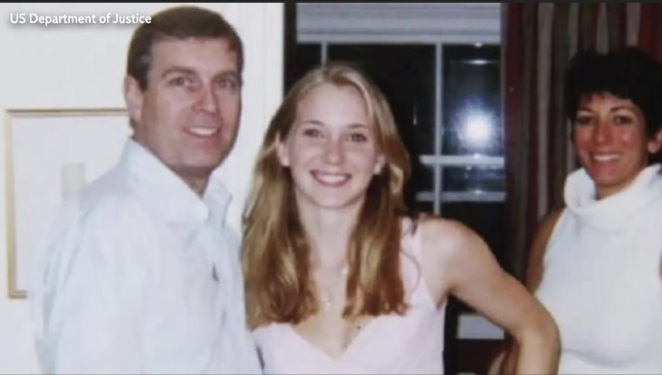
Images accompanying the DOJ release reportedly show Andrew crouched over an unidentified woman in Epstein’s New York mansion. These visuals, combined with the emails, have reignited debate over the former Duke’s connections and the ethical implications of sharing confidential reports with a convicted offender.
The former Duke served as the UK’s special representative for trade and investment from 2001 to 2011. His interactions with Epstein occurred near the end of this term, raising concerns that sensitive information from official meetings might have been compromised.
Andrew has maintained his innocence, repeatedly insisting in media statements, “I have never met Virginia Giuffre,” despite later settling a civil case with her for millions.
Documents show Andrew corresponded with Epstein on several occasions after the latter’s 2008 conviction for soliciting a minor.
The emails involve travel itineraries, business briefings, and insights into international trade missions, highlighting the tension between personal relationships and official responsibilities.
Analysts warn that sharing this material could undermine diplomatic trust and raise broader concerns about the conduct of UK trade envoys abroad.
The Royal family has remained largely silent amid renewed scrutiny. Experts suggest that continued silence may backfire, fueling media speculation and public criticism.
One analyst commented, “The Royal household risks appearing complicit if it fails to address the release of these emails in a transparent manner.”
Andrew’s relocation from Royal Lodge to a temporary property on the Sandringham estate, reportedly Wood Farm Cottage, has attracted attention in light of the revelations.
While his permanent residence, Marsh Farm, is not yet ready, sources indicate the move is part of broader plans unrelated to the latest email disclosures. Nonetheless, the timing has raised eyebrows, especially among media commentators.
Epstein’s long-standing association with Andrew, as well as with Ghislaine Maxwell, further complicates public perception.
Maxwell was convicted for her role in trafficking underage girls for Epstein, and documents reveal that Andrew hosted Epstein alongside others at official gatherings, including dinners at Buckingham Palace. These events blur the lines between formal state responsibilities and personal connections.
The 2022 civil settlement with Virginia Giuffre has not halted the release of historical documents. Giuffre’s posthumous book also brought renewed scrutiny to Andrew’s activities, alleging he participated in incidents while Epstein and Maxwell orchestrated trafficking.
The emails and accompanying photographs from the DOJ provide additional context for these claims, demonstrating persistent public interest in the former Duke’s conduct.
Officials emphasize that trade envoys occupy a unique position with access to sensitive commercial intelligence. Andrew’s forwarding of confidential reports to Epstein, even if done without explicit malice, could represent a breach of trust.
Government guidance reiterates the enduring duty of confidentiality beyond the term of office, highlighting the legal framework governing former envoys.
Commentators note the broader political and diplomatic implications.
Sharing sensitive information with a private individual, particularly one convicted of serious crimes, can compromise international negotiations.
Observers warn that foreign counterparts may question the reliability of British envoys and officials if such practices are perceived as routine or unchecked.
Andrew Mountbatten-Windsor’s defense rests on the claim that all communications were social in nature. He told BBC Newsnight in 2019 that contact with Epstein ceased in December 2010.
Nonetheless, the content of the emails suggests that at least some exchanges involved substantive material from his UK trade envoy portfolio. Analysts argue that even indirect exposure of sensitive information can create reputational and security risks.
Public reaction has been mixed. Royal supporters emphasize Andrew’s charitable and trade-related accomplishments, while critics underscore the ethical and legal dilemmas inherent in these interactions.
One journalist remarked, “regardless of intent, forwarding official documents to a convicted sex offender raises serious questions about judgment and accountability.”
The ongoing scrutiny coincides with broader discussions about the monarchy’s role in governance and oversight of former representatives. While Andrew no longer holds an official role, the precedent set by his actions could influence policies regarding future trade envoys, particularly concerning personal relationships intersecting with official duties.
Photographs accompanying the DOJ release, depicting Andrew alongside Maxwell and Giuffre, reinforce public interest in the narrative. These images, paired with emails referencing official trade missions, illustrate the intertwined nature of social, political, and legal controversies surrounding the former Duke.
Andrew’s partial relocation to Norfolk has also prompted speculation about privacy and security. Reports suggest the move to Wood Farm Cottage is temporary until Marsh Farm is ready, though the Royal Lodge lease remains active until October. Media attention continues to focus on the former Duke’s movements and lifestyle amid the ongoing release of historical records.
Legal experts note that while Andrew’s civil settlement does not imply criminal liability, the ethical ramifications of his correspondence persist.
Sharing sensitive government information with private individuals can violate norms of confidentiality and could be subject to review under the Official Secrets Acts. Observers highlight that these guidelines apply even after a trade envoy’s official term has ended.
The Andrew Mountbatten-Windsor emails thus serve as a cautionary tale regarding the responsibilities of public figures with access to sensitive information. Even in a social or informal context, forwarding materials to individuals like Epstein carries substantial risks, as critics argue that it undermines both trust and transparency in public office.
Looking forward, the Royal family may need to address these disclosures more directly. Experts suggest that strategic communication and acknowledgment of historical missteps could mitigate reputational damage.
Without proactive engagement, the controversy surrounding the emails and the former Duke’s associations is likely to remain in the public eye for the foreseeable future.
Read also: Morgan McSweeney resignation: Political shockwaves after Mandelson controversy
About The Author