Nigeria’s foreign exchange market closed the week with mixed signals as the naira continued to trade within a narrow band against major global currencies.
Analysts say the currency’s performance reflects ongoing adjustments in the country’s monetary policy, external market pressures, and sustained demand for foreign exchange from importers and businesses.
Market participants noted that the naira’s stability heading into the weekend provides a snapshot of Nigeria’s broader economic landscape, where foreign exchange supply remains sensitive to oil earnings, remittance inflows and investor sentiment.
Naira exchange rate to other currencies for weekend
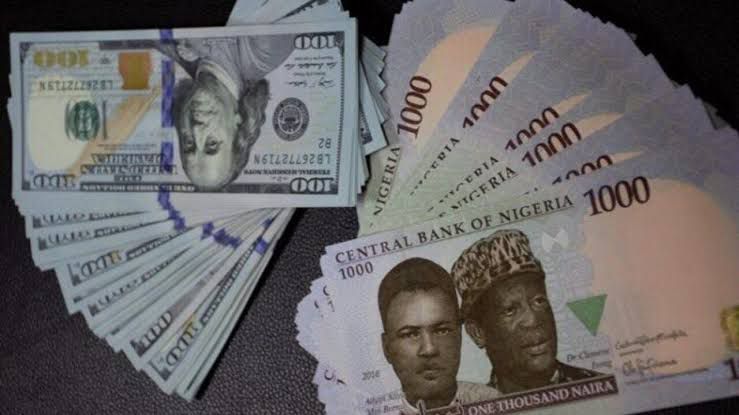
The naira exchange rate to other currencies for weekend shows the Nigerian currency maintaining relative stability against major global currencies such as the U.S. dollar, euro, and British pound, although pressure from foreign exchange demand persists.
At the close of trading for the week, the naira traded around ₦1,385.72 per U.S. dollar in the official foreign exchange market.
Meanwhile, the currency exchanged at approximately ₦1,770 to ₦1,820 per British pound sterling, reflecting the continued strength of the UK currency against emerging market currencies.
The euro also maintained a firm position, trading between ₦1,500 and ₦1,540 per euro, while other international currencies showed varying levels of strength against the Nigerian currency.
The Canadian dollar traded between ₦1,020 and ₦1,060, while the Chinese yuan exchanged around ₦190 to ₦205.
Similarly, the South African rand traded between ₦72 and ₦78, while the United Arab Emirates dirham ranged between ₦375 and ₦385.
These figures highlight the persistent gap between Nigeria’s domestic currency and stronger international currencies, largely due to differences in economic productivity, foreign reserves strength and global financial market conditions.
Forex demand remains strong
Financial analysts say the continued demand for foreign currency remains a key driver shaping movements in the naira exchange rate.
Businesses across Nigeria rely heavily on imported goods, equipment, and raw materials, most of which require payment in foreign currency, particularly the U.S. dollar.
As a result, any increase in demand for dollars tends to place downward pressure on the naira.
The dollar continues to dominate global trade and finance, meaning Nigerian companies involved in international transactions must secure sufficient foreign exchange to settle payments.
Economists say this demand is particularly strong among manufacturers, aviation operators, energy companies and import-dependent businesses.
Impact on prices and inflation
Movements in the naira exchange rate to other currencies for weekend also carry significant implications for inflation and consumer prices.
When the naira weakens against foreign currencies, the cost of imported goods typically rises. These increases are often passed on to consumers in the form of higher prices for food, fuel, electronics and household goods.
Transportation costs also tend to increase when exchange rates shift, since spare parts, lubricants and other automotive products are largely imported.
As a result, exchange rate fluctuations remain one of the most closely watched economic indicators in Nigeria.
Oil revenue still crucial
Nigeria’s exchange rate performance remains closely tied to global crude oil prices.
As Africa’s largest oil producer, Nigeria depends heavily on oil exports to generate foreign exchange earnings.
These earnings help support the country’s foreign reserves and improve liquidity in the forex market.
When global oil prices rise, Nigeria’s foreign exchange inflows typically increase, which can strengthen the naira.
However, when oil prices decline or production levels fall, foreign exchange supply tightens, leading to increased pressure on the local currency.
Energy analysts say Nigeria’s long-term currency stability will depend on expanding non-oil exports and reducing reliance on imported goods.
Monetary reforms and policy direction
In recent years, monetary authorities have implemented several reforms aimed at stabilising the foreign exchange market and improving transparency in currency trading.
These measures include efforts to harmonise exchange rates, attract foreign investment and encourage export earnings through official channels.
Policy experts say such reforms are designed to boost confidence among international investors while ensuring that businesses have access to foreign exchange through more transparent mechanisms.
However, structural challenges such as weak industrial capacity and high import dependence continue to limit the speed at which the naira can recover against global currencies.
Outlook for the forex market
Market analysts expect the naira to remain relatively stable in the near term, although external factors such as global interest rates, geopolitical developments and oil price movements could influence future trends.
The weekend exchange rates provide insight into Nigeria’s economic direction, particularly as policymakers continue to pursue reforms aimed at strengthening the financial system.
Experts say sustained fiscal discipline, stronger export performance and increased foreign investment will be crucial to achieving long-term stability in the currency market.
For now, the naira exchange rate to other currencies for weekend reflects a cautious balance between demand pressures and ongoing policy efforts to stabilise the Nigerian economy.
About The Author