The Venezuela earthquake disaster has left at least 32 people dead and more than 700 injured after two powerful earthquakes struck the country within 39 seconds of each other, devastating parts of Caracas and triggering a nationwide state of emergency. Authorities are racing against time to rescue survivors trapped beneath collapsed buildings as fears grow that the death toll could rise significantly in the coming days.
The twin earthquakes, measuring magnitudes 7.2 and 7.5, hit Venezuela on Wednesday evening, causing widespread destruction across the capital and surrounding regions. Several multi-storey buildings crumbled, transport networks were shut down, schools closed nationwide and the country’s main international airport was forced to suspend operations following structural damage.
As rescue workers dug through mountains of concrete and twisted metal, the US Geological Survey issued a grim assessment, estimating a 44 per cent probability that fatalities could eventually exceed 10,000.
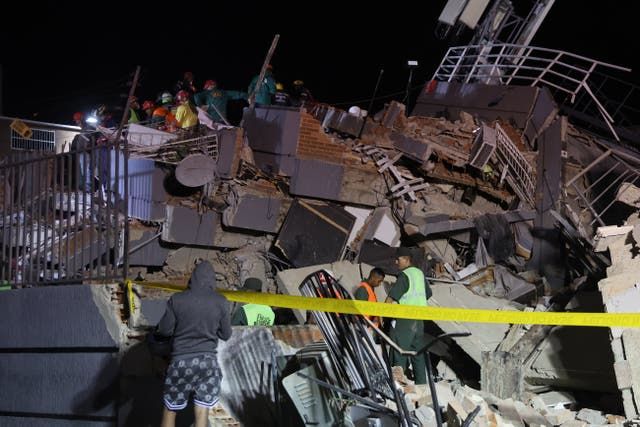
State of Emergency Declared Across Venezuela
Interim president Delcy Rodriguez confirmed the first nationwide casualty figures and announced emergency measures as authorities struggled to assess the scale of the catastrophe.
Rodriguez revealed that at least 32 people had lost their lives while hundreds more had suffered injuries ranging from minor wounds to critical trauma. She also confirmed that international rescue teams were expected to arrive in Venezuela to support local emergency operations.
The declaration of a state of emergency marked one of the most significant disaster responses in recent Venezuelan history. Government agencies, emergency responders and military personnel were deployed across affected regions as officials sought to restore order and coordinate rescue efforts.
The disaster forced authorities to suspend metro and train services nationwide while schools were ordered closed for the remainder of the week. The closure of the country’s principal airport further complicated emergency logistics and raised concerns about transportation and humanitarian access.
Twin Earthquakes Strike Within Seconds
The extraordinary nature of the disaster has heightened concerns among seismologists and emergency officials. The first earthquake measured 7.2 in magnitude before a second, stronger 7.5 magnitude tremor struck just 39 seconds later.
The back-to-back shocks amplified the destruction, causing already weakened structures to collapse and triggering panic among residents.
Witnesses described terrifying scenes as buildings shook violently and debris rained onto streets packed with people attempting to escape.
One Caracas resident, Amparo Diaz, vividly described the horrifying moments during the quake.
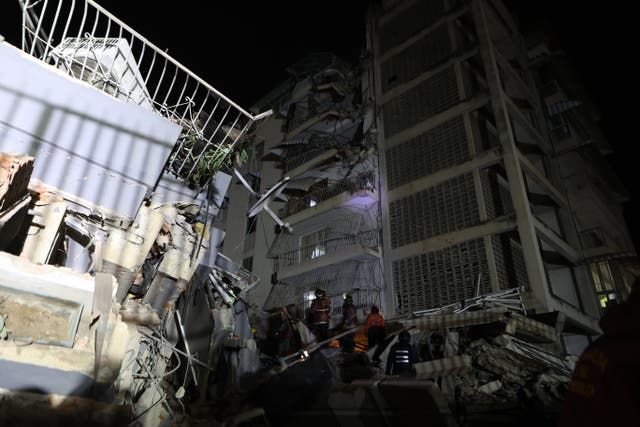
“The walls were moving, and I felt as if I were in water.”
Her account captured the chaos that unfolded as residents struggled to comprehend the scale of the disaster.
Diaz also described the destruction inside her home.
“The kitchen collapsed. The living room wall is about to fall; one more movement and it will come down.”
The trauma of the experience forced her to flee immediately.
“At that moment I only ran out with my rosary, my phone, which I had on me, and my clothes.”
Her testimony reflects the fear shared by thousands of Venezuelans who suddenly found themselves fleeing damaged homes with little more than the essentials they could carry.
Residents Describe Fear and Destruction
Across Caracas, survivors recounted scenes of panic as the earthquakes struck without warning.
One resident told journalists that the disaster instantly transformed daily life into a struggle for survival.
“The natural disaster caused panic in the population. We were forced to leave our homes.”
The resident explained that her apartment building had suffered severe structural damage while basic services had been disrupted.
“My building, for example, suffered an important fracture. As of now, we don’t have power or internet, and all I can see are shattered objects and glass.”
The emotional impact was evident throughout the city as frightened families gathered outdoors, fearful of returning to damaged structures.
“We could see people on the streets, people afraid to go back to their homes or buildings.”
Those fears intensified as aftershocks continued to shake the country throughout the night.
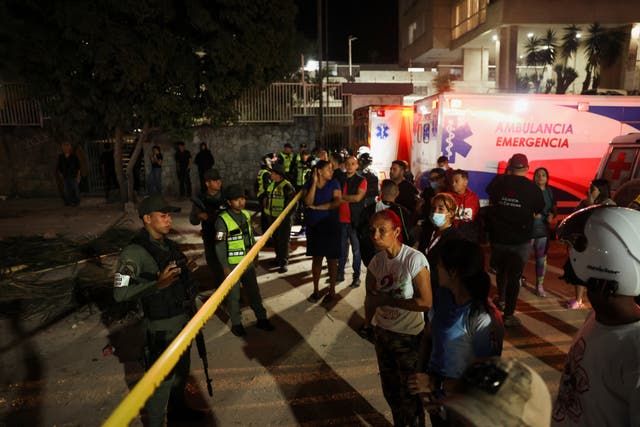
More Than 20 Aftershocks Increase Anxiety
Authorities confirmed that Venezuela has experienced more than 20 aftershocks since the initial earthquakes.
The continuing tremors have complicated rescue operations and heightened concerns about further building collapses. Many residents have chosen to remain outside despite difficult conditions, unwilling to risk returning to unstable homes and apartment complexes.
According to The Independent.co.uk, emergency crews continued operating across the hardest-hit regions, including La Guaira, Aragua, Carabobo and Falcon states. Rescue teams searched collapsed buildings, cleared debris and assessed damage while medical personnel treated the growing number of casualties.
The aftershocks have also increased psychological strain on survivors, many of whom remain uncertain whether additional powerful earthquakes could strike.
Rescue Teams Race Against Time
As daylight broke across Caracas, emergency responders intensified efforts to locate survivors trapped beneath collapsed structures.
Nicolas Maduro Guerra, speaking from one of the disaster sites, described the scale of the challenge facing rescue workers.
“We saw the interim president declare exceptional measures today due to this tragedy that we are witnessing in our country.”
He confirmed reports of multiple building collapses throughout the capital and stressed that authorities were working around the clock to locate survivors.
Maduro Guerra also highlighted the vulnerability of older buildings.
“This area has very old buildings from the 50s and 60s.”
He added that authorities were still determining the full extent of the damage.
“We don’t have an exact number at this time, but we are out in the streets and helping people.”
His remarks reflected the uncertainty surrounding the disaster as officials continued gathering information from affected communities.
International Support Begins to Arrive
The scale of the Venezuela earthquake disaster has prompted offers of international assistance.
US President Donald Trump expressed sympathy for victims and pledged American support for ongoing rescue and recovery efforts.
“The two major earthquakes that just hit the great people of Venezuela are both massive in scale and have left a devastating number of deaths.”
Trump also promised that the United States would assist the country during the crisis.
“We will be there for our new and great friends.”
Meanwhile, activists and opposition figures urged authorities to restore access to social media platforms, VPN services and independent news outlets to ensure families could communicate during the emergency.
Exiled opposition leader Edmundo Gonzalez argued that communication restrictions were preventing many Venezuelans from understanding the true scale of the disaster.
Fears Grow Over Rising Death Toll
Although the official death toll currently stands at 32, experts warn that the number could increase substantially as rescue operations continue.
Collapsed buildings, missing persons reports and damaged infrastructure have complicated efforts to determine the full impact of the earthquakes.
The US Geological Survey‘s estimate that fatalities could exceed 10,000 has added urgency to rescue efforts and reinforced concerns about the magnitude of the disaster.
Emergency officials acknowledge that the coming days will be critical as crews work to reach people trapped beneath rubble and provide aid to affected communities.
Read also: Trump Iran war clash erupts as Republican Senator challenges President over $70 billion conflict bill
The Venezuela earthquake disaster has plunged the nation into mourning after twin earthquakes devastated Caracas and surrounding regions, leaving at least 32 people dead and 700 injured. With more than 20 aftershocks recorded, rescue teams continue searching desperately for survivors while authorities battle to restore essential services.
The powerful eyewitness accounts emerging from the disaster zone underscore the human tragedy unfolding across Venezuela. As one resident painfully recalled, “All I can see are shattered objects and glass.” For thousands of families facing uncertainty, fear and loss, the road to recovery is only just beginning.
About The Author