The UK-EU reset deal has been agreed following negotiations in Brussels, with Britain and the European Union reaching agreements on food and drink trade, emissions trading and youth mobility, although a dispute over university tuition fees remains unresolved.
Downing Street confirmed on Friday, November 20, 2026, that negotiations on the three major areas had concluded, describing the outcome as a significant step towards rebuilding relations following Brexit.
A No 10 spokesperson said: “The deal is done – negotiations have concluded,” adding that discussions would continue on other outstanding areas of the relationship.
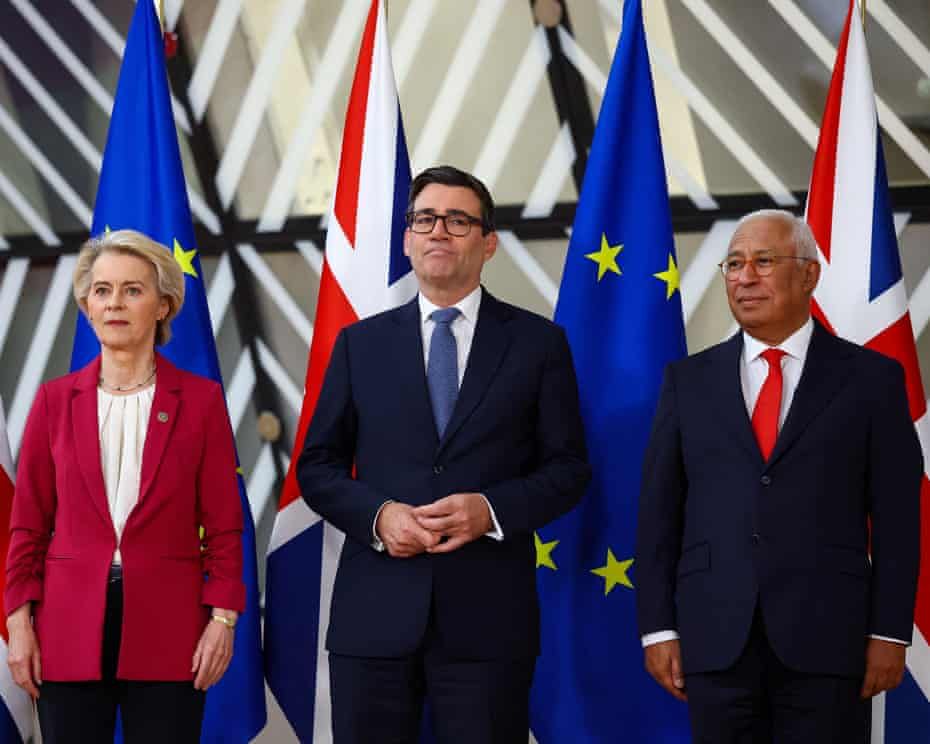
British Prime Minister Andy Burnham met European Commission President Ursula von der Leyen and European Council President António Costa at the summit in Brussels, where both sides discussed the future of their post-Brexit partnership.
The agreements are expected to cover arrangements for food and drink trade, cooperation on emissions trading and the establishment of a youth mobility scheme designed to improve opportunities for young people on both sides.
However, the agreements will still require legal processes and further steps before they can be fully implemented.
Three agreements reached between Britain and the EU
The UK-EU reset deal covers three major areas identified as priorities for improving cooperation between Britain and the European bloc.
The first agreement concerns food and drink, alongside sanitary and phytosanitary arrangements, commonly referred to as the SPS deal, which is expected to ease trade-related barriers and improve cooperation over agricultural and food standards.
The second concerns emissions trading, potentially bringing the UK and EU closer together in their climate-related market arrangements and helping address differences affecting businesses operating across both markets.
The third agreement introduces a youth mobility scheme intended to create opportunities for younger people to travel, work and gain experience across Britain and EU member states.
A Downing Street spokesperson said both sides would now work towards implementing the agreements and had already established proposed commencement dates.
The spokesperson explained that the dates would be included in a joint statement to be published later, while the necessary legal procedures would proceed in Britain and the EU.
Although negotiations on the three arrangements have concluded, officials acknowledged that discussions on other matters remain ongoing.
Tuition fees remain the major stumbling block
Despite the announcement of agreements, a disagreement over university tuition fees for European students could delay the implementation of the wider arrangements.
The European Union wants its citizens studying at British universities to receive equal treatment with UK students regarding tuition fees, rather than being charged the higher international student rates.
The bloc has insisted that the tuition fee question remains connected to the wider package of agreements reached during the 2026 summit.
In a statement cited by The Guardian, the European Commission and European Council said:
“The Council and Commission consider that this agreement is to provide for equal treatment with nationals as regards tuition fees for all students. The Council and Commission acknowledge that these four agreements form a package of the 2026 EU-UK summit.”
The EU had previously indicated that the food and drink agreement, emissions trading arrangement and youth mobility scheme would not enter into force unless the tuition fee issue was resolved.
European officials maintain that EU students should not face significantly higher university fees than British students when studying in the United Kingdom.
Britain, however, has not yet accepted the bloc’s position, leaving the matter to further negotiations.
Six months given to resolve the tuition fee disagreement
The two sides have agreed to postpone the tuition fee negotiations for six months, providing additional time to reach a compromise.
The delay represents a temporary opportunity to prevent the disagreement from undermining the broader progress achieved at the summit.
According to the Guardian’s reporting, the EU has maintained its position that the agreements form part of a wider package, giving the tuition fee question significant political importance.
An EU official reiterated the bloc’s position, saying: “I think our position has been clear. We think this is an issue that needs to be addressed.”
However, British officials pushed back against suggestions that the three agreements would necessarily collapse if tuition fee negotiations failed to produce an immediate solution.
They insisted that the arrangements were separate and argued that the food and agricultural agreement could still come into force in March 2028, even if the tuition fee question remained unresolved by then.
The UK government believes the three agreements represent substantial progress and should not be jeopardised by the separate dispute over university charges.
Britain secures support for proposed Made in Europe policy
British officials also disclosed that the country had secured agreement in principle to participate in the European Union’s proposed Made in Europe policy.
The initiative is expected to focus on protecting European industrial interests and limiting the growing influence of China in key manufacturing and economic sectors.
The proposal is regarded as a protectionist approach aimed at strengthening European production and giving businesses within the region greater advantages in strategic industries.
A UK official reportedly described the agreement in principle as a significant achievement, particularly because it was secured before the tuition fee negotiations had been settled.
The development could provide Britain with an opportunity to strengthen its industrial relationship with European partners while pursuing economic cooperation in areas affected by global competition.
Burnham’s summit signals closer post-Brexit cooperation
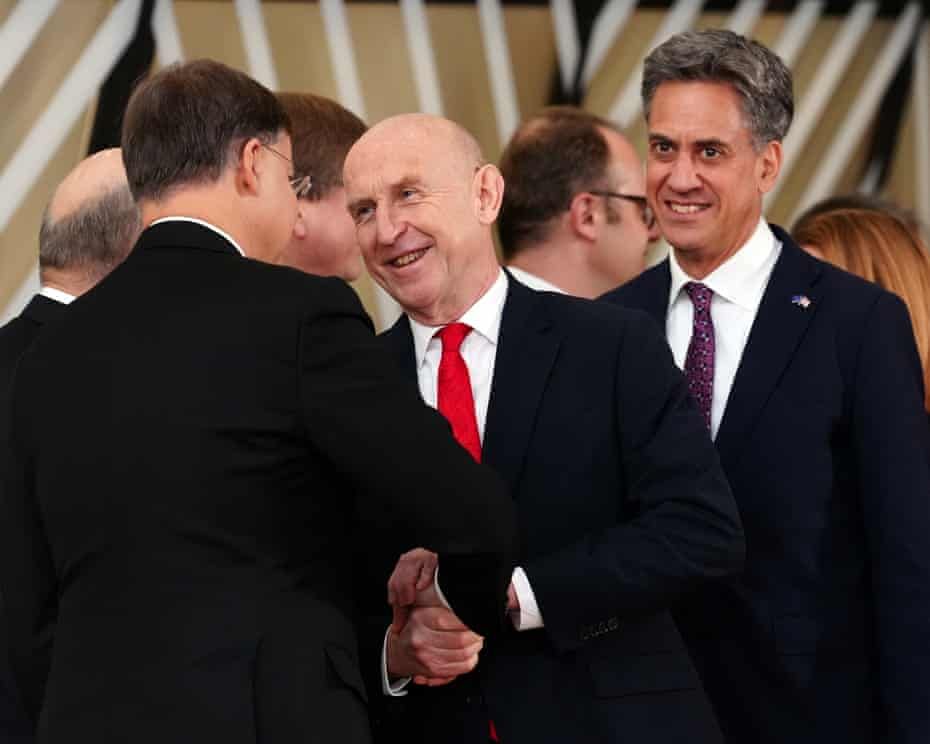
The summit in Brussels was treated as an important diplomatic engagement, with Burnham arriving alongside several senior British government officials and ministers.
The delegation included First Secretary of State Lou Haigh, Chancellor John Healey, Foreign Secretary Ed Miliband, Business Secretary Jonathan Reynolds, Environment Secretary Angela Eagle and Chief Whip Anneliese Midgley.
The high-level attendance reflected the government’s interest in securing progress on economic, environmental, trade and mobility arrangements with the European Union.
The meeting also marked another effort to address the consequences of Brexit and establish a more constructive relationship between London and Brussels.
According to The Guardian, the negotiations went down to the wire before the announcement that agreements had been reached on the three priority areas.
While the unresolved tuition fees issue means some aspects of the package remain uncertain, the agreements have been presented as a meaningful step towards closer cooperation.
The UK-EU reset deal is expected to shape the relationship between Britain and the European Union in the coming months, with implementation dependent on legal procedures and continuing discussions over outstanding matters.
The six-month window for resolving the tuition fee dispute could prove decisive in determining how quickly the agreements translate into practical benefits for businesses, students and young people on both sides.
Read also: Joanne Young abuse case: Four men convicted after husband drugged and advertised wife for sex
About The Author