

Hormuz crisis tensions intensified as Ursula von der Leyen urged immediate negotiations between the United States and Iran, warning that disruptions threaten global energy stability and economic security worldwide.
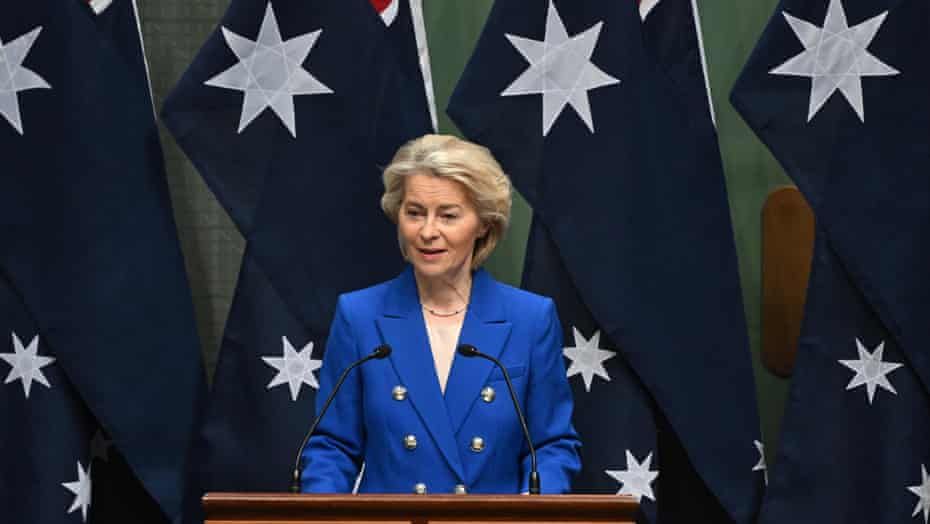
Speaking in Canberra, Ursula von der Leyen described the Hormuz crisis as critical, emphasizing that continued hostilities could severely impact oil and gas supplies relied upon by economies across continents.
The Hormuz crisis centers on the Strait of Hormuz, a vital shipping route through which roughly twenty percent of global oil supplies are transported daily.
Von der Leyen warned that attacks on commercial vessels and infrastructure must cease, stressing that escalation risks deepening economic instability and triggering widespread consequences for energy dependent nations.
She stated, “The situation is critical for energy supply,” highlighting how the Hormuz crisis is already influencing fuel prices and increasing uncertainty in global markets.
Her remarks followed reports of rising tensions involving Iran’s alleged attempts to block shipping routes using mines, drones, and missile threats targeting key maritime pathways.
The European Commission president called for diplomacy, insisting that negotiation remains the only viable path to resolve the Hormuz crisis and prevent further military confrontation.
She emphasized that global interconnectedness means even geographically distant countries are vulnerable to disruptions caused by instability in the Middle East.
Addressing lawmakers, she said the world has become “brutal, harsh and unforgiving,” reflecting a shift in geopolitical realities shaped by conflict and economic uncertainty.
The Hormuz crisis has highlighted vulnerabilities in global supply chains, particularly for countries heavily dependent on imported energy resources and stable shipping routes.
Energy analysts warn that prolonged disruption in the strait could replicate or exceed the impact of past oil shocks, affecting inflation, production costs, and consumer prices globally.
Von der Leyen compared the current situation to previous crises, noting that energy insecurity can have lasting consequences on economic growth and political stability.
In parallel with her warnings, diplomatic efforts have continued, with reports suggesting communication channels remain open between US representatives and Iranian officials.
Figures linked to Donald Trump have reportedly engaged in indirect discussions aimed at exploring potential pathways toward de escalation.
Despite these efforts, skepticism persists regarding the likelihood of a swift resolution, given entrenched positions and ongoing military developments.
The Hormuz crisis has also drawn attention to the strategic importance of maritime chokepoints, which play a crucial role in global trade and energy distribution.
Countries are increasingly evaluating contingency plans to mitigate risks, including diversifying energy sources and strengthening domestic production capabilities.
Von der Leyen highlighted the importance of energy independence, stating that building resilient systems is essential to withstand external shocks linked to geopolitical tensions.
Her visit to Australia coincided with the signing of a major trade agreement aimed at strengthening economic ties between Europe and the Asia Pacific region.
The deal is expected to reduce tariffs and expand market access, providing economic opportunities while reinforcing cooperation amid global uncertainty.
Australian Prime Minister Anthony Albanese welcomed the agreement, noting that collaboration is key to navigating complex geopolitical challenges.
He emphasized that shared commitments to security and stability would help both regions respond effectively to emerging threats, including those linked to the Hormuz crisis.
Beyond trade, discussions included defense cooperation, cybersecurity, and joint efforts to counter hybrid threats affecting international stability.
The Hormuz crisis has underscored the interconnected nature of modern geopolitics, where regional conflicts can have immediate global repercussions.
Economic analysts note that even temporary disruptions can trigger long term shifts in investment patterns, supply chains, and strategic alliances.
Von der Leyen urged countries to accelerate transitions toward renewable energy, arguing that reducing reliance on volatile regions is critical for future resilience.
She stated that electrification and innovation would play central roles in shaping more secure and sustainable economic systems.
Meanwhile, global markets have reacted cautiously, with fluctuations reflecting ongoing uncertainty surrounding the Hormuz crisis and its potential escalation.
Shipping companies and insurers have reportedly increased risk assessments, adjusting operations to account for heightened dangers in the region.
The crisis has also prompted renewed calls for international cooperation to ensure freedom of navigation and protect critical infrastructure.
Security experts warn that failure to resolve tensions could lead to broader conflict, drawing in additional regional and global actors.
Humanitarian concerns are also growing, as instability threatens livelihoods and access to essential resources in affected areas.
Diplomatic observers stress that timely intervention is crucial to prevent further deterioration and avoid a prolonged crisis with far reaching consequences.
Read also: Gulf tension escalates as Iran threatens full closure, mine-laying
The Hormuz crisis remains a defining issue in global geopolitics, shaping decisions that will influence economic stability and international relations in the coming years.