

A major legal milestone has been recorded in fraud case, as Nigeria’s anti-corruption efforts secured a high-profile conviction against a former top government official.
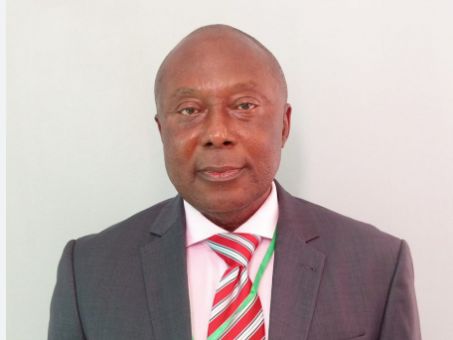
A judge of the Federal High Court sitting in Maitama, Abuja, sentenced Chukwunyere Anamekwe Nwabuoku, a former acting Accountant-General of the Federation, to 72 years behind bars after finding him guilty of financial crimes involving N868.4 million.
The judgment, delivered by James Omotosho, followed a prolonged trial during which prosecutors laid out detailed evidence of how public funds were allegedly diverted and laundered.
The court concluded that the charges against the defendant were proven beyond reasonable doubt, leaving little room for ambiguity regarding his role in the transactions.
Central to the Nwabuoku fraud case was the role played by the Economic and Financial Crimes Commission (EFCC), which led the prosecution.
The agency charged the former AGF with a nine-count indictment focused on money laundering activities that reportedly took place between September 2019 and October 2020.
According to the EFCC, the scheme involved calculated steps to disguise the origin and ownership of illicit funds.
Investigators told the court that Nwabuoku did not act alone.
Instead, he allegedly collaborated with several corporate entities to execute the transactions.
These companies—Temeeo Synergy Concept Limited, Turge Global Investment Limited, Laptev Bridge Limited, and Arafura Transnational Afro Limited—were identified as vehicles used to move funds across accounts in a manner designed to evade scrutiny.
Authorities indicated that these firms remain at large, adding another layer of complexity to the case.
A breakdown of financial records presented during the trial painted a clearer picture of how the alleged fraud unfolded.
One of the transactions highlighted in the Nwabuoku fraud case involved over N262.6 million, which was reportedly funneled through a Zenith Bank account linked to Temeeo Synergy Concept Limited.
The prosecution argued that the defendant was fully aware that the funds originated from unlawful activities.
Further evidence revealed additional movements of money through other corporate channels.
About N202.8 million was traced to Turge Global Investment Limited, while another N281.1 million passed through accounts associated with Laptev Bridge Limited.
These transactions, according to prosecutors, were not isolated incidents but part of a broader pattern aimed at concealing the true source of the funds.
In evaluating the case, Justice Omotosho emphasized the weight of the evidence and the consistency of the prosecution’s arguments.
He noted that the financial trails, combined with witness testimonies and documentary exhibits, established a strong link between the defendant and the illicit transactions.
This, he said, made the court’s decision in the Nwabuoku fraud case both necessary and justified.
A critical aspect of the ruling was the revelation that the funds in question were allegedly diverted from allocations meant for the Ministry of Defence.
The judge described this as a grave violation of public trust, stressing that resources intended to support national security operations were instead misappropriated for personal gain.
Such actions, he added, undermine governance and weaken institutional integrity.
The court also took note of the methods used to carry out the scheme.
By routing funds through company accounts that did not bear his name, the defendant was said to have attempted to distance himself from the transactions.
Justice Omotosho described this tactic as a deliberate and calculated effort to avoid detection, further reinforcing the prosecution’s claims in the Nwabuoku fraud case.
Legal observers say the outcome sends a strong signal about accountability in public office.
The length of the sentence reflects the seriousness with which the judiciary now treats financial crimes involving public funds. It also highlights the growing role of institutions like the EFCC in holding powerful individuals accountable.
Beyond the courtroom, the Nwabuoku fraud case has sparked renewed conversations about transparency in government financial management.
Analysts argue that stricter oversight, improved auditing systems, and stronger enforcement mechanisms are necessary to prevent similar cases in the future.
Without such reforms, they warn, systemic vulnerabilities may continue to be exploited.
In the end, the conviction stands as both a punishment and a deterrent. It underscores the risks associated with abusing public office and reinforces the principle that no individual is above the law.
As Nigeria continues its anti-corruption drive, cases like this may shape public perception and influence future governance standards.
Ireport247news
About The Author
