European Commission president Ursula von der Leyen has condemned the recent disruption of Lithuanian airspace by unidentified balloons, describing it as a “provocation” and a hybrid threat.
Speaking at a Brussels press conference, von der Leyen expressed her “full solidarity with Lithuania”, reaffirming the EU’s collective stance against what she called a “clear act of intimidation” targeting the bloc’s eastern flank.
She emphasized that such incidents “underscore the urgent need for enhanced European defense readiness,” adding that the EU will not tolerate incursions into its airspace or territory under any circumstances.
Lithuanian authorities earlier reported that several balloons—believed to be launched from Belarusian territory—were detected drifting across its airspace, prompting temporary restrictions and heightened military alerts.
Vilnius officials described the episode as part of a pattern of hybrid provocations orchestrated by actors linked to Moscow and Minsk, aimed at testing NATO’s eastern defenses and the EU’s resolve.
Von der Leyen’s remarks come amid a tense regional backdrop, with Russia’s war in Ukraine entering its fourth year and Western allies stepping up surveillance along NATO’s eastern border.

She told reporters that the EU’s defense industrial strategy will include new investments in drone technology, satellite tracking, and rapid response systems designed to detect and counter such unconventional threats.
“We have learned from experience that hybrid tactics—whether cyberattacks, misinformation, or now balloons—are meant to destabilize,” von der Leyen said, warning that “Europe must be prepared.”
The Commission president reaffirmed that the EU stands united with Lithuania, praising the Baltic state for its swift, calm, and coordinated response alongside NATO partners.
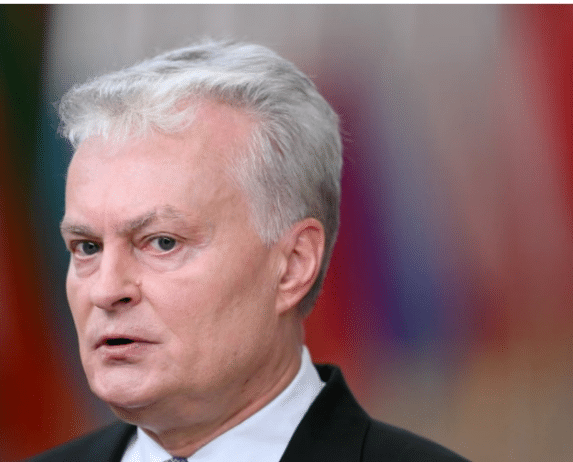
Her comments echoed those of Lithuanian president Gitanas Nausėda, who earlier denounced the incursions as a “deliberate attempt to provoke fear” and urged the EU to adopt a stronger collective deterrence policy.
Security experts note that such aerial disruptions are becoming more common, part of a broader “gray-zone” warfare strategy blending espionage, psychological pressure, and technological manipulation.
In early 2024, similar incidents occurred over Poland and Latvia, with both countries citing evidence of Belarusian-linked surveillance operations designed to test radar systems and response protocols.
Von der Leyen said the Commission is coordinating with the European Defence Agency (EDA) and member states to expand a joint situational awareness network to monitor suspicious aerial objects in real time.
She noted that this framework aligns with the EU’s Strategic Compass, a blueprint for strengthening defense integration and crisis preparedness across the bloc by 2030.
“The EU must ensure that no European airspace becomes a testing ground for provocations,” she said. “Our message is simple: Europe will defend itself.”
Her statement was widely welcomed by Baltic officials, who have long urged Brussels to take stronger action against hybrid aggression emanating from Russia’s sphere of influence.
In Vilnius, the Ministry of Defense released photos of the balloons, describing them as “military-grade surveillance devices” capable of carrying small cameras and sensors.
Although officials have not confirmed the origin, preliminary analysis suggested they were launched from within Belarus, a close ally of the Kremlin.
Belarusian authorities denied involvement, calling the reports “politically motivated,” but NATO sources said radar data traced several balloon trajectories directly from Belarusian airspace into Lithuanian territory.
The incident prompted Lithuania’s air force to deploy two fighter jets to escort and monitor the objects before they exited national borders.
Military analysts believe the balloons may have been used to test electronic warfare capabilities or gather environmental data useful for reconnaissance operations.
Von der Leyen’s sharp language marks a shift toward more assertive EU defense posturing, reflecting growing frustration with ongoing provocations near the bloc’s borders.
She reiterated that Europe’s security architecture “must evolve rapidly” to meet 21st-century threats, blending traditional military strength with technological innovation and intelligence sharing.
Her call aligns with recent proposals from the European Council to allocate an additional €10 billion to the European Defence Fund (EDF) for surveillance and air defense programs.
Observers see the balloon incident as a wake-up call, reinforcing arguments that Europe can no longer depend solely on NATO and must build autonomous defense capacity.
Von der Leyen’s press briefing also referenced broader EU priorities, including cyber resilience, counter-disinformation measures, and cross-border intelligence cooperation.
“The EU’s future security depends on coordination,” she said. “When one member is threatened, the whole Union must respond decisively.”
She also emphasized that European citizens “must understand the nature of hybrid warfare,” which increasingly blurs the line between peace and conflict.
Analysts note that hybrid threats combine military intimidation with digital sabotage, economic pressure, and propaganda, making them difficult to attribute or deter.
In this case, the use of balloons recalls Cold War-era tactics, adapted for modern surveillance using lightweight, high-altitude technologies.
Experts say such methods are inexpensive yet effective tools for testing radar coverage and communication protocols in targeted regions.
The Lithuanian Defense Ministry confirmed that no damage or casualties occurred, but the psychological impact was significant, especially given the ongoing regional tensions.
Public sentiment in Lithuania remains firm, with citizens expressing both resilience and concern over increasing Russian and Belarusian provocations.
Von der Leyen’s remarks aim to reassure member states that Brussels recognizes the seriousness of these tactics and intends to respond collectively and strategically.
Her stance is part of a wider EU effort to integrate security policy with industrial and technological priorities, reinforcing Europe’s strategic autonomy.
Defense experts suggest that future incidents could accelerate joint EU airspace monitoring initiatives, leveraging artificial intelligence and satellite data for early detection.
The European Parliament is expected to debate new proposals on hybrid defense frameworks next month, with support from Baltic and Nordic delegations.
NATO Secretary General Jens Stoltenberg also issued a statement backing Lithuania and the EU’s position, calling the balloon episode “unacceptable interference.”
He noted that NATO allies remain “vigilant and ready to respond” to any form of aggression or intrusion across alliance borders.
Von der Leyen’s condemnation underscores a unified transatlantic stance, bridging EU and NATO efforts to ensure deterrence remains credible.
She closed her remarks by stressing that “Europe’s airspace is sacred, and its defense is non-negotiable.”
For many observers, the message signals a new phase of EU strategic maturity, one where hybrid threats are treated with the same urgency as conventional attacks.
The episode over Lithuania may soon fade, but its lessons are likely to shape EU defense policy for years to come, reinforcing the bloc’s collective resilience and readiness.
About The Author