Maduro tells US court he was kidnapped as he appeared before a federal judge in New York, insisting he remains Venezuela’s president despite his dramatic capture.
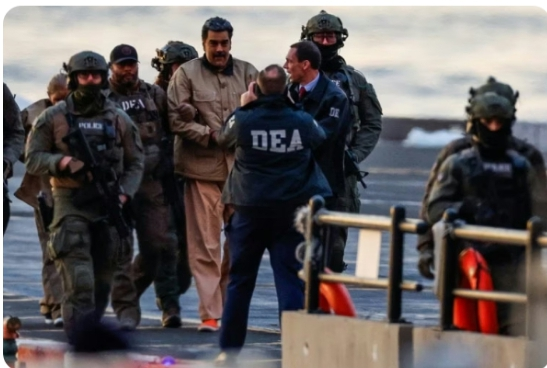
The ousted Venezuelan leader entered a not-guilty plea to federal charges including drug trafficking, narco-terrorism, and conspiracy to import cocaine into the United States.
Speaking through an interpreter, Maduro told Judge Alvin K. Hellerstein, “I’m innocent. I’m not guilty. I am a decent man,” rejecting every allegation.
Maduro tells US court he was kidnapped during a U.S. military raid in Caracas, describing his arrest as an unlawful abduction carried out on foreign soil.
When the judge asked him to identify himself, Maduro responded by declaring he was the sitting president of Venezuela and had been brought to court against his will.
Judge Hellerstein interrupted, explaining that the hearing was limited to confirming identity and entering pleas, not litigating geopolitical disputes or military actions.
Despite the warning, Maduro continued testing the courtroom’s boundaries, repeatedly returning to claims of illegality and violations of Venezuelan sovereignty.
His wife, Cilia Flores, standing beside him in an orange prison uniform, also pleaded not guilty and said she was “completely innocent.”
Flores appeared with a bandage on her forehead and visible bruising, holding onto a U.S. marshal as she stood to address the court.
Her lawyer later told the judge she had sustained injuries requiring medical attention, without providing further details about their cause.
The arraignment was procedurally routine, a stark contrast to the extraordinary circumstances surrounding the capture of a foreign head of state.
Prosecutors stated that the defendants entered U.S. custody at approximately 11:30 a.m. on January 3, declining to describe the raid itself.
Maduro’s attorney, Barry Pollack, signaled that future motions could challenge the legality of the operation and his client’s treatment as a criminal defendant.
“There are serious questions about the legality of his military abduction,” Pollack told the court, referencing Maduro’s former role as head of state.
Pollack said he was not seeking bail at this time but reserved the right to revisit detention as the case develops.
As Maduro rose to leave the courtroom, a man in the public gallery shouted in Spanish that he would pay for his crimes.
Maduro turned back briefly and replied that he would win his freedom, before declaring himself “a prisoner of war.”
Outside the courtroom, the Trump administration maintained that the operation was justified and necessary to end Maduro’s rule.
President Trump asserted that the United States was now effectively “in charge” of Venezuela, escalating tensions across the region.
Those remarks appeared to contradict statements by Secretary of State Marco Rubio, who suggested Washington sought cooperation, not occupation.
The mixed messaging underscored uncertainty about America’s long-term intentions following Maduro’s removal from power.
Maduro tells US court he was kidnapped as political fallout continued to unfold rapidly inside Venezuela itself.
In Caracas, the National Assembly ratified Jorge Rodríguez as its president, reaffirming loyalty to Maduro’s political circle.
Rodríguez invited Maduro’s son and a son of Flores to the chamber while unveiling portraits of the detained couple.
Maduro’s son, Nicolás Maduro Guerra, delivered a defiant speech accusing the United States of imperial aggression.
He urged international solidarity, warning that the raid represented a dangerous precedent for global sovereignty.
Venezuela’s interim leader, Delcy Rodríguez, adopted a more measured tone while condemning the operation publicly.
She called the capture a kidnapping but also expressed willingness to work with Washington on a cooperative agenda.
Rodríguez faces pressure from a population weary of Maduro’s rule but deeply suspicious of American intervention.
At the United Nations, Venezuela requested an emergency Security Council meeting to address the raid’s legality.
The U.S. ambassador insisted there was no war against Venezuela or its people, rejecting accusations of destabilization.
Several council members warned that unilateral military actions risk eroding international norms governing state sovereignty.
Regional reaction intensified after Trump suggested similar action could be taken against other countries.
Colombia’s president, Gustavo Petro, issued a sharp warning, saying any attempt to detain him would unleash public fury.
Mexico’s president played down Trump’s remarks, describing them as rhetorical rather than operational threats.
Meanwhile, U.S. officials prepared to brief Congress after lawmakers complained they were not informed in advance.
Democrats raised concerns about executive overreach and the absence of congressional authorization.
Economic consequences also emerged as Venezuelan oil shipments attempted to evade U.S. naval enforcement.
At least sixteen tankers reportedly altered tracking data to avoid sanctions tied to the blockade.
Trump has repeatedly said Venezuela’s oil reserves should be opened to American companies.
Energy analysts warn that intervention could prove costly and complicated despite Venezuela’s vast resources.
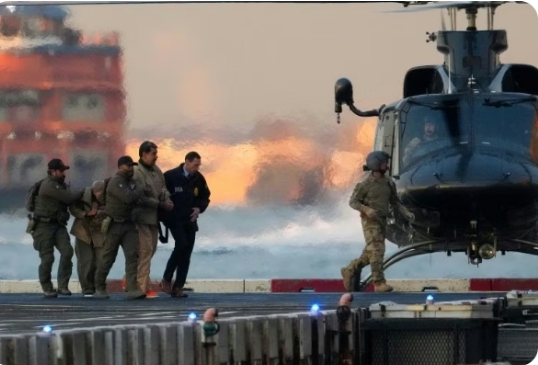
For now, Maduro remains jailed in New York, awaiting further hearings scheduled for March.
Whether the court treats him as a criminal defendant or a former sovereign leader may shape the case.
Maduro tells US court he was kidnapped, a claim likely to sit at the center of legal, diplomatic, and historical debate.
Read also: Switzerland moves to freeze Nicolás Maduro assets amid Venezuela crisis
About The Author