Geneva Agreement Signals New Chapter for Washington and Tehran
The US-Iran Peace Deal has emerged as one of the most significant diplomatic developments in recent Middle East history, raising hopes for an end to months of conflict while leaving critical questions about regional security unresolved.
After weeks of intense negotiations and mounting international pressure, Washington and Tehran announced that they had reached a tentative framework designed to halt hostilities and establish a pathway toward broader political and security agreements.
The announcement immediately reverberated across global capitals, financial markets and diplomatic circles as governments assessed what the breakthrough could mean for regional stability and international trade.
While many details remain under negotiation, officials from both countries described the agreement as a decisive step toward ending a conflict that threatened to destabilize the wider Middle East.
The proposed memorandum of understanding is expected to be formally signed in Geneva later this week, creating a foundation for future negotiations on several contentious issues.
Among the most important unresolved matters are the future of Iran’s nuclear program, maritime security in the Strait of Hormuz and broader security arrangements involving regional actors.
President Donald Trump celebrated the development in characteristic fashion, declaring on Truth Social: “The Deal with the Islamic Republic of Iran is now complete. Congratulations to all!”
His statement quickly became one of the most discussed political messages worldwide, fueling optimism among investors and policymakers seeking an end to regional uncertainty.
Trump later described the agreement as a “Great Deal” capable of delivering long-term peace and prosperity across the Middle East while reducing risks to global energy supplies.
He further argued that the agreement represented a turning point for regional diplomacy, claiming that Middle Eastern leaders had finally found a pathway toward lasting cooperation.
“The Leaders of the Region have, for the first time, found a President who can help them achieve real Peace,” Trump wrote.
The American president also linked the agreement to the anticipated reopening of the Strait of Hormuz, one of the world’s most strategically important maritime routes.
According to Trump, the reopening process would facilitate the removal of maritime hazards and restore uninterrupted commercial shipping throughout the region.
“With the opening of the Strait upon the signing of the Deal on Friday, for purposes of mine removal, oil will flow on both ends again for the Region, and the World!” he stated.
Iran Declares Immediate End to Hostilities
Iranian officials also welcomed the agreement, presenting it as a significant diplomatic achievement that could reduce tensions and prevent further military confrontation.
Iran’s Deputy Foreign Minister Kazem Gharibabadi described the arrangement as an immediate mechanism for ending active conflict between both nations.
In televised remarks, he declared that the agreement with the United States would bring an “immediate end” to the war between the two countries.
Gharibabadi further stated that the cessation of hostilities would extend beyond direct US-Iran tensions and include other regional theatres.
According to the Iranian official, the end of military operations would apply on all fronts, including the long-running conflict dynamics involving Lebanon.
His comments reflected Tehran’s effort to portray the agreement as a comprehensive diplomatic success rather than a limited ceasefire arrangement.
Nevertheless, analysts continue to caution that substantial differences remain between the negotiating positions of Washington and Tehran.
Those differences could influence the pace of implementation and determine whether the agreement evolves into a permanent settlement.
Diplomatic observers note that both governments are attempting to balance domestic political pressures with international expectations.
As a result, future negotiations are expected to involve complex discussions regarding security guarantees, sanctions relief and verification mechanisms.
The coming weeks may therefore prove decisive in determining whether the diplomatic breakthrough can withstand political scrutiny on both sides.
Strait of Hormuz Reopening Sparks Market Optimism
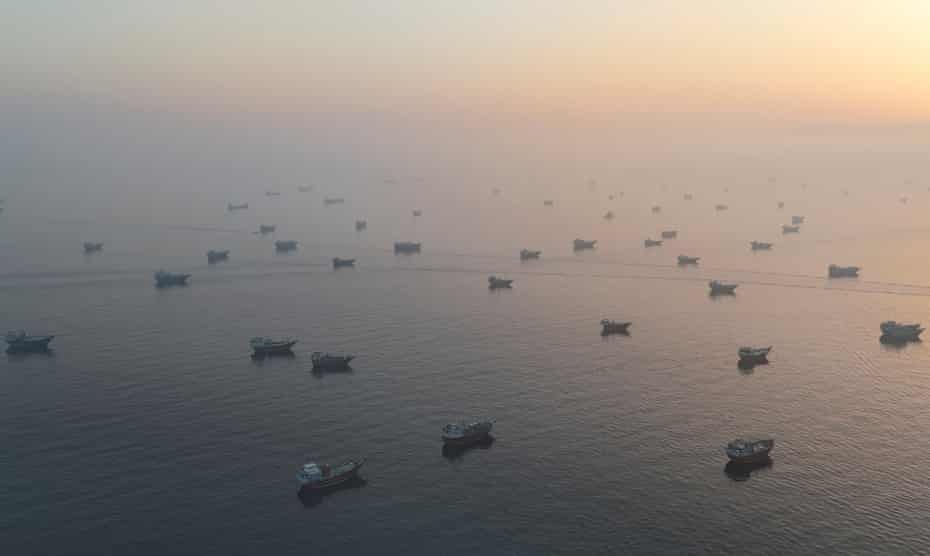
One of the most closely watched aspects of the US-Iran Peace Deal concerns the future status of the Strait of Hormuz.
The narrow waterway remains one of the most important energy corridors in the world, carrying a substantial share of global crude oil exports.
Its disruption during the conflict contributed significantly to volatility in international energy markets and heightened concerns about global supply chains.
Following news of the agreement, investors responded positively, anticipating a reduction in geopolitical risks and improved shipping conditions.
Oil markets recorded sharp declines as traders adjusted expectations regarding future supply availability and transportation security.
Brent crude prices fell noticeably while benchmark stock indices across Asia registered significant gains.
Market participants interpreted the diplomatic breakthrough as a signal that commercial activity could normalize sooner than previously anticipated.
Trump reinforced that perception with another highly publicized statement regarding maritime access through the strategic corridor.
“I hereby fully authorize the toll free opening of the Strait of Hormuz, and simultaneously herewith, authorize the immediate removal of the United States Naval blockade,” he said.
The president concluded with a message that quickly gained traction across social media platforms and financial news outlets.
“Ships of the World, start your engines. Let the oil flow!” Trump declared.
The reaction from investors underscored the broader economic importance of stability in the Gulf region.
For many countries dependent on imported energy, uninterrupted navigation through the Strait of Hormuz remains essential to economic security.
Iran Nuclear Program Remains the Biggest Challenge
Despite widespread optimism, questions surrounding Iran’s nuclear program continue to cast uncertainty over the agreement’s long-term prospects.
Western governments have consistently maintained that Tehran must never acquire a nuclear weapon under any circumstances.
European leaders welcoming the diplomatic breakthrough simultaneously emphasized the need for rigorous safeguards and monitoring mechanisms.
French President Emmanuel Macron stressed that future discussions must address both nuclear and ballistic missile concerns.
British Prime Minister Keir Starmer echoed similar concerns, insisting that longstanding international positions regarding Iran’s nuclear ambitions remain unchanged.
“It remains the UK’s firm and longstanding position that Iran must never have a nuclear weapon,” Starmer said.
Australian Prime Minister Anthony Albanese and Foreign Minister Penny Wong also highlighted the importance of addressing international concerns regarding Tehran’s nuclear activities.
Their joint statement emphasized the need for continued restraint and constructive engagement by all parties involved.
Questions also persist regarding reports that negotiations may involve frozen Iranian assets and future sanctions arrangements.
Neither Washington nor Tehran has fully clarified all provisions reportedly contained within the proposed memorandum of understanding.
The lack of detailed public information has generated debate among political leaders, security analysts and foreign policy experts.
Some observers argue that unresolved nuclear issues could eventually undermine confidence in the broader agreement.
Others believe the framework provides a realistic opportunity for further negotiations capable of producing a comprehensive settlement.
Global Leaders Welcome Diplomatic Breakthrough
The US-Iran Peace Deal has received support from governments across Europe, Asia and the Middle East.
European Council President Antonio Costa welcomed the agreement and expressed hope for a durable peace process.
“I look forward to an end to this costly war and to the full restoration of freedom of navigation in the Strait of Hormuz,” Costa stated.
The United Nations also reacted positively, describing the diplomatic development as an important contribution to regional stability.
Regional governments similarly emphasized the need to preserve momentum and avoid actions capable of reigniting tensions.
Turkey called for restraint and warned against rhetoric that could jeopardize the implementation process.
Qatar voiced support for initiatives designed to strengthen regional security and encourage peaceful coexistence among neighbouring states.
Japan and several other international partners likewise welcomed the announcement while encouraging continued diplomatic engagement.
Many leaders emphasized that the agreement should be viewed as the beginning of a process rather than its conclusion.
Their statements reflected widespread recognition that lasting peace will require sustained political commitment and mutual trust.
Although challenges remain, the agreement has already reshaped diplomatic conversations across the international community.
For now, the US-Iran Peace Deal stands as a potentially transformative moment that could redefine the geopolitical landscape of the Middle East and influence global security for years to come.