

Trump orders naval blockade of Venezuelan oil tankers, a dramatic move that has intensified diplomatic, military, and economic tensions between Washington and Caracas overnight.
The announcement, delivered via President Donald Trump’s Truth Social platform, described a “total and complete” maritime blockade targeting sanctioned oil vessels entering or leaving Venezuela.
Trump framed the decision as a response to alleged theft of US assets, terrorism, drug smuggling, and human trafficking, accusing Venezuela’s government of criminal state behavior.
According to Trump, Venezuela is now surrounded by what he called “the largest armada ever assembled in the history of South America,” signaling unprecedented naval deployment.
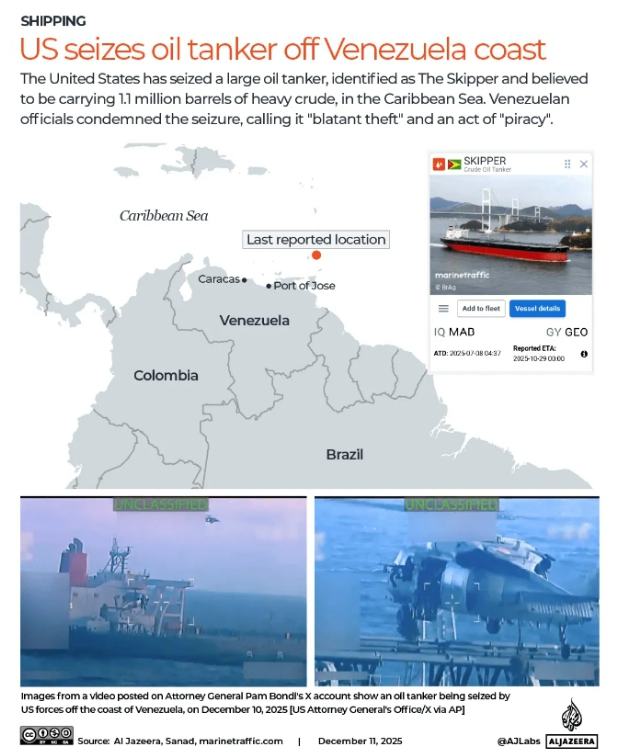
The blockade follows last week’s seizure of the Skipper oil tanker by US forces off Venezuela’s coast, an action that already sparked international criticism.
US officials claimed the vessel was linked to sanctions violations, while Caracas described the operation as piracy and an illegal act of aggression.
Venezuelan authorities say the tanker was engaged in legitimate international trade, transporting crude oil that belongs to the Venezuelan people.
President Nicolas Maduro responded angrily, warning that “the world will rise up against piracy and oil plunder” committed under the guise of enforcement.
Maduro accused Washington of attempting to steal Venezuela’s natural resources while destabilizing the region through military intimidation.
In a formal statement, Venezuela’s government rejected Trump’s move as a “grotesque threat” that violates international law and national sovereignty.
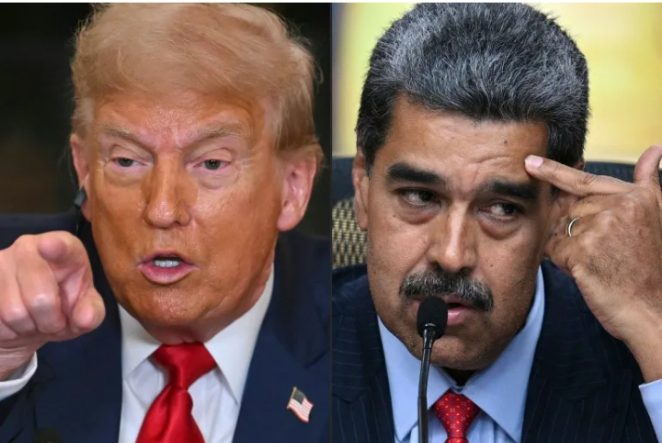
“The President of the United States intends to impose, in an utterly irrational manner, a supposed naval blockade,” the statement said bluntly.
Caracas argued the blockade’s true objective is regime change, not drug enforcement, echoing long-standing Venezuelan accusations against US policy.
Trump orders naval blockade of Venezuelan oil tankers amid a broader expansion of US naval and aerial operations across the Caribbean and eastern Pacific.
Since September, US forces have reportedly killed at least 90 people during maritime interdictions, actions criticised by international law experts.
Washington insists the operations target drug trafficking networks, yet has provided limited public evidence supporting these lethal encounters.
Human rights groups have raised concerns that several incidents may constitute extrajudicial killings under international humanitarian standards.
The Venezuelan government says US drug enforcement claims are merely a pretext to justify military escalation and economic coercion.
Venezuela holds the world’s largest proven oil reserves, making its energy sector a long-standing focal point of geopolitical rivalry.
Strict US sanctions on Venezuelan oil exports, first imposed during Trump’s earlier presidency, have devastated the country’s economy.
Those sanctions were tightened again at the beginning of Trump’s second term, deepening shortages and financial isolation.
Reuters reported that only tankers chartered by US oil giant Chevron have recently left Venezuelan ports without interference.
Chevron operates through joint ventures with Venezuela’s state-run oil company PDVSA under special US government authorisation.
The arrangement allows Chevron to export Venezuelan crude to the United States, highlighting selective enforcement within sanctions regimes.
Trump orders naval blockade of Venezuelan oil tankers while US courts simultaneously pursue Venezuelan assets through legal mechanisms.
Earlier this month, a US court ordered the forced sale of Citgo, a Venezuelan-owned oil company, to satisfy outstanding debts.
Caracas condemned the ruling as another example of asset seizure disguised as legal accountability.
Venezuela’s ambassador to the United Nations, Samuel Moncada, formally denounced the tanker seizure before the UN Security Council.
In a letter to the council president, Moncada described the action as “state piracy carried out through the use of military force.”
He accused Washington of kidnapping the Skipper’s crew and stealing oil belonging to a UN member state.
Trump’s decision has also drawn criticism within the United States, including from members of Congress.
Democratic Congressman Joaquin Castro called the blockade “unquestionably an act of war” lacking congressional authorization.
“This is a war the Congress never authorized and the American people do not want,” Castro wrote on social media.
He warned that the blockade risks dragging Americans into yet another costly foreign conflict aimed at regime change.
Castro noted lawmakers would soon vote on a resolution directing the president to end hostilities with Venezuela.
“Every member of the House will have to decide where they stand,” Castro added pointedly.
Trump orders naval blockade of Venezuelan oil tankers despite warnings that such actions could violate international maritime law.
Legal experts say a naval blockade traditionally constitutes an act of war under international conventions.
They argue unilateral enforcement outside declared hostilities risks destabilizing global shipping norms and trade routes.
Regional governments have so far responded cautiously, though analysts expect diplomatic backlash across Latin America.
Several countries fear the precedent could justify future maritime interventions beyond Venezuelan waters.
China and Russia, both diplomatic allies of Caracas, have previously condemned US sanctions and seizures involving Venezuelan oil.
Moscow reiterated support for Venezuela following the Skipper incident, warning against further escalation.
Beijing has called for respect for national sovereignty and non-interference in internal affairs.
Trump’s aggressive maritime posture also coincides with heightened rhetoric targeting other sanctioned states.
Analysts say the blockade reflects a broader shift toward coercive enforcement rather than multilateral diplomacy.
Trump orders naval blockade of Venezuelan oil tankers at a moment of fragile global energy markets and geopolitical uncertainty.
Any prolonged disruption to Venezuelan exports could ripple through oil prices, particularly in regional markets.
Economists warn that tightening supply routes may worsen humanitarian conditions inside Venezuela.
Ordinary Venezuelans already face severe shortages of food, medicine, and basic services after years of sanctions.
International aid groups caution that further economic isolation could deepen civilian suffering.
Despite criticism, Trump has shown little sign of reversing course, framing the blockade as decisive leadership.
“This is about protecting America and stopping criminal regimes,” Trump said, defending the move online.
As tensions mount, the risk of miscalculation at sea remains high, with consequences far beyond Venezuelan waters.
Read also: Trump escalates Caribbean campaign as US military kills eight in eastern pacific vessel strikes
About The Author


