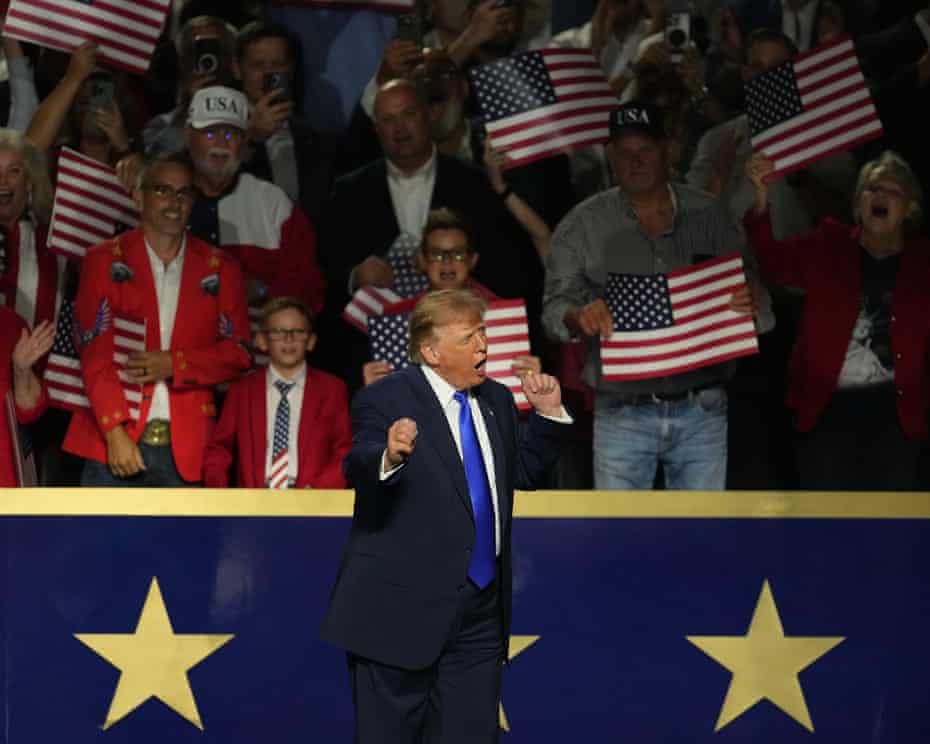
US counter-terrorism under Trump is facing renewed scrutiny 25 years after the September 11 attacks, with terrorism experts warning that budget cuts, loss of experienced personnel, shifting priorities and growing complacency could leave America exposed to a changing terrorist threat.
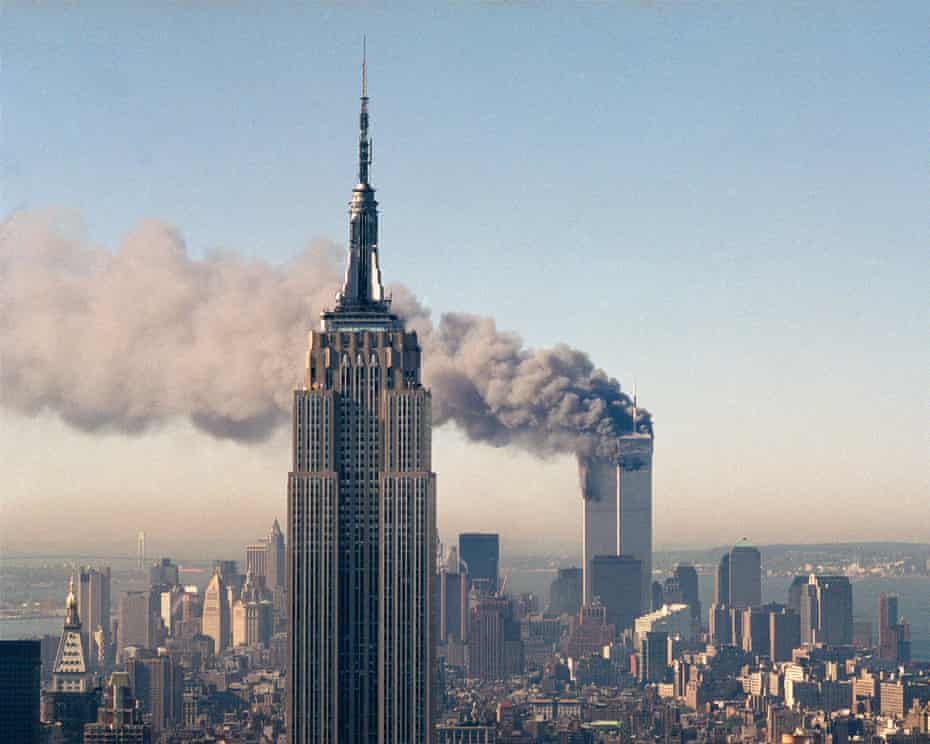
The warning comes as the United States marks a quarter-century since the attacks launched by Osama bin Laden’s al-Qaida against New York and Washington killed about 3,000 people and triggered decades of conflict, radicalisation and instability across the Middle East and beyond.
Although the US has not experienced another attack on anything close to the scale of 9/11, experts say the absence of a catastrophic attack should not be mistaken for the disappearance of the terrorist threat.

Some analysts have raised particular concerns about the direction of the Trump administration, accusing it of politicising counter-terrorism, making controversial appointments to senior intelligence positions and redirecting resources towards other priorities, including drug cartels.
Experts warn US counter-terrorism resources are being stretched
Bruce Hoffman, a terrorism expert at Georgetown University, said the lessons of 9/11 should not be forgotten simply because the US has avoided another attack of comparable magnitude.
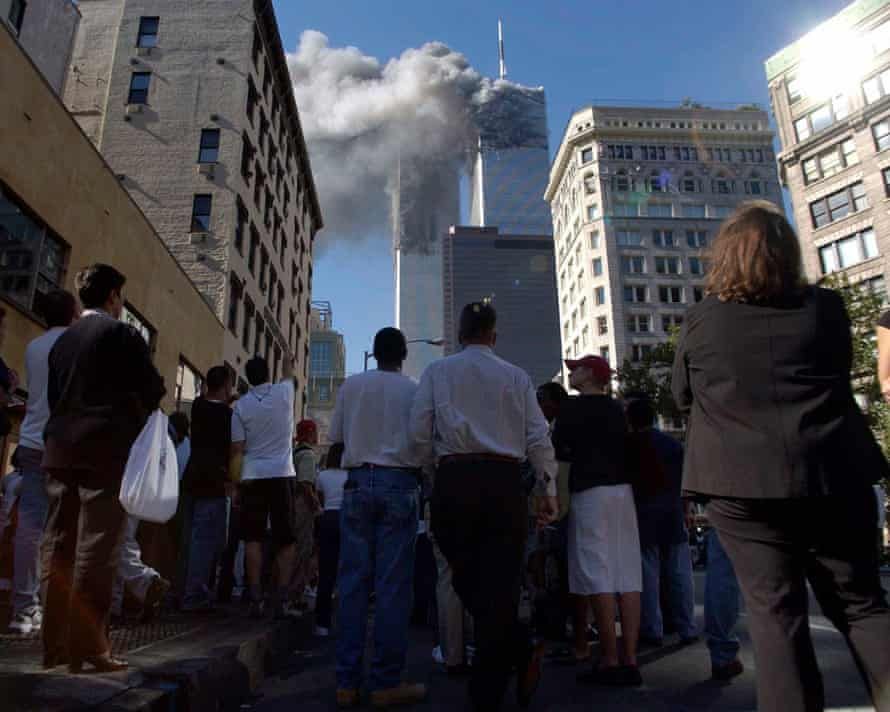
“I remember [9/11] and this pure chaos and pandemonium in the streets and I remember thinking that we would never lower our guard again and complacency against a threat that is episodic but when it is revealed highly consequential,” Hoffman said.
In testimony to the US House permanent select committee on intelligence this year, Hoffman warned that the system established after 9/11 was weakening.
“The counter-terrorism architecture built after 9/11 is eroding … through budget cuts, personnel losses, and the diminution of terrorism as a national security priority,” he said.
Hoffman argued that the situation was beginning to resemble the conditions that existed before the 2001 attacks.
This was “recreating the conditions of under-resourcing and institutional neglect that preceded the 2001 attacks,” he warned, adding that “the terrorist threat to Americans has both changed and grown.”
Terrorism no longer receives the same priority
The US intelligence community has undergone a major strategic shift since the years immediately following 9/11.
Many analysts supported the 2018 decision to move attention away from terrorism and towards long-term strategic competition with countries such as Russia and China.
However, experts now question whether the shift, combined with further policy decisions by the Trump administration, has left counter-terrorism capabilities vulnerable.
Colin Clarke, executive director of the Soufan Center, described the pressures facing US intelligence agencies as a “basket of factors”.
Those factors included “funding, personnel [and] complacency”, Clarke said.
“There is a certain amount of fatigue. We did the global war on terror for 20 years and people were keen to pivot to something else,” he added.
Clarke also expressed concern about morale within the intelligence community.
“There is a real lack of morale because of the way the president has treated the intelligence community … the quiet professionals are really demoralised,” he said.
Trump administration faces criticism over counter-terrorism strategy
The Trump administration counter-terrorism strategy has become one of the major points of controversy.
An updated strategy released in May has been criticised by intelligence experts and analysts who argue that it places greater emphasis on leftwing violence, drug cartels and gangs while downplaying the threat posed by rightwing extremism.
The administration has also designated criminal groups such as Mexican drug cartels as foreign terrorist organisations, a move that has increased the demands placed on already limited counter-terrorism resources.
Clarke said the government now had to make difficult choices because the resources available were not unlimited.
“It is a very partial document [and] raises the question: are you protecting America or people who agree with you?” he said.
“We have finite resources now. You don’t have a blank cheque like after 9/11 and at the same time it’s not just Sunni jihadist groups which are considered the threat.”
Critics question political influence on security policy
Devorah Margolin of the Washington Institute for Near East Policy described the new strategy as a significant change in direction.
She acknowledged that counter-terrorism policies could legitimately evolve as threats changed, but questioned whether the latest strategy was being driven sufficiently by security assessments.
“That is not to say that counter-terrorism policies cannot change as the landscape changes, but this year’s strategy appears more focused on a political agenda than the reality of the threat,” Margolin said.
She argued that the strategy had expanded the definition of counter-terrorism and sought to use the extensive bureaucracy created after 9/11 for political purposes.
“While the strategy still acknowledged the threat posed by groups like the Islamic State and al-Qaida, it also expanded definitions of counter-terrorism,” Margolin said.
“It sought to use the vast counter-terrorism bureaucracy that has been built over the last two decades for its own political agenda. This has spread dwindling counter-terrorism resources even thinner.”
Loss of experienced intelligence officials raises concern
The US intelligence community and terrorism threat are also being affected by the loss of experienced personnel, according to experts.
Veterans have criticised the appointments of Tulsi Gabbard as director of national intelligence and Kash Patel as FBI director, arguing that both lacked sufficient top-level experience in law enforcement.
For the 2026 financial year, requested funding for the principal agencies of the civilian intelligence community totalled $81bn.
But experts say the size of the overall intelligence budget does not necessarily mean every counter-terrorism programme has adequate resources.
The designation of drug cartels as foreign terrorist organisations has added another layer of responsibility for agencies already dealing with competing national security priorities.
Experts have also criticised the dismantling of programmes designed to counter extremist ideologies and prevent radicalisation.
Don Rassler, director of strategic initiatives at the Combating Terrorism Center at West Point, said terrorism had become less prominent as US strategic attention moved towards China and Russia.
He warned against allowing the intelligence community to repeat the mistakes of the past.
The US needed to be careful not to “revert back to the dynamics that led to an event like 9/11”, Rassler said.
9/11 lessons remain relevant 25 years later
The 9/11 anniversary and US terrorism threat have renewed attention on the intelligence failures that preceded the attacks.
The September 11 attacks were the culmination of a series of operations and threats associated with bin Laden and al-Qaida.
In 1996 and again in 1998, bin Laden declared war on the United States, issuing statements from Afghanistan that included grievances against US policy in the Middle East.
Soon afterwards, twin bombings destroyed US embassies in east Africa, while a suicide attack nearly sank a US warship off Yemen in 2000.
Investigations into 9/11 later highlighted failures by senior officials to act on intelligence warnings, as well as failures by the FBI and CIA to share crucial information.
The history remains important because many of the experts warning today are not suggesting that another 9/11-style attack is imminent. Rather, they argue that counter-terrorism systems must remain capable of detecting threats before they become catastrophic.
The terrorist threat has changed
The threat facing the US today is different from the one that existed in 2001.
Analysts remain divided over whether al-Qaida’s apparent lack of major recent attempts to strike the US reflects reduced ambition or a deliberate strategy of waiting for an opportunity.
A recent UN report based on intelligence supplied by member states said al-Qaida’s senior leadership remained marginalised, while its capability and intent to conduct external operations remained unclear.
But the absence of a major attack does not mean the broader extremist threat has disappeared.
Read also: Trump $5000 Midterm election promise: President offers Americans $5,000 if Republicans win
Since 9/11, there have been more than 100 attacks in the US by violent Islamic extremists linked to the broader jihadi movement, according to a count by the Center for Strategic and International Studies.
Rassler said Islamist extremist groups remained a major concern despite their reduced prominence within the broader national security agenda.
The US, he said, had “to accept more terrorist risk” as fewer resources and personnel were devoted to counter-terrorism.
“There hasn’t been another attack … but there is a danger of believing that the [terrorist] threat isn’t there,” Rassler said.
“The threat is different in many ways from 10 years ago and we have to be as clear-eyed as possible about it.”
Twenty-five years after 9/11, the central warning from terrorism experts is therefore not simply about the possibility of another attack. It is about whether the United States can maintain the institutional knowledge, resources and vigilance needed to identify an evolving threat before it becomes another national tragedy.
About The Author