
Hong Kong court convicts Wall Street Journal publisher Dow Jones Publishing for preventing journalist Selina Cheng from exercising her trade-union rights, a landmark ruling that raises an uncomfortable question for Nigeria: what happens when management treats workers and labour leaders as a problem simply because they organise, represent colleagues and challenge decisions affecting their welfare?
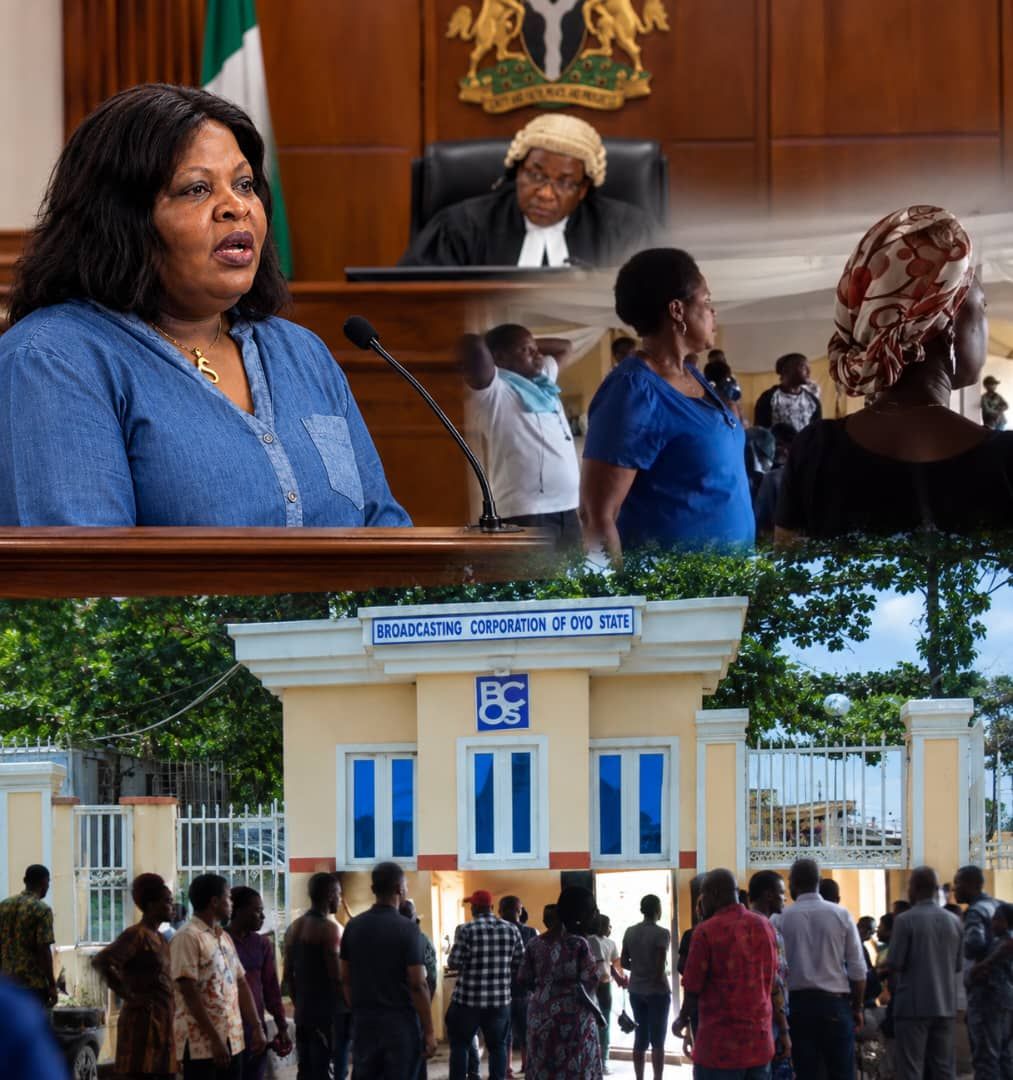
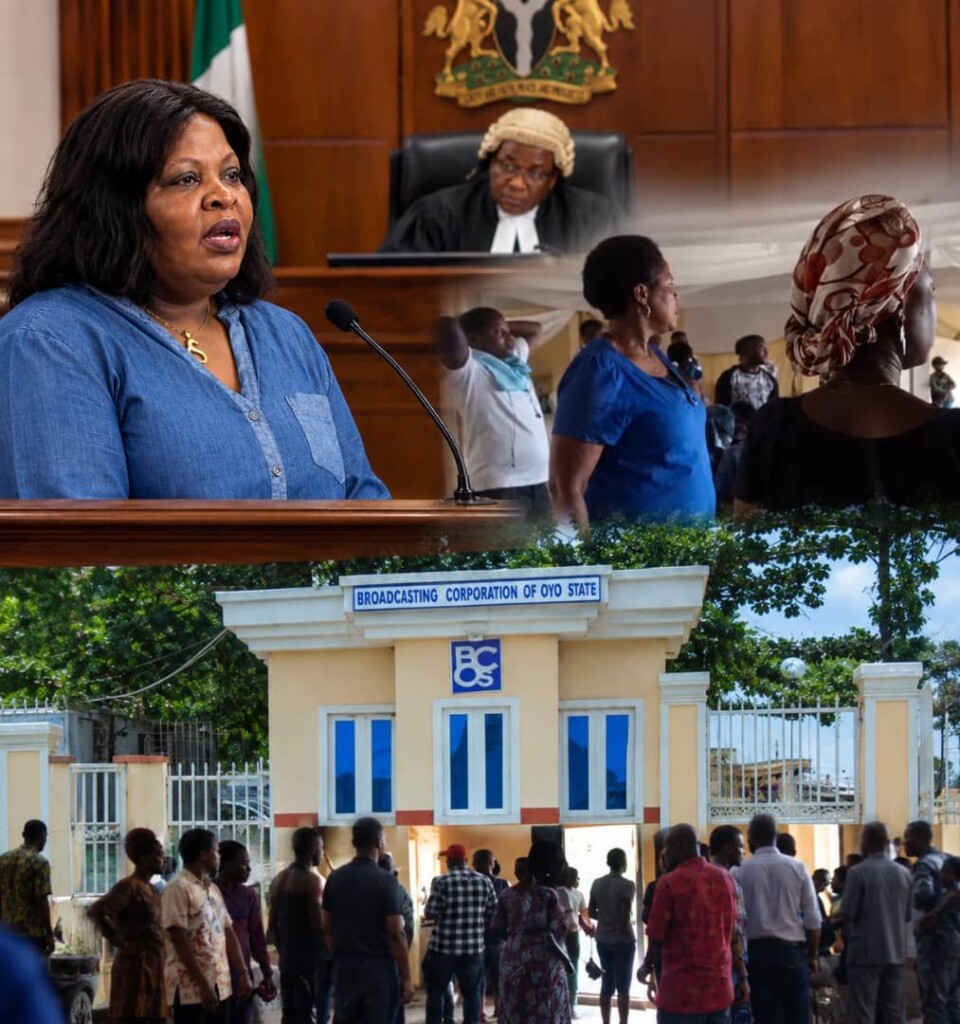
That question is particularly relevant at the Broadcasting Corporation of Oyo State (BCOS), where the relationship between management and organised labour has deteriorated into a bitter dispute over workers’ welfare, union activities and the treatment of labour representatives.
The Hong Kong case is not merely another employment dispute. It is a court-tested example of what can happen when an employer attempts to place conditions around an employee’s participation in a registered trade union.
And it provides a powerful lens through which the conduct of BCOS management can be examined.
Hong Kong Court Convicts Wall Street Journal Publisher
The facts of the Hong Kong case are striking.
Selina Cheng was a reporter for the Wall Street Journal covering China’s automobile and energy sectors when she was elected chairperson of the Hong Kong Journalists Association in 2024.
Her decision to take up the union leadership position became a source of conflict with her employer.
According to the evidence reported from the proceedings, Cheng was told that she needed company permission to run for the union chairpersonship and that assuming the position could affect her continued employment.
Principal Magistrate David Cheung ultimately found Dow Jones guilty of preventing or deterring Cheng from exercising her right to become an officer of a registered trade union.
The magistrate’s finding was particularly direct: “The company required her to obtain permission to run for the chairpersonship” of the Hong Kong Journalists Association, permission the court said would have been denied.
The court also found that the company had asserted that Cheng would not remain employed if she assumed the union position.

That is the heart of the case.
An employer was found guilty not necessarily because the employee was incapable of doing her job, but because her exercise of a trade-union role had become unacceptable to the employer.
The Court Drew an Important Line
There is an important distinction in the judgment.
Dow Jones was convicted on the charge relating to preventing or deterring Cheng from exercising her union rights.
But the company was acquitted on the separate allegation that it unlawfully dismissed her because she exercised those rights.
The magistrate said the defence had raised sufficient reasonable doubt that her dismissal could have been connected to a genuine corporate restructuring.
That distinction makes the ruling more, not less, significant.
The court did not simply accept every allegation made by Cheng.
It examined the separate claims independently and convicted the publisher on the specific issue where the evidence established interference with her trade-union right.
That is precisely what makes the case relevant to Nigeria.
Selina Cheng’s Warning Goes Beyond Hong Kong
After the ruling, Cheng issued a warning that resonates far beyond the newsroom in which she once worked.
“If reporters’ employment rights are not sufficiently safeguarded, or when their rights are violated and not enforced in law, then we can no longer work safely as reporters,” she said.
Replace “reporters” with “workers” and the underlying principle becomes even broader.
Workers cannot effectively exercise collective rights if exercising those rights places their employment, dignity or livelihood at the mercy of management.
Trade unions exist precisely because individual workers may lack the bargaining power to confront an employer alone.
That is why trade-union representation is not an act of rebellion.
It is an established component of industrial relations.
And Then There Is BCOS
This is where the Hong Kong judgment becomes uncomfortable for the Broadcasting Corporation of Oyo State.
At BCOS, workers have been represented by unions in disputes concerning welfare, salaries, allowances, deductions, working conditions and other employment matters.
The unions have also organised themselves around the defence of those interests.
The BCOS Management also requested Union leaders to first obtain permission before union activities can be held. More alarming is the directive that the union must also obtain permission before using the union hall.
The RATTAWU BCOS chapter’s own communication to members described its purpose in unmistakable terms: members were being brought together to discuss matters concerning the “welfare and progress of the BCOS”, with the union calling for a stronger organisation that works for every member.
That is exactly what a trade union is supposed to do.
But when management begins treating the representatives of workers as enemies because they perform that function, industrial relations quickly cease to be about ordinary disagreement.
They become a contest over whether workers are actually free to organise.
The BCOS Question: Can Workers Represent Workers Without Fear?
The BCOS labour leadership has maintained that representatives were threatened with dismissal, intimidated and subjected to derogatory remarks while carrying out their responsibilities.
Those claims should not simply be dismissed as a quarrel between management and labour.
They deserve scrutiny because of what they mean for every other employee at BCOS.
If a worker sees a colleague threatened because he or she accepted a union responsibility, what message does that send to the rest of the workforce?
If a labour leader can be intimidated for raising workers’ grievances, who will speak when salaries, allowances, deductions or working conditions become problematic?
And if the price of representation is victimisation, what remains of collective bargaining?
The Prostration Incident Shows How Complicated the BCOS Dispute Has Become
The controversy surrounding the recent BCOS peace meeting adds another extraordinary dimension.
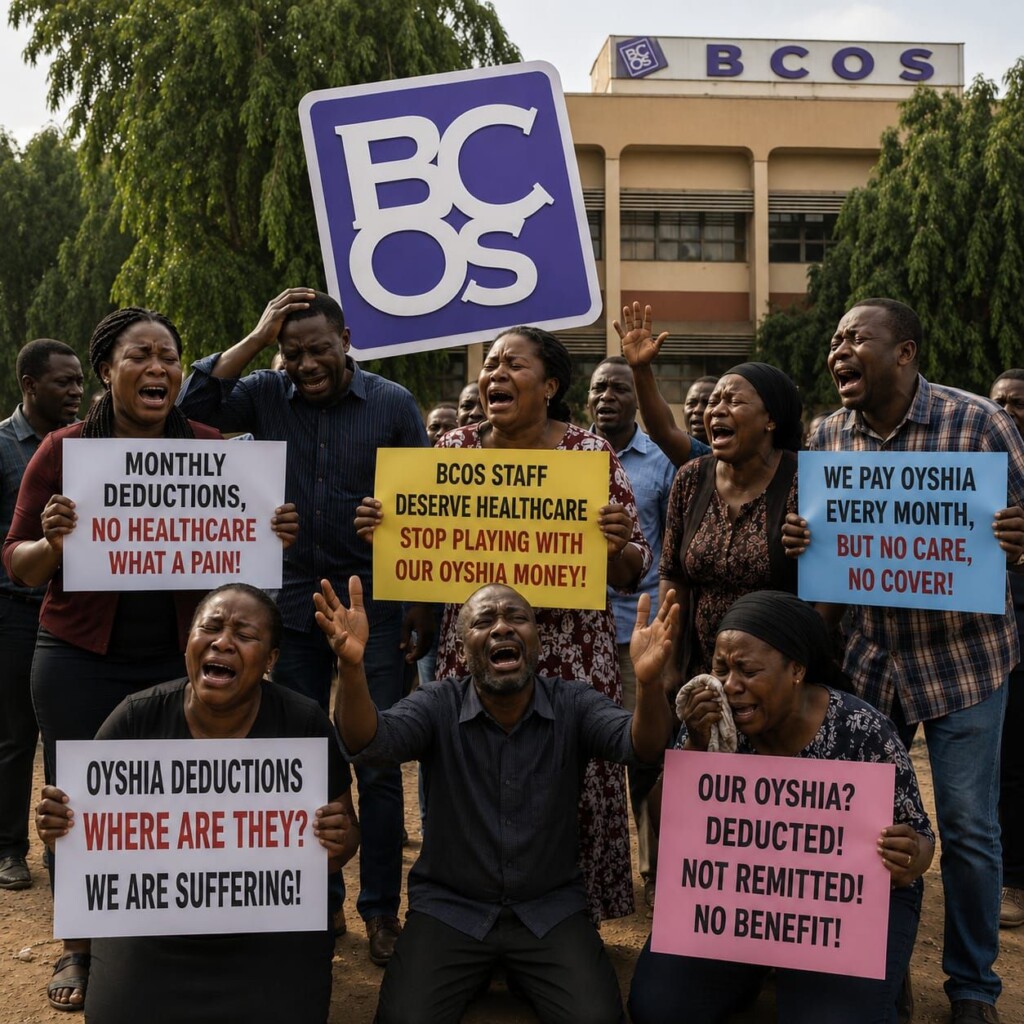
The labour representatives have rejected the suggestion that they went before management to beg.
Their explanation is that they acted pursuant to the directives of the Nigeria Labour Congress, Oyo State Council, and RATTAWU State Council.
The labour centres intervened because they wanted industrial peace.
The representatives complied with that intervention and, according to the labour leadership, were instructed to prostrate before the BCOS leadership as part of the peace gesture.
That action has subsequently been portrayed as begging.
But there is an obvious difference between a worker independently kneeling before management to plead for mercy and a group of labour representatives carrying out a peace gesture directed by organised labour.
The distinction matters.
The labour representatives were acting in a labour dispute, not abandoning their union responsibilities.
Indeed, they maintained that their substantive demands remained intact.
Peace Is Not Permission to Silence Labour
There is nothing inherently contradictory about a union seeking peace while continuing to defend workers.
The entire purpose of collective bargaining is to find a way through disagreement without destroying the workplace.
The danger begins when management interprets every challenge as insubordination.
That is the lesson emerging from Hong Kong.
Cheng did not become an employee without rights because she became a union leader.
And a BCOS worker does not cease to be an employee with rights because he or she becomes a labour representative.
What Makes the Hong Kong Case So Important for Nigeria
The Hong Kong court did not convict Dow Jones because the company and Cheng disagreed.
It convicted the publisher because the court found that the company had prevented or deterred her from exercising a protected trade-union right.
That is an important distinction for Nigeria.
Management has authority.
But management’s authority is not unlimited.
Workers have responsibilities to their employers.
But they also have rights as employees and as members of lawful trade unions.
The two principles must coexist.
When management uses its institutional power to make union participation dangerous, the balance is destroyed.
And when that happens in a public institution, the matter becomes even more serious because the institution is not merely someone’s private business.
BCOS Management Must Answer the Bigger Question
The issue surrounding BCOS management therefore goes beyond the personality of individual labour leaders.
It goes beyond the question of who prostrated before whom.
It goes beyond whether a particular union leader was respectful enough to management.
The fundamental question is whether BCOS workers are free to participate in legitimate trade-union activities without fear of retaliation.
That is the question that the Hong Kong judgment puts squarely on the table.
And it is a question that the Chairman of the BCOS Board, Dotun Olaitan, cannot reasonably avoid if the Corporation is committed to credible governance and industrial harmony.
The Chairman sits at the level where the conduct of management and the welfare of workers should ultimately attract institutional scrutiny.
If labour leaders are threatened because they perform their union responsibilities, the Board should want to know.
If workers are victimised because they participate in organised labour, the Board should want to know.
If legitimate welfare complaints remain unresolved, the Board should want to know.
And if a peace gesture by labour representatives is later weaponised against those same representatives and described as begging, the Board should ask whether the dispute is being resolved or merely reframed.
Nigeria Cannot Build Industrial Peace on Fear
Nigeria has no shortage of laws, institutions and labour organisations.
The real problem is enforcement.
The Nigeria Labour Congress and its affiliates have repeatedly warned about weaknesses in labour justice and the power imbalance between employers and workers.
At a 2026 labour adjudication forum, NLC President Joe Ajaero warned that labour justice could bend towards employers and called for stronger protection of workers against systemic power imbalances.
That concern makes the BCOS situation particularly important.
A country cannot claim to protect workers’ rights while allowing powerful institutions to treat union representation as an act of disloyalty.
The purpose of labour law is not to make management powerless.
It is to ensure that management’s power does not become absolute.
If Hong Kong Can Prosecute, What Happens in Nigeria?
This is ultimately where the Hong Kong case leaves Nigeria with an uncomfortable challenge.
Dow Jones is a powerful international media company.
Yet when a worker’s union rights were challenged, the matter went before a court.
Evidence was examined.
The company was acquitted on one count.
It was convicted on another.
The court did not protect the company merely because it was a major employer.
It did not convict it merely because an employee had made an allegation.
It separated the issues and reached a finding on the evidence.
That is what accountability should look like.
What About Dotun Olaitan and BCOS?
If the facts being presented by BCOS labour leaders amount to unlawful interference with trade-union rights, threats, victimisation or retaliation, then the answer should not be political protection.
It should be investigation.
It should be evidence.
It should be due process.
And if evidence establishes an offence, prosecution should follow regardless of the status of the person involved.
That principle should apply to a worker.
It should apply to a union leader.
It should apply to a management official.
And it should apply to the Chairman of a government-owned corporation.
If the Hong Kong case can result in a conviction when an employer interferes with a worker’s trade-union rights, then the Nigerian question is simple: if the conduct attributed to BCOS management is found to constitute the same kind of unlawful interference or victimisation, should BCOS Board Chairman Dotun Olaitan be subjected to the same standard of investigation and, where the evidence supports it, prosecution?
If the answer is no, then Nigeria must confront a far more disturbing question: are political connections and elite status creating a system in which the law protects the powerful while workers are left to fight alone?
That is the real lesson of the Hong Kong judgment.
The issue is not whether a worker should win every dispute with management.
The issue is whether a worker should be free to join a union, become a union leader and represent colleagues without being punished simply for doing so.
Read also: US counter-terrorism under Trump faces new warning 25 years after 9/11
Hong Kong has demonstrated that the question can reach a courtroom.
Nigeria must decide whether the same principle applies when the institution involved is a government-owned corporation, the people in charge are politically connected, and the workers at the bottom have little power beyond their unions.
The test for BCOS is therefore no longer whether labour leaders can be persuaded to prostrate in the name of peace. The test is whether management, the Board and the Nigerian system itself can respect the right of workers to stand upright as trade-union representatives.
Read more: Ireport247news
About The Author