

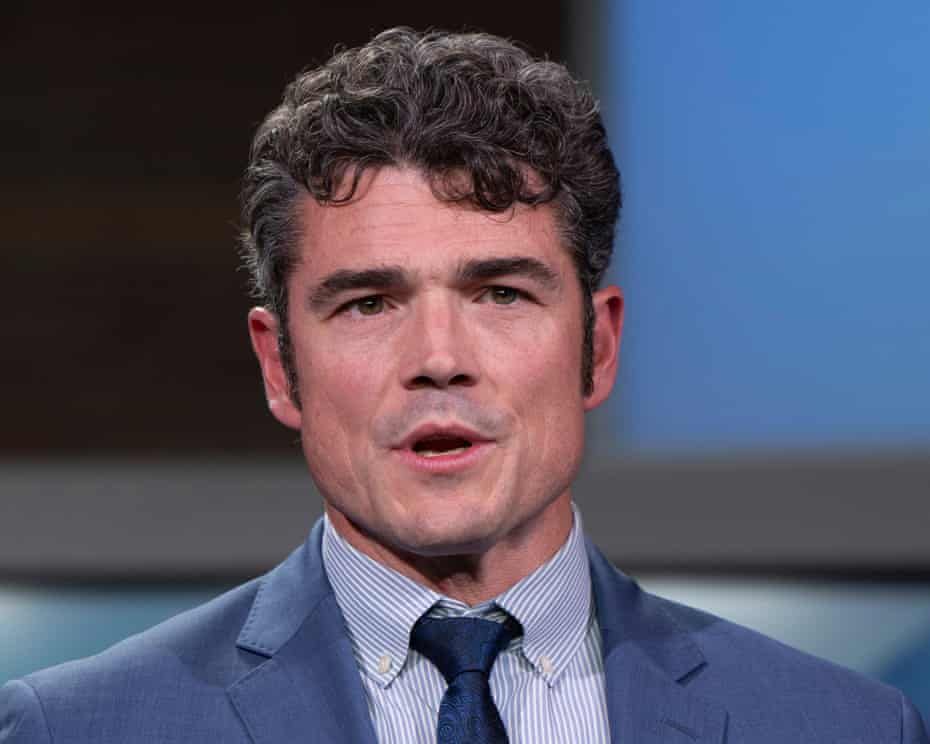
The “US-Israel war on Iran” has triggered a major shake-up in Washington as senior intelligence official Joseph Kent resigned, warning that Iran posed no imminent threat to the United States, directly contradicting the administration’s justification for the conflict.
In a sharply worded resignation letter addressed to Donald Trump, Kent stated that intelligence assessments did not support claims of an urgent Iranian danger.
His departure underscores growing internal divisions over the “US-Israel war on Iran,” particularly among national security officials tasked with evaluating threats and shaping counter-terrorism policy.
Kent, a former Green Beret and CIA operative, had only recently assumed leadership of the National Counterterrorism Center. His appointment itself drew scrutiny due to alleged links to far-right figures, including Nick Fuentes, raising broader concerns about political influence within US intelligence institutions even before the outbreak of the “US-Israel war on Iran.”
The resignation now amplifies questions about the credibility of the intelligence used to justify military escalation. Critics argue that Kent’s claim—that Iran posed no immediate threat—could weaken public and congressional support for continued US involvement, especially as the conflict risks expanding across the Gulf region.
Supporters of the administration, however, maintain that preemptive action remains necessary to counter Iran’s regional influence and military capabilities.
They argue that intelligence assessments are often contested and that decisions during wartime must balance classified risks with strategic urgency, particularly in volatile zones like the Strait of Hormuz.
Still, the timing of Kent’s exit is politically significant. It comes amid rising casualties, economic disruptions, and increasing skepticism among US allies about the long-term objectives of the “US-Israel war on Iran.” Several partner nations have already expressed reluctance to deepen military engagement, fearing a broader regional escalation.
Ultimately, Kent’s resignation may mark a turning point in how the conflict is perceived both domestically and internationally. If more officials echo his concerns, the “US-Israel war on Iran” could face mounting pressure from within the very institutions responsible for prosecuting it.
Read also:Heathrow Terminal 4 loses a third of passengers amid Gulf flight collapse
The fallout from Kent’s resignation could extend beyond Washington, influencing how international intelligence partners assess cooperation with the United States.
Allies who rely on shared threat evaluations may begin to question whether political considerations are shaping intelligence outputs tied to the “US-Israel war on Iran,” potentially straining long-standing security alliances.
Domestically, the move is likely to energize congressional oversight efforts, with lawmakers demanding greater transparency around the intelligence used to justify the conflict.
As pressure mounts on Donald Trump’s administration, the “US-Israel war on Iran” may face intensified scrutiny that could reshape both its strategy and public support in the weeks ahead.
The fallout from Joseph Kent’s resignation is expected to intensify political divisions in Washington, as lawmakers grapple with the implications of his claims.
Congressional hearings could be demanded to investigate whether intelligence was misrepresented or influenced by external lobbying efforts. Such inquiries may focus on the role of advisory networks, media narratives, and diplomatic pressures in shaping the decision to engage in conflict with Iran.
If substantiated, Kent’s assertions could lead to calls for stricter oversight of foreign policy decisions and reforms aimed at insulating national security strategy from undue external influence.
On the global stage, the resignation may further complicate already fragile diplomatic relations, particularly with allies who have expressed skepticism about the war’s justification.
Countries wary of escalation could use Kent’s statements as validation of their concerns, potentially weakening coalition support for US actions. Meanwhile, adversaries may exploit the controversy to question American credibility and unity. As debates intensify both domestically and internationally, Kent’s departure underscores a critical moment of reckoning over how wars are initiated, justified, and sustained in an increasingly complex geopolitical landscape.
About The Author


