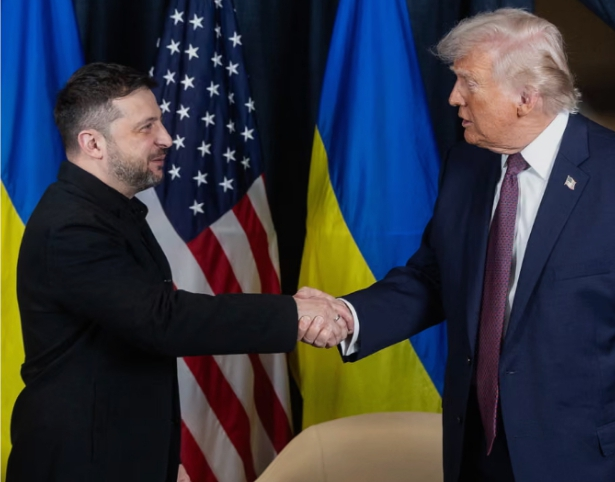
The Trump Greenland NATO agreement has triggered intense diplomatic debate after US president Donald Trump declared that a new framework with the defence alliance would give the United States full and permanent access to Greenland, a claim firmly challenged by Denmark and Greenlandic officials who insist sovereignty remains non-negotiable.
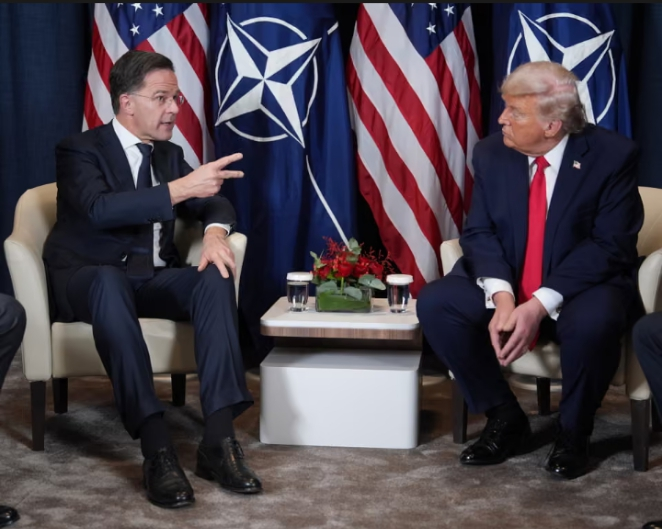
Trump made the remarks following talks with NATO secretary general Mark Rutte, stating that the agreement would allow “total access” to the strategically important Arctic island with no time limit attached.
He described the arrangement as a long-term solution aimed at protecting US and allied security interests in the Arctic, a region that has become increasingly important due to climate change, emerging shipping routes and rising geopolitical rivalry.
The US president’s comments came a day after he backed away from earlier threats to impose tariffs or use economic pressure to force European acceptance of expanded American control over Greenland.
Although Trump ruled out the use of force, his assertion that the Trump Greenland NATO agreement guarantees permanent access raised immediate concerns in Copenhagen and Nuuk over the implications for territorial integrity.
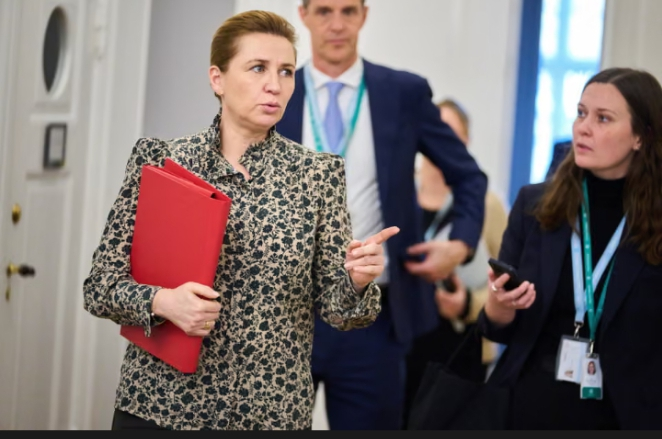
Denmark’s prime minister, Mette Frederiksen, was quick to respond, stating unequivocally that while Denmark remained open to dialogue on security cooperation, investment and economic development, its sovereignty and that of Greenland could not be negotiated.
She stressed that Denmark alone speaks for the kingdom in matters of sovereignty and that no international alliance, including NATO, has the authority to strike deals on its behalf.
Denmark’s defence minister, Troels Lund Poulsen, reinforced that position, noting that NATO’s secretary general could not negotiate on Denmark’s or Greenland’s behalf.
While acknowledging the importance of alliance unity, Poulsen said any cooperation under the Trump Greenland NATO agreement must respect existing legal frameworks and Greenland’s status as a self-governing territory within the Danish realm.
Greenland’s deputy prime minister, Múte Egede, also issued a strong statement, warning that Greenland would not be “given away” under external pressure.
He said Greenlanders would not accept their future being gambled with by foreign powers and insisted that any discussions about the island must involve Greenlandic authorities directly.
The dispute has highlighted long-standing tensions surrounding Greenland’s strategic value. The island, which sits between North America and Europe, plays a crucial role in Arctic defence and early-warning systems.
The United States already maintains a significant military presence there, including the Pituffik space base, formerly known as Thule Air Base, under a long-standing bilateral defence agreement with Denmark.
That agreement, originally signed in 1951 and updated in 2004 to reflect Greenland’s home-rule status, allows the US to expand its military footprint on the island with Danish consent.
Analysts suggest the Trump Greenland NATO agreement may involve a renegotiation or reinterpretation of this pact rather than a wholly new arrangement, though details remain unclear.
NATO secretary general Mark Rutte said alliance members were considering ways to strengthen Arctic security in response to growing Russian and Chinese activity in the region.
Speaking after meeting Trump at the World Economic Forum in Davos, Rutte described the discussions as constructive and said NATO commanders would work quickly to assess what additional measures might be required.
Rutte emphasised that NATO’s goal was to ensure that rival powers did not gain undue influence over Greenland’s economy or military infrastructure.
He noted that cooperation with Denmark and Greenland would be essential and said the alliance was committed to maintaining unity while addressing emerging security challenges.
Despite these assurances, European leaders remain wary of Trump’s approach, which many see as unpredictable and confrontational.
Trump’s repeated assertions that the US needs “complete control” of Greenland for national security have raised fears of a broader transatlantic rift and revived memories of his first-term proposal in 2019 to purchase the island outright.
In recent weeks, Trump escalated his rhetoric by threatening to impose tariffs on several European countries, including Denmark, unless they dropped objections to his Greenland ambitions.
The move prompted EU leaders to consider retaliatory economic measures and reignited concerns about a potential trade war between the US and Europe.
Although Trump has since softened his tone, EU officials say trust has been damaged. Several European governments believe firm resistance from Denmark and its allies helped push the US president toward de-escalation, but caution that future disagreements remain likely.
Italy’s prime minister, Giorgia Meloni, cautiously welcomed the shift in rhetoric, saying continued dialogue between allies was essential.
Dutch prime minister Dick Schoof also described the situation as a step toward de-escalation, while stressing the importance of cooperation within NATO to secure the Arctic region.
Germany’s chancellor, Friedrich Merz, urged European leaders not to abandon the transatlantic partnership despite recent tensions.
Speaking in Davos, he said trust remained NATO’s greatest strength and warned that both Europe and the United States depended on maintaining it in an era of renewed great-power competition.
France’s finance minister, Roland Lescure, described the developments surrounding the Trump Greenland NATO agreement as a positive sign that tensions were easing. He said de-escalation had become the key priority after days of uncertainty and diplomatic strain.
However, other European officials urged caution. Germany’s vice-chancellor, Lars Klingbeil, said Europe should wait to see what substantive agreements emerged and warned against complacency.
He stressed that Europe could not afford to relax simply because rhetoric had softened.
The European Commission has also signalled that it is prepared to respond firmly if US pressure resumes. EU officials have discussed using the bloc’s anti-coercion instrument, which could restrict US access to European markets, including investment and digital services, if necessary.
Within Greenland, public reaction has been mixed but largely sceptical of Trump’s claims. Protests were held outside the US consulate in Nuuk, with demonstrators expressing concern about sovereignty and self-determination.
Many Greenlanders fear that increased military activity could come at the expense of local interests and environmental protection.
Despite these concerns, Danish officials have acknowledged that Arctic security is a growing challenge. Melting ice has opened new shipping routes and increased access to natural resources, intensifying competition among major powers.
Denmark has said it is willing to work with allies, including the US, to strengthen regional security, provided cooperation respects territorial integrity.
Frederiksen reiterated that Denmark supports dialogue on defence initiatives, including potential contributions to US missile-defence systems in the Arctic, but insisted any such steps must be grounded in mutual respect and international law.
As discussions continue, uncertainty surrounds the true scope of the Trump Greenland NATO agreement. While Trump has portrayed it as granting permanent US access, Danish and NATO officials have downplayed that interpretation, suggesting negotiations are ongoing and no final terms have been agreed.
For now, the episode has underscored the fragile state of transatlantic relations and the delicate balance between collective security and national sovereignty.
Whether the Trump Greenland NATO agreement ultimately strengthens alliance unity or deepens divisions will depend on how negotiations unfold in the coming months.
What remains clear is that Greenland has become a focal point of global strategic competition, and any decisions affecting its future will carry significant implications not only for Denmark and the United States, but for the wider international order.