

Polish jets intercept Russian reconnaissance plane operations intensified concerns as Warsaw confirmed a NATO response near sovereign airspace amid heightened Baltic security tensions and regional military vigilance.
Poland’s armed forces confirmed that fighter jets were scrambled after detecting a Russian reconnaissance aircraft operating close to Polish-controlled airspace over the Baltic Sea.
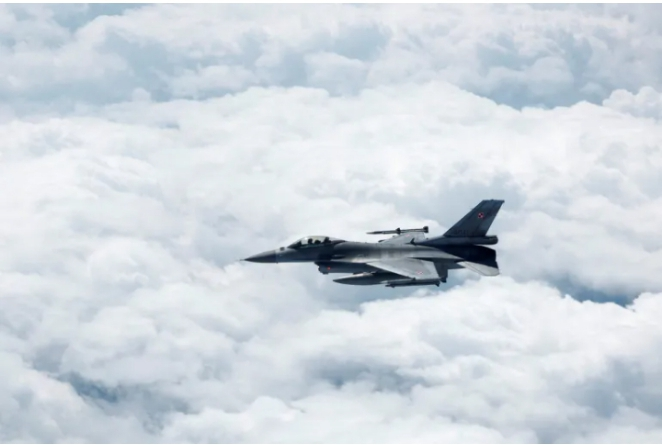
“This morning, Polish fighters intercepted, visually identified, and escorted a Russian reconnaissance aircraft,” the Operational Command of the Polish Armed Forces announced in an official statement.
Military officials stressed the aircraft never violated Polish airspace, but its proximity required immediate NATO-standard interception procedures under established alliance air-policing rules.
“The aircraft was escorted away from the area of responsibility and posed no direct threat to national security,” the Polish defence command clarified following the encounter.
The interception occurred just hours after Poland tracked suspicious airborne objects drifting from Belarus toward its northeastern regions during overnight surveillance operations.
Polish authorities temporarily closed civilian airspace in affected areas as radar systems monitored unidentified aerial objects approaching national borders under uncertain conditions.
“After thorough analysis, the objects were determined to be smuggling balloons moving with prevailing wind currents,” the Operational Command explained in a follow-up assessment.
Officials declined to specify the number or size of balloons, citing ongoing intelligence protocols and cross-border security coordination with neighbouring NATO partners.
Polish Defence Minister Wladyslaw Kosiniak-Kamysz addressed the public, emphasizing calm and operational control amid heightened holiday-period security deployments.
“All provocations over the Baltic Sea and near the Belarus border were under full control of the Polish Army,” Kosiniak-Kamysz stated in a post on X.
He also praised military personnel working during the Christmas period, highlighting their role in safeguarding national sovereignty amid evolving regional threats.
“I thank nearly 20,000 soldiers who, during the holidays, watch over our safety and do so extremely effectively,” the defence minister added.
The Russian and Belarusian embassies in Warsaw did not immediately respond to media requests seeking clarification regarding the reconnaissance flight and balloon incidents.
Security analysts note that Russian reconnaissance aircraft frequently operate near NATO airspace, testing response times without formally breaching sovereign boundaries.
“These missions are designed to probe NATO readiness while staying just within international law,” one regional security expert explained.
Poland, a frontline NATO state bordering both Russia’s Kaliningrad enclave and Belarus, remains particularly sensitive to such manoeuvres.
Since Russia’s invasion of Ukraine in February 2022, Poland has significantly expanded its air defence readiness and surveillance infrastructure.
NATO air-policing missions, involving rotating allied fighter squadrons, have increased in frequency across Eastern Europe and the Baltic region.
“These intercepts are routine but symbolically important,” a NATO official said, noting they demonstrate alliance unity and rapid reaction capability.
The latest incident follows repeated disruptions caused by smuggling balloons originating from Belarus and drifting into Lithuanian and Polish airspace.
Lithuania has described such balloons as a “hybrid attack,” alleging they are tacitly tolerated by Belarusian authorities allied with Moscow.
Belarus has consistently denied responsibility, dismissing the balloons as criminal smuggling operations unrelated to state policy or military coordination.
Smuggling balloons have previously forced airport closures in Lithuania, prompting increased regional cooperation on airspace monitoring and border security.
Poland’s alert level remains elevated following major airspace violations earlier this year involving Russian drones crossing into NATO territory.
Between September 9 and 10, Polish and allied forces reportedly shot down more than a dozen Russian drones over Polish airspace.
That incident marked the largest airspace incursion involving Russian unmanned aircraft since the Ukraine war began, alarming regional defence planners.
“Russia is testing how quickly NATO responds to escalating threats,” Polish Foreign Minister Radoslaw Sikorski warned after the drone incident.
Following those events, Poland called an emergency United Nations Security Council session to address what it described as blatant violations of international law.
“NATO borders must remain inviolable,” Sikorski stated, arguing that deterrence depends on consistent and credible military responses.
Military analysts suggest reconnaissance flights serve intelligence-gathering purposes, mapping radar coverage, response timings, and communication protocols.
“These encounters are calculated, not accidental,” said a former NATO air commander familiar with Baltic security operations.
Russia has not publicly commented on the latest interception, maintaining silence common in similar incidents involving NATO intercepts.
Read also: Epstein survivor demands Mountbatten-Windsor be ‘brought to justice’ in US
Moscow has previously accused NATO of “provocative air patrols,” countering alliance claims of defensive posture near Eastern European borders.
Despite heightened tensions, Polish officials emphasized restraint, stressing that the situation was handled professionally and without escalation.
“Our actions were measured, proportional, and fully compliant with international aviation norms,” the Polish Armed Forces reiterated.
Regional security experts caution that frequency, not intensity, now defines the evolving NATO-Russia airspace standoff.
“Normalization of intercepts increases miscalculation risks, especially during heightened geopolitical strain,” warned a European defence analyst.
The Baltic Sea remains one of Europe’s most militarized zones, with overlapping surveillance, naval exercises, and intelligence operations.
As winter conditions complicate aerial operations, NATO forces maintain constant readiness, supported by integrated radar and early-warning networks.
Poland continues investing heavily in air defence modernization, including advanced radar, missile systems, and expanded fighter jet capabilities.
“These investments are about deterrence, not provocation,” Kosiniak-Kamysz said previously when announcing defence budget increases.
With the Ukraine war entering another uncertain year, Poland’s role as NATO’s eastern shield grows increasingly central.
“Every successful interception reinforces alliance credibility,” a NATO spokesperson noted, describing such actions as defensive necessity.
While the immediate threat has passed, Polish authorities confirm airspace monitoring remains intensified across all border regions.
“This vigilance is permanent, not temporary,” the Operational Command emphasized in its concluding statement.
As geopolitical tensions persist, Poland’s intercept of the Russian reconnaissance aircraft underscores the fragile balance shaping European security today.


