Oluwo of Iwo declares he’ll go mad if he forsakes God, urging Yoruba people to abandon idol worship and return to the true faith in Olodumare.
The Oluwo of Iwo, Oba Abdulrasheed Adewale Akanbi, has reaffirmed his total devotion to God, declaring that he would run mad the day he separates himself from the Almighty.
The monarch made this powerful statement while addressing residents of Iwo, urging them to uphold faith in Olodumare and reject idol worship.
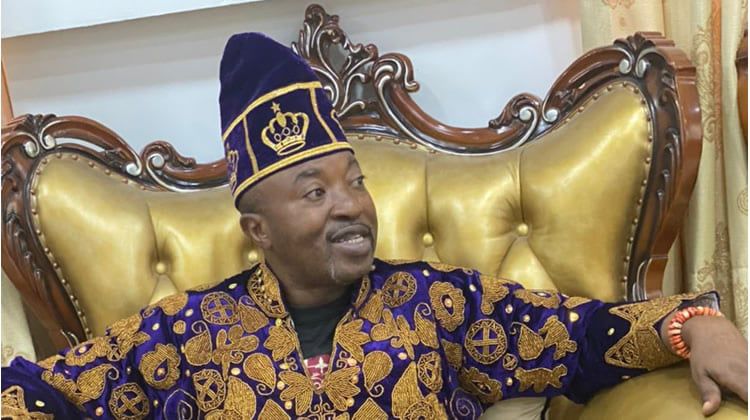
“I will run mad the day I dissociate myself from Olodumare (God),” the Oluwo of Iwo proclaimed.
“I will be disgraced the day I turn away from Him. God’s punishment will be upon me if I ever bow to any other gods apart from the Most High.”
The royal father, known for his outspoken views on faith and morality, used the occasion to preach repentance and spiritual redirection.
He advised his subjects to abandon idol worship, shun all forms of deity reverence, and surrender their lives to Jesus Christ, emphasizing that genuine worship should be directed only to the Creator of heaven and earth.

In recent times, the Oluwo of Iwo has consistently spoken against the continued worship of idols in Yoruba land.
According to him, idolatry represents spiritual blindness and cultural distortion that dishonor the true faith of their ancestors.
He lamented that many Yoruba people have misunderstood their heritage by clinging to practices that degrade rather than elevate the spirit.
Just two weeks ago, iReport247News reported that the monarch accused idol worshippers of defiling Yoruba heritage through “unclean and demeaning rituals.”
His words, though controversial, have resonated with many who see his message as a wake-up call for spiritual renewal.
However, traditionalists have criticized him, arguing that his remarks insult Yoruba culture and misrepresent the values of the ancestors.
In a viral social media post accompanied by pictures of traditional shrines, the Oluwo of Iwo questioned the moral and spiritual worth of Yoruba idols.
He described many of them as “dirty and unkempt,” asking whether their appearance truly reflects the dignity of Yoruba forefathers.
“Can anyone be proud to say, ‘This is how I honor my fathers and forefathers?’” he asked. “Are our ancestors really dirty, or have we turned their memory into something unworthy of respect?”
The monarch further challenged the logic of venerating deities like Sango, Ogun, Obatala, Oya, and Osun, insisting that such worship contradicts the teachings of true faith.
“Why should we bow to wood and iron?” he asked. “Our ancestors knew God before idols arrived. They served Olodumare — the Supreme Creator — not carved images.”
To the Oluwo of Iwo, the call to abandon idol worship is not a rejection of culture but a restoration of moral and spiritual purity.
He believes that Yoruba civilization once honored the Creator directly before external influences led to idol reverence. He stressed that faith in God should be guided by truth, not by rituals that lack divine approval.
“Our culture can flourish without idol worship,” he explained. “The problem is not our heritage but the distortion of its meaning. God alone deserves our praise and service.”
The monarch also emphasized that true progress can only come when people align their hearts with righteousness and divine order.
He urged Yoruba descendants everywhere to reconnect with Olodumare, the source of all wisdom, strength, and prosperity.
The Oluwo of Iwo has become one of the most controversial figures in Yoruba traditional leadership because of his reformist views.
While some cultural advocates accuse him of undermining ancient traditions, others applaud him as a voice of moral clarity in an era of confusion.
To his supporters, he represents a modern monarch guided by divine conviction one who combines culture with a living faith. To his critics, however, he appears as a disruptor challenging centuries of ancestral reverence.
Yet, Oba Akanbi remains firm. “I am not against our culture,” he said. “But I will never support anything that leads people away from God. Faith in God must come before any ritual or tradition.”
The monarch’s bold statement, “I’ll run mad if I ever forsake God” has become symbolic of his unshakable faith and courage. It reflects his conviction that his sanity, authority, and purpose as a king are inseparably tied to divine grace.
He has also used his platform to call for spiritual enlightenment among traditional rulers, urging them to lead by example and prioritize godliness over cultural conformity.
“A true king must guide his people to light, not darkness,” he said. “We must lead them to Olodumare, who gives wisdom to rule and the strength to serve.”
Across Nigeria, his message continues to spark discussions about religion, identity, and the evolving meaning of Yoruba spirituality. His critics may disagree, but the Oluwo of Iwo insists that God alone deserves glory and that any deviation from that truth is a step toward destruction.
The Oluwo of Iwo remains unwavering in his belief that devotion to God is the foundation of true leadership and moral order.
His fearless stance against idol worship continues to challenge cultural conventions while inspiring a new generation to embrace faith, purity, and divine connection.
Whether seen as a reformer or a rebel, his message is unmistakable, the Yoruba people must return to the worship of the Supreme Creator, Olodumare, and reject practices that weaken their spiritual foundation.
To him, faith in God is not only personal but essential for the rebirth of his people and the future of their heritage.
More news at ireport247news
About The Author