The Adiyan Water Project will boost Lagos water supply as Governor Sanwo-Olu targets clean, sustainable access for millions through new infrastructure upgrades.
The Adiyan Water Project is on track for completion next year, marking a major breakthrough in Lagos State’s long-standing quest to provide safe, reliable, and sufficient potable water for its rapidly growing population.
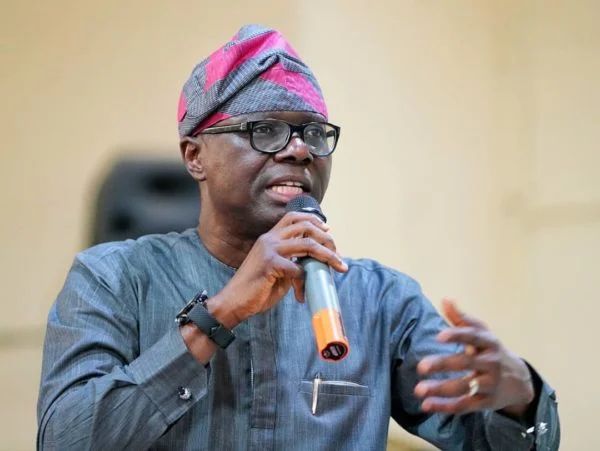
Governor Babajide Sanwo-Olu made this known during an inspection tour of key water infrastructure projects spanning parts of Ogun and Lagos states, reaffirming his administration’s commitment to sustainable urban development.
According to the governor, the Adiyan Waterworks One and Two projects are designed to deliver a combined capacity of 140 million gallons of water per day upon completion.
Each facility is expected to produce 70 million gallons daily, a scale that positions the project as one of the most ambitious water infrastructure investments in the state’s history.
Sanwo-Olu noted that the initiative would significantly improve Lagos water supply and reduce pressure on existing, overstretched systems.
During his visit to the project sites in Iju, Adiyan, and Akute areas of Ogun State, the governor explained that the inspection was necessary to ensure transparency, maintain construction timelines, and strengthen coordination with contractors.
He stressed that consistent monitoring remains critical to achieving value for public investment and delivering long-term benefits to residents.
Sanwo-Olu commended the pace of work already completed, revealing that over eight kilometres of pipelines have been successfully laid.
He added that progress was made possible after securing right-of-way approvals from the Ogun State Government, while compensation had been fully paid to all affected property owners.
These steps, he said, eliminated potential bottlenecks that often delay large-scale infrastructure projects.
Explaining the technical process, the governor stated that raw water drawn from the Ogun River would undergo comprehensive treatment before distribution.
He assured residents that the upgraded system would convert previously unusable brown water into clean, safe potable water suitable for household consumption.
The rehabilitation of Adiyan Waterworks One, alongside the construction of Adiyan Waterworks Two, is expected to be completed before the end of next year, further strengthening confidence in the Adiyan Water Project timeline.
Beyond Adiyan, the governor also commissioned the rehabilitated Akilo Mini Waterworks in Ogba, Lagos.
The facility, with a capacity of one million gallons per day, represents a smaller but critical intervention aimed at addressing water shortages in densely populated urban communities.
Sanwo-Olu described the project as evidence of the state government’s willingness to collaborate with development partners to improve public health outcomes and living standards.
The Akilo Mini Waterworks was delivered through the Urban Water and Sanitation Access Project (UWASAP), facilitated by WaterAid Nigeria and implemented in partnership with the Lagos State Water Corporation.
Producing about 4,500 cubic metres of water daily, the facility is expected to serve residents across Ogba, Agege, Ifako-Ijaiye, and nearby communities through household connections and digitally operated water kiosks.
Speaking at the commissioning ceremony, the governor emphasised that his administration’s water policy is built on sustainability, investment, and community inclusion.
He urged residents to protect public water assets by avoiding vandalism, illegal connections, and meter bypassing, warning that such actions undermine the long-term viability of water infrastructure Lagos desperately needs.
The Commissioner for the Environment and Water Resources, Mr. Tokunbo Wahab, described the Akilo project as a milestone in strengthening water governance under the Sanwo-Olu administration.
He highlighted key upgrades introduced at the facility, including a modern control panel room, clean water storage tanks, overhead tanks, automated motor kiosks, and integrated metering systems designed to promote accountability and transparency.
Wahab noted that the combined impact of the Akilo facility and the larger Adiyan Water Project demonstrates the state government’s layered approach to solving water challenges—addressing both mega supply gaps and localised community needs simultaneously.
WaterAid Nigeria’s Country Director, Ms. Evelyn Mere, said the UWASAP initiative aims to expand access to water, sanitation, and hygiene services in a way that is affordable, resilient, and scalable.
She revealed that the Akilo project was intentionally designed as a replicable model and confirmed that plans are underway to rehabilitate the Ojokoro Waterworks, which is expected to extend safe water access to an additional 100,000 residents.
The Managing Director of the Lagos State Water Corporation, Engr. Mukhtaar Tijani, explained that the Akilo facility, originally built in 2012, had been non-functional for years before the intervention.
He said its revival would restore steady water supply to thousands of households and reduce reliance on unsafe private sources.
Community leaders have also welcomed the developments. The Ologba of Ogba, Oba Egbeyemi Oladimeji, described the projects as a renewed source of hope, urging residents to take ownership of the infrastructure to ensure its longevity.
As Lagos continues to expand, the success of the Adiyan Water Project and supporting facilities like Akilo may prove pivotal in shaping a healthier, more resilient megacity.