Police visited the home of the Canada school shooting suspect multiple times over the years after reports of mental health concerns and potential risks involving firearms in the residence.
Authorities in Canada confirmed that officers were called repeatedly to a family home in Tumbler Ridge, a small town in northern British Columbia, where neighbours and relatives had expressed concerns about the teenager’s wellbeing.
The attack, which unfolded at a local secondary school, left six people dead, including a teacher and five students, and injured more than twenty others, two of whom remain in serious condition in hospital.
Police later discovered two family members dead at the suspect’s home, while the teenager was found at the school with a gunshot wound and was subsequently pronounced dead.
Tumbler Ridge, a community of about 2,400 residents, has been left in shock. Officials described the attack as one of the most devastating school shootings in recent Canadian history.
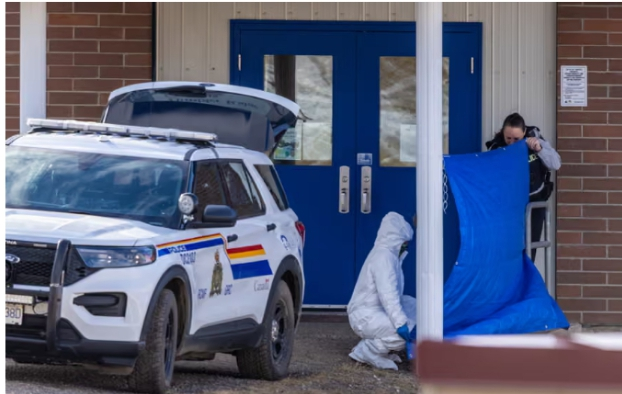
Deputy commissioner Dwayne McDonald of the Royal Canadian Mounted Police explained that the family had been known to law enforcement for some time prior to the shooting, due to repeated reports of concerning behaviour.
McDonald stated that police visits had focused on the suspect’s mental health, with the individual occasionally taken for assessment under provincial mental health laws for evaluation and follow-up treatment.
At least one visit also involved firearms, as police seized weapons from the household roughly two years ago, citing concerns under Canada’s criminal code.
Those firearms were later returned after the lawful owner petitioned for their release, a decision that has sparked public debate about the balance between property rights and public safety in cases involving mental health.
McDonald noted that the suspect’s firearms licence had expired in 2024 and that no firearms were registered in the individual’s name at the timeof the attack.
The motive behind the shooting remains unclear. Investigators emphasised that the case is still at an early stage, and they cautioned against drawing conclusions before the inquiry is completed.
Canada’s prime minister, Mark Carney, announced plans to visit Tumbler Ridge to meet with grieving families, community leaders, and first responders affected by the tragedy.
Across the country, questions have emerged regarding how firearms regulation intersects with mental health interventions, particularly when police have previously engaged with a household over repeated concerns.
British Columbia’s premier, David Eby, acknowledged that residents have many questions about why weapons were returned to a home where authorities had previously identified risks, including mental health issues and access to firearms.
Former RCMP officer Sherry Benson-Podolchuk explained that current laws limit officers’ ability to permanently remove firearms during mental health assessments unless specific legal thresholds are met, highlighting a legal gap that complicates prevention.
Canada has stricter gun laws than the United States, including a ban on assault-style firearms and a national freeze on the sale of handguns.
Despite these restrictions, this attack has reignited debate about whether current laws sufficiently prevent such tragedies.
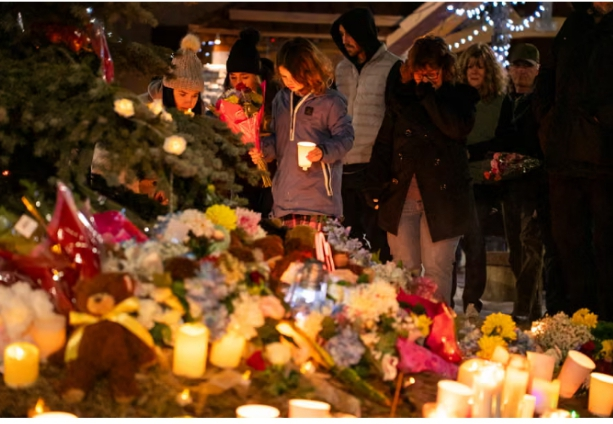
Families of the victims shared heartfelt memories as vigils were held across Tumbler Ridge. They emphasised that the focus should remain on those who were killed rather than the individual responsible for the attack.
Read also:Barbados PM Mia Mottley third election victory delivers clean sweep as BLP wins all 30 seats
Community members described the school as close-knit, with students and teachers forming strong relationships. Many noted that the sudden loss has left the town grieving and searching for answers about how this could have happened.
Investigators continue to collect evidence from the scene and the suspect’s home. Officials have stressed the importance of avoiding speculation and allowing the legal process to proceed without interference.
Court documents obtained by media outlets indicate that the suspect’s family had moved multiple times over the past several years, living in different provinces and often relocating due to work, housing, or family circumstances.
The suspect, identified as Jesse Van Rootselaar, was born biologically male but began publicly transitioning to female approximately six years ago, living socially and publicly under a female identity.
Authorities confirmed this to clarify speculation surrounding the incident.
After an independent provincial legislator suggested, without evidence, that the shooting was related to the suspect’s gender identity, advocates and experts on gun violence warned against vilifying an entire demographic based on one individual’s actions.
Research shows that transgender individuals are more often victims rather than perpetrators of violence, being more likely to experience sexual and aggravated assaults than cisgender people. This has prompted calls for careful and responsible reporting.
Residents of Tumbler Ridge described the suspect as someone who had been struggling but whose struggles were not always visible to the broader community.
Mental health professionals have emphasised the importance of early intervention and continuous support for youth in similar situations.
Neighbours recalled multiple occasions when police arrived at the family home, sometimes taking the suspect for brief mental health evaluations. These visits, while intended to provide assistance, did not prevent the eventual escalation of violence.
Community leaders have called for improvements in mental health services, especially in small and remote towns where access to specialists and follow-up care is limited, arguing that repeated interventions must be supported by long-term care solutions.
The return of firearms to the family home remains a contentious point, raising broader questions about balancing individual property rights with public safety concerns, particularly in situations where mental health and access to weapons intersect.

Local authorities have urged families and citizens to remain vigilant and to report warning signs, while also providing compassionate support for those struggling with mental health challenges.
The shooting has prompted renewed national debate over gun control, mental health care, and the responsibilities of law enforcement when early warning signs appear.
Experts have recommended reviewing legislation to allow better prevention while safeguarding rights.
School staff and emergency responders have been praised for their rapid response, which likely prevented further casualties. First responders continue to receive support and counselling to cope with the traumatic experience.
The tragedy has also prompted reflection on the wider community culture and support networks, highlighting the need for stronger communication between schools, families, and mental health services to identify risks early.
Parents and guardians in the town have expressed deep grief and anger, while simultaneously focusing on honouring the memories of children and teachers who lost their lives. Many have called for stricter safety measures in schools.
Victims’ families have shared personal stories to humanise the tragedy, emphasising the bright futures, talents, and aspirations of the children taken too soon, highlighting the human cost beyond statistics.
The Canadian government is reviewing the incident to determine whether legislative or policy changes are required to prevent similar attacks, particularly regarding firearms access and mental health support.
As communities across Canada mourn, discussions about preventive measures, mental health resources, and responsible gun ownership continue at local and national levels. Authorities have stressed the need for evidence-based solutions to avoid similar tragedies.
Public vigils and memorials are ongoing, providing a space for collective grief, reflection, and healing. Residents are calling for unity, understanding, and compassion as the investigation continues.
Experts have recommended that training for police officers include enhanced mental health awareness, better communication with families, and protocols for assessing risk when firearms are present in a home.
The Tumbler Ridge shooting has underscored gaps in the system that allowed warning signs to go unaddressed effectively, prompting urgent discussion on how to better integrate mental health and public safety measures.
In the aftermath, mental health advocates and policymakers are exploring new strategies for prevention, including community programs, school interventions, and legislation to balance rights and protection more effectively.
Authorities have emphasised that while this tragedy has drawn national attention, the focus must remain on supporting victims, families, and the broader community, ensuring that resources and assistance are made available to all affected.
The incident will likely serve as a case study in the intersection of mental health, firearms regulation, and law enforcement intervention, guiding policy discussions and community safety efforts across Canada for years to come.
About The Author