Democrats urge Europe to stand up to Trump as senior party figures arrive in Munich, warning that appeasement threatens transatlantic stability, democratic norms, and collective security arrangements.
The Munich gathering comes amid growing anxiety across European capitals over Washington’s unpredictability, as allies struggle to balance dependence on American power with preserving political dignity.
Democrats attending the conference argue Europe must abandon strategies based on accommodation, insisting such approaches only reinforce erratic behaviour and encourage further coercive diplomatic demands.
Several US lawmakers believe European hesitation reflects fear of retaliation, particularly through tariffs, defence commitments, or trade disputes that could destabilise already fragile economies.
The conference highlights an unusual moment where American opposition figures publicly align with European leaders against their own sitting president’s foreign policy approach.
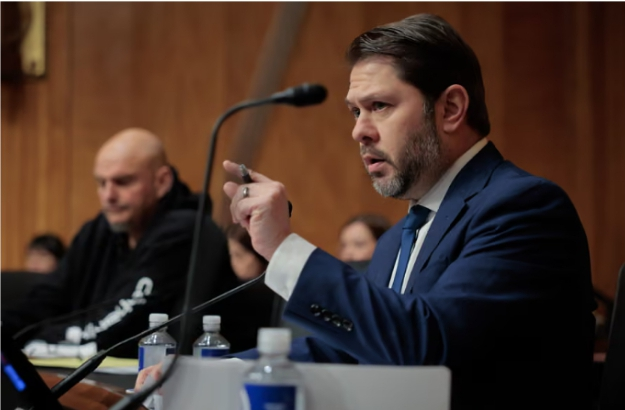
Democrats urge Europe to stand up to Trump by presenting a unified front, believing fragmentation allows Washington to exploit divisions for short term leverage.
Participants privately concede that Europe’s reliance on American military capabilities constrains its options, complicating calls for strategic independence and autonomous security frameworks.
Yet many Democrats argue Europe’s economic strength provides leverage often underestimated in transatlantic calculations, especially when exercised collectively rather than nationally.
European leaders remain deeply split, with some advocating accommodation to preserve security guarantees, while others insist resistance is essential to safeguard long term sovereignty.
The debate reflects broader uncertainty about whether the transatlantic alliance remains values based or has shifted into a purely transactional relationship.
Democrats warn that normalising transactional diplomacy undermines institutions built after the second world war to prevent coercion and great power domination.
Several speakers emphasise that unpredictability itself has become a strategic weapon, forcing allies into reactive postures and limiting independent policy planning.
The legacy of last year’s confrontational speeches still looms large, having triggered intense debates within European governments about shared democratic commitments.
Democrats attending the summit openly challenge the notion that accommodating disruptive leadership preserves stability, arguing it instead accelerates erosion of trust.
They point to historical precedents where appeasement emboldened aggressive behaviour, leaving allies weaker and strategically constrained.
Democrats urge Europe to stand up to Trump by resisting intimidation, even when such resistance carries short term economic or political costs.
The US delegation’s composition reflects internal American divisions, underscoring that Washington no longer speaks with a single coherent foreign policy voice.
European officials quietly express concern that future American administrations may continue prioritising domestic political optics over alliance management.
The resulting uncertainty forces Europe to contemplate faster defence integration, procurement coordination, and independent command capabilities.
Despite rising defence spending, European officials acknowledge meaningful autonomy will take years, leaving a dangerous interim period of strategic vulnerability.
Ukraine remains central to these calculations, serving as both a moral test and a strategic fault line for European unity.
Democrats warn that pressuring Ukraine into unfavourable settlements risks legitimising aggression and destabilising borders across eastern Europe.
They argue Europe’s credibility depends on sustaining support regardless of fluctuating signals from Washington.
Democrats urge Europe to stand up to Trump by reaffirming commitments to Ukraine rather than deferring decisions to US electoral cycles.
Some European leaders privately fear that resistance could provoke punitive measures affecting trade, technology cooperation, or energy markets.Others counter that failing to resist invites even greater demands, creating a cycle of escalating concessions.
The conference also reflects shifting global dynamics, with China positioned to exploit transatlantic discord to expand economic and political influence.
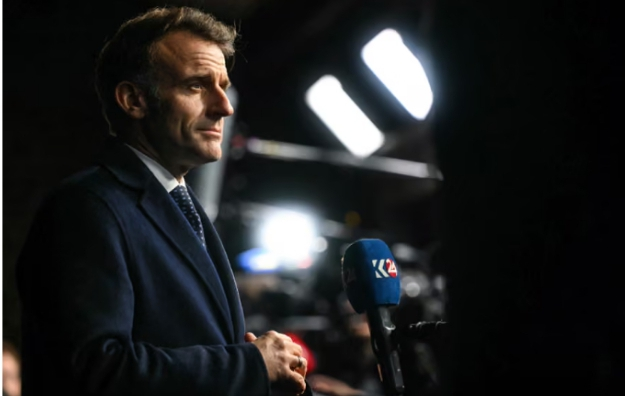
Several speakers argue that weakening multilateral institutions benefits authoritarian states seeking to replace rules with power based bargaining.
Democrats caution Europe against drifting toward strategic cynicism, warning that abandoning values weakens public support for international cooperation.
Public opinion across Europe increasingly questions reliance on an unpredictable ally, adding domestic pressure for policy recalibration.
The summit’s tone suggests a growing acceptance that the previous international order may not return.Rather than mourning its decline, participants debate how to construct resilient alternatives suited to a more volatile environment.
Democrats urge Europe to stand up to Trump by investing politically in unity, not merely increasing defence budgets.They stress that cohesion among European states is as important as military capability in deterring external pressure.
Internal European divisions, however, remain a significant obstacle, with differing threat perceptions and economic priorities.Some eastern states prioritise immediate security guarantees, while others focus on long term strategic autonomy.
This divergence complicates collective responses and creates openings for external actors to influence national positions.The summit repeatedly returns to the question of relevance, as smaller states fear marginalisation within shifting power structures.
Democrats acknowledge these fears but argue submission offers no lasting security, only delayed confrontation.They insist Europe’s greatest strength lies in its collective market, regulatory power, and diplomatic reach.

Democrats urge Europe to stand up to Trump by recognising that leverage exists beyond military dependence.As discussions conclude, few expect immediate consensus, but many sense a turning point in transatlantic relations.
The Munich conference may be remembered as a moment when Europe began redefining its role within an uncertain alliance framework.
Whether that redefinition leads to greater unity or deeper fragmentation remains unresolved.What is clear is that the era of unquestioned alignment has ended.
Democrats leave Munich convinced that Europe’s response will shape the future balance of democratic power.
Read also:Trump BBC lawsuit set for $10bn courtroom showdown in 2027
About The Author