North Korea ballistic missile launch from the eastern port city of Wonsan has heightened tensions on the Korean Peninsula, with South Korea saying the missile travelled more than 700 kilometres before falling into the sea.
South Korea’s Joint Chiefs of Staff detected the launch at about 6:30am on Saturday from the Wonsan area, with the missile heading towards the East Sea, also known as the Sea of Japan.
The launch came as relations between the two Koreas deteriorated further following a landmine explosion inside the Demilitarised Zone that seriously injured South Korean soldiers.
Wonsan missile launch triggers emergency response
South Korea immediately increased surveillance for possible additional launches and said it would share relevant intelligence with the United States and Japan.
The South Korean presidential office also convened an emergency National Security Council meeting to assess the situation and determine the implications of the missile test.
Japan also issued an emergency alert after its authorities detected what they described as a suspected ballistic missile.
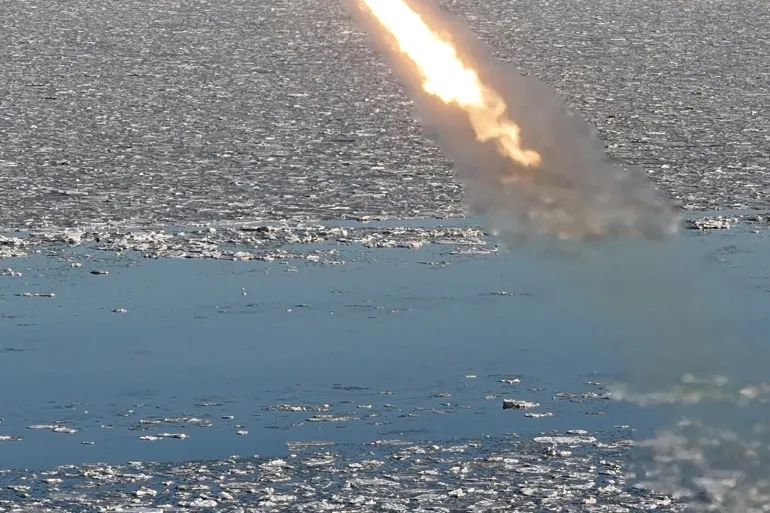
Japan’s coast guard, citing the country’s defence ministry, said the projectile appeared to have come down and warned vessels operating in the area to take precautions.
The US Indo-Pacific Command said it was aware of the launch and was consulting with Washington’s allies and partners.
The command said its initial assessment indicated that the event did not pose an immediate threat to US personnel or territory or to its allies.
North Korea South Korea tensions intensify
The missile launch followed a sharp dispute over landmine explosions in the DMZ, the heavily fortified buffer separating North and South Korea.
South Korea and the US-led United Nations Command have said North Korean mines caused the blasts, which injured three South Korean soldiers during a reconnaissance mission inside the border zone.
Seoul subsequently demanded an apology from Pyongyang and called on North Korea to stop strengthening its border defences with mines and anti-tank barriers.
North Korea rejected the accusation and refused to apologise.
Kim Yo Jong, the influential sister of North Korean leader Kim Jong Un, described Seoul’s demand as “utterly pathetic” and said Pyongyang intended to permanently cut ties with South Korea.
Her comments came just a day before the latest missile launch, adding to concerns that military and political tensions between the two sides are entering another dangerous phase.
Kim Yo Jong’s warning and the missile test
The timing of the Wonsan missile launch has attracted attention because it followed Kim Yo Jong’s rejection of Seoul’s demands.
North Korea has increasingly abandoned language about eventual reconciliation or reunification with South Korea, instead describing its neighbour as an enemy state and strengthening military positions along the border.
The latest launch therefore comes against a backdrop of deteriorating relations rather than as an isolated weapons test.
North Korea has also carried out several other military demonstrations in recent weeks, including tests of what it described as a hypersonic missile system, live-fire exercises and the commissioning of a new warship.
The series of activities has kept South Korean and US intelligence agencies on heightened alert.
US, Japan and South Korea monitor North Korea
The United States, South Korea and Japan maintain close military and intelligence cooperation because of North Korea’s missile and nuclear programmes.
Following Saturday’s launch, South Korea said it was sharing information with Washington and Tokyo while maintaining an “all-out readiness posture.”
The latest missile also adds another complication to diplomatic efforts aimed at reducing tensions on the Korean Peninsula.
South Korean President Lee Jae Myung has recently called for dialogue and the restoration of trust with North Korea while simultaneously outlining plans to strengthen South Korea’s military capabilities.
Read also: France student protests: 400 schools shut as thousands arrested in escalating unrest
Pyongyang, however, has continued to reject Seoul’s efforts at engagement and has intensified its hostile rhetoric.
What the missile launch means
The North Korea ballistic missile launch does not, by itself, establish that Pyongyang is preparing for an immediate military confrontation.
However, its timing is significant because it followed a serious dispute over the DMZ, including the injuries to South Korean soldiers and North Korea’s rejection of Seoul’s demand for an apology.
South Korean and US authorities are continuing to analyse the missile’s precise characteristics, while Seoul has raised its monitoring of possible additional launches.
For now, the latest Wonsan missile launch represents another military demonstration by North Korea at a time when relations between the two Koreas are already under considerable strain.
With Pyongyang strengthening its border positions, rejecting Seoul’s diplomatic demands and continuing weapons tests, the Korean Peninsula remains under close observation by South Korea, the United States and Japan.