

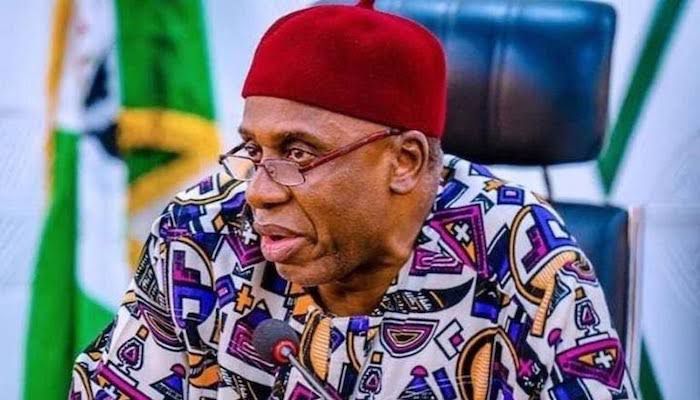
Vice-presidential candidate of the African Democratic Congress (ADC), Rotimi Amaechi, has challenged President Bola Ahmed Tinubu’s administration to demonstrate the impact of its economic policies by bringing the retail price of petrol down to ₦600 per litre.
Amaechi said he would be prepared to withdraw from the ADC ticket and campaign for Tinubu in the 2027 presidential election if petrol is genuinely available to motorists at the stated price.
The former Rivers State governor made the declaration during an appearance on Channels Television’s Politics Today on Friday, October 2, 2026, where he criticised the Federal Government’s handling of the economy and questioned whether Nigerians were experiencing the improvements being highlighted by the administration.
His comments followed President Tinubu’s Independence Day address in which the President said Nigeria had entered an “age of prosperity” after a period of difficult economic reforms.
Amaechi, however, questioned how convincing such assurances would be to Nigerians who continue to deal with high transportation costs and the rising prices of essential commodities.
He argued that economic progress should not only be measured through government statements or official figures but also through what ordinary citizens experience when they buy food, pay for transportation or purchase petrol.
According to him, Nigerians should be able to determine whether the government’s economic reforms are producing tangible improvements in their daily lives.
Amaechi particularly drew attention to transportation costs, using the journey between Nyanya and Abuja as an example of the pressure faced by people who depend on public transportation.
He asked whether the cost of travelling along the route had reduced and whether ordinary workers were paying less for transportation than they did previously.
“It is about believability; who do you believe?” Amaechi said during the interview.
He further questioned whether the economic situation had actually changed for the average Nigerian, asking, “Has anything come down? Has any price come down, has anything changed?”
The ADC vice-presidential candidate said the issue was not simply about political arguments but about whether the government’s claims could be matched by conditions on the ground.
Amaechi then turned the discussion to petrol prices, offering a specific benchmark that he said would convince him that the administration’s economic policies were delivering the promised results.
He said he was willing to personally visit a filling station and purchase petrol if the product was selling for ₦600 per litre.
“I will go tomorrow morning to the petrol station to buy fuel, I will go myself, if fuel has come down to 600, I will campaign for President Tinubu,” he said.
He went further by inviting anyone who doubted his declaration to accompany him with a camera and witness the purchase.
According to Amaechi, if petrol was confirmed to be selling at ₦600 per litre, he would withdraw as the running mate to former Vice President Atiku Abubakar and campaign for President Tinubu instead.
“If you doubt me, come with your camera to my house, and I will go to the filling station and buy fuel,” he said.
Amaechi added that he would personally abandon the ADC vice-presidential ticket if the condition was met.
The statement has placed petrol pricing at the centre of another political argument over the economic reforms introduced by the Tinubu administration.
Since the removal of the petrol subsidy in 2023, fuel prices have undergone major increases, with the policy also becoming closely linked to debates over transportation, food prices and the broader cost of living.
Amaechi has repeatedly criticised the subsidy removal and argued that the resulting increase in petrol prices has contributed to higher transportation and food costs.
In another interview on the same day, he said an administration led by Atiku would seek to reduce the cost of fuel, transportation and food within its first year.
The ADC politician also argued that the original justification for removing the subsidy was to free government resources for other purposes and ultimately improve the welfare of Nigerians.
He questioned whether citizens were currently feeling the benefits of the money saved from the subsidy policy.
The petrol-price challenge therefore forms part of Amaechi’s broader criticism of the Federal Government’s economic direction ahead of the 2027 presidential election.
For the Tinubu administration, the reforms have been presented as difficult but necessary measures intended to address longstanding economic problems, improve government finances and place the economy on a more sustainable footing.
President Tinubu reiterated the administration’s message of economic recovery and prosperity during his October 1 Independence Day address.
Amaechi, however, has focused on the immediate experiences of households, arguing that government claims of economic progress must ultimately be reflected in the cost of living.
The former minister of transportation’s challenge also comes as political parties and their candidates intensify their preparations for the 2027 presidential election.
Atiku Abubakar is the presidential candidate of the ADC, with Amaechi serving as his running mate. Amaechi’s proposed withdrawal would therefore represent a major political statement if the condition he outlined were to occur.
For now, the ₦600 benchmark remains the specific test Amaechi publicly attached to his pledge to support Tinubu.
His remarks have consequently shifted attention from broader political arguments to a measurable issue that directly affects motorists, transport operators and households: the price Nigerians pay for petrol at filling stations.
Whether petrol reaches the ₦600-per-litre figure remains separate from Amaechi’s political declaration, but his comments have added another dimension to the continuing debate over fuel pricing, subsidy policy and the economic reforms of the Tinubu administration.