The France student protests have spread across the country, forcing about 400 high schools to close as thousands of teenagers are detained amid clashes with police, fires and growing anger over the state of education.
The demonstrations began with complaints about overcrowded classrooms, teacher shortages, crumbling school buildings and inadequate government investment, but have rapidly escalated into a national crisis confronting Prime Minister Sébastien Lecornu’s government.
Students have barricaded school entrances with rubbish bins and other objects, while riot police have been deployed in several cities as some demonstrations descended into violence.
Reuters reported that more than 2,000 people had been taken into police custody, most of them teenagers, while around 400 high schools were closed.
Why Students Are Protesting Across France
The France education crisis has become the central issue driving the demonstrations.
Students have complained about classrooms containing up to 40 pupils, shortages of teachers, staff absences, poor pay for educators and school buildings suffering from leaks, damaged ceilings and other maintenance problems.
Some pupils have also criticised long school days and what they describe as an unequal education system in which students’ social backgrounds can influence their prospects.
The protests have also been fuelled by frustration over France’s university application system and the extreme heat experienced in classrooms during heatwaves earlier this year.
At the Lycée Voltaire in Paris, 17-year-old student Sophia told the Guardian that protesters wanted the government to listen to them.
“We just want to be listened to by the government. We’d rather stand here doing this than have to learn in poor conditions. It’s the only way to make ourselves heard.”
Another student carried a sign declaring: “School is a right, not a privilege.”
Students Attack Education Spending Priorities
Some protesters have also criticised the government’s spending priorities.
Sophia said education funding was being reduced while additional money was being directed towards the military.
Students have called for greater investment in schools, improved facilities and more teachers, while some teachers have joined or expressed support for the demonstrations.
The government has acknowledged that students have legitimate grievances, although officials have condemned the violence and destruction accompanying some protests.
Reuters reported that the draft 2027 budget proposes a 1.7% increase in education spending, below the rate of inflation, as France faces significant pressure from its debt and borrowing costs.
Hundreds Of French Schools Shut
The scale of the unrest has forced authorities to close hundreds of schools.
The Guardian reported that about 400 schools remained closed on Friday, while dozens of schools had suffered damage during the escalation. The French education ministry said 40 school principals had been injured.
The shutdowns have disrupted lessons across the country as students continue to blockade school entrances.
Some institutions have switched to remote learning because of safety concerns.
Education Minister Édouard Geffray urged parents to intervene and warned that young people were putting themselves in danger on the streets.
The closures represent a significant escalation from the original school demonstrations, which initially centred on education conditions and funding.
Protests Turn Violent
While many demonstrations have remained peaceful, violent incidents have occurred in several French cities.
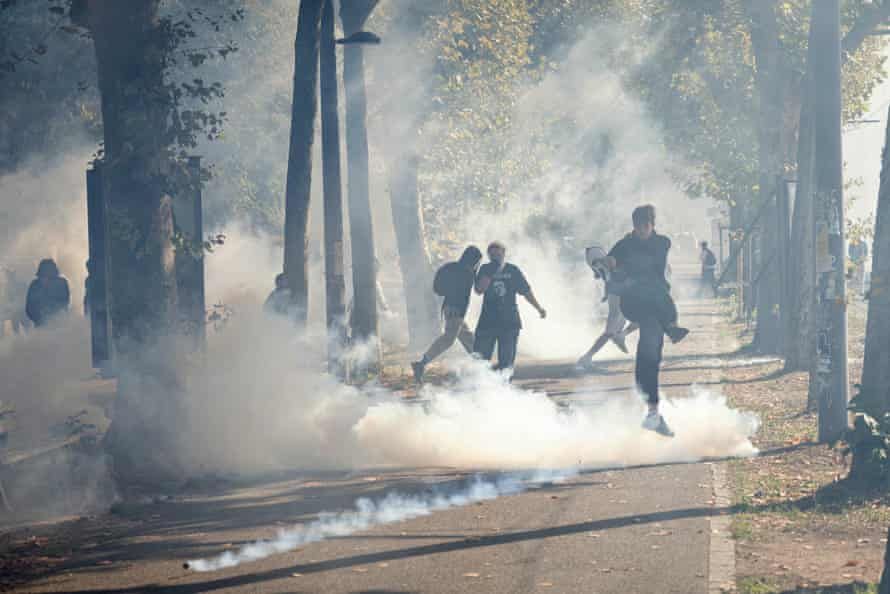
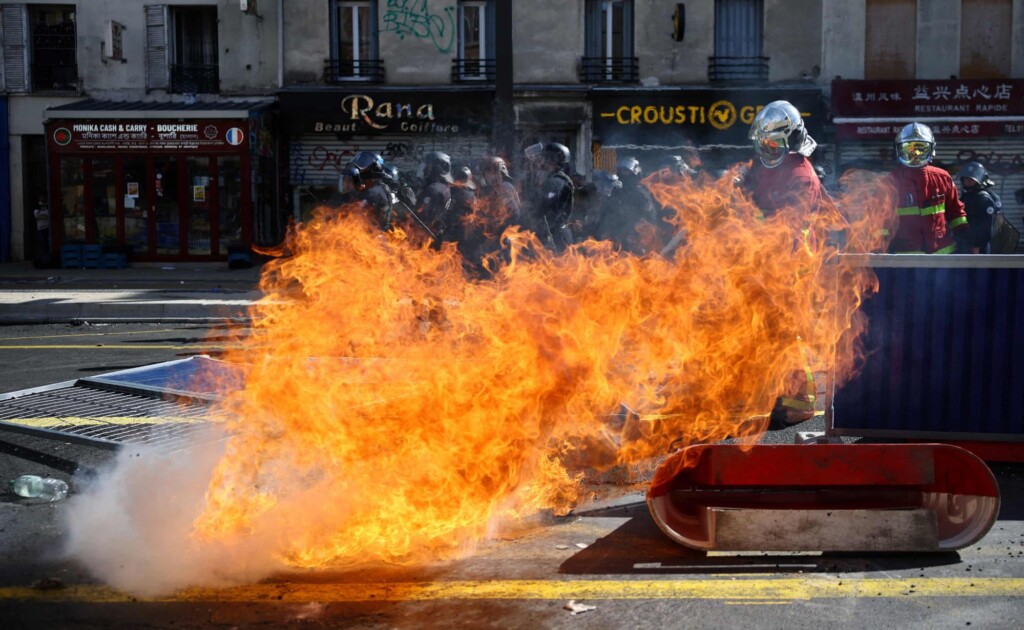
Students and other protesters have confronted riot police, while fireworks have been fired towards police lines and rubbish bins have been set alight.
Fires have also damaged school buildings and other infrastructure.
In Strasbourg, protesters were photographed kicking tear-gas canisters back towards police, while clashes were reported in cities including Marseille, Rennes and Pantin.
Reuters reported that some protesters had set fires and launched fireworks at police during confrontations, while authorities accused outsiders of exploiting the demonstrations to provoke violence.
Injuries Add To Pressure On Government
The violence has resulted in injuries among students, teachers and police officers.
The French education ministry said 65 education staff had been injured, including 40 school principals.
An investigation is also underway after a 14-year-old boy in Val-d’Oise suffered serious injuries to his mouth and jaw during a confrontation with police.
The boy’s family lawyer said the teenager believed he was “going to die”.
Students have accused police of using excessive force, while authorities have defended the deployment of riot police as necessary to contain violent incidents.
The competing claims have added another layer to the crisis, with investigations expected to establish what happened in individual cases.

Government Blames Violence On Outside Agitators
The French government has attempted to distinguish between students’ complaints about education and the violence surrounding some demonstrations.
Justice Minister Gérald Darmanin urged prosecutors to pursue civil liability claims against parents for damage caused by their children.
Reuters reported that government officials have also claimed that outsiders were moving between schools and encouraging violent behaviour.
Earlier, intelligence agencies were reported to have linked the unrest to the hard-left France Unbowed party and its affiliates.
France Unbowed rejected the allegation and said the government had contributed to tensions through its response to the protests.
Those claims remain politically contested and should not be treated as an established explanation for the protests.
Students Say Their Demands Go Beyond School Buildings
The student protests in France have also developed into a wider expression of youth frustration.
Some demonstrators have raised concerns about welfare support, housing assistance and subsidised meals for poorer students.
Others have used the demonstrations to express solidarity with Palestinians in Gaza and opposition to Marine Le Pen and the far-right National Rally.
At the Lycée Hélène Boucher in Paris, students carried signs supporting people in Gaza while also protesting against Le Pen.
However, the core complaints remain focused on education.
One student, Sofiane, said young people wanted to study in decent conditions and criticised the government over the state of French schools.
The demonstrations therefore combine specific education demands with broader political and social concerns among young people.
France Faces Growing Political Pressure
The protests come at a difficult moment for the French government.
The administration is preparing to implement a 2027 budget while dealing with heavy debt, pressure from financial markets and demands to reduce public spending.
The budget debate has intensified concerns about whether the government can increase spending on education while simultaneously reducing its deficit.
That tension is particularly important because students are demanding more resources for schools at the same time that the government is under pressure to control spending.
Reuters reported that France’s debt is expected to reach about 119% of GDP, while the government has targeted €54 billion in savings in the 2027 budget.
Teachers Prepare To Join The Protest
The unrest could continue beyond the student demonstrations.
Education unions have announced plans for a nationwide teachers’ strike, potentially broadening the movement from a youth-led protest into a larger education-sector dispute.
That could put additional pressure on the government to address concerns over staffing, school conditions and funding.
The situation also raises questions about whether authorities can restore normal school operations while responding to the underlying complaints that triggered the protests.
Read also: Ukraine war: North, South Korea drawn in as Putin issues nuclear threat against Europe
What Happens Next?
The immediate challenge for the government is to restore safety around schools without ignoring the grievances that brought thousands of students onto the streets.
The demonstrations have already moved far beyond isolated school blockades.
With hundreds of schools closed, thousands of teenagers detained and dozens of buildings damaged, the crisis has become one of the most significant outbreaks of youth unrest France has experienced in months.
At the same time, the government faces pressure to explain its education spending plans and respond to complaints about classroom conditions.
For the students, however, the message remains straightforward: they want better schools, more teachers and decent conditions in which to learn.
For the government, the challenge is now to separate those demands from the violence that has accompanied parts of the movement while finding a response capable of bringing schools back to normal.
The France student protests therefore remain a rapidly developing national crisis, with the future of the demonstrations likely to depend on whether the government can address the education grievances while containing the violence and disruption spreading across the country.