Emmanuel Macron’s leadership stands at its most vulnerable point yet as France’s ongoing political crisis deepens, shaking the nation’s stability and sparking fierce calls for accountability and renewal.
The French president, visibly defiant, accused his political rivals of deliberately fuelling unrest across France while brushing off mounting calls for his resignation, insisting his administration remains focused on governance and reform.
In a sharp rebuke of opponents, Macron declared that “many of those who have fuelled division and speculation have not risen to the moment,” referring to the French opposition’s persistent resistance.
The remarks came during his visit to Egypt for the Gaza summit, where Macron balanced diplomatic responsibilities abroad with political fires blazing at home, testing the resilience of his leadership.
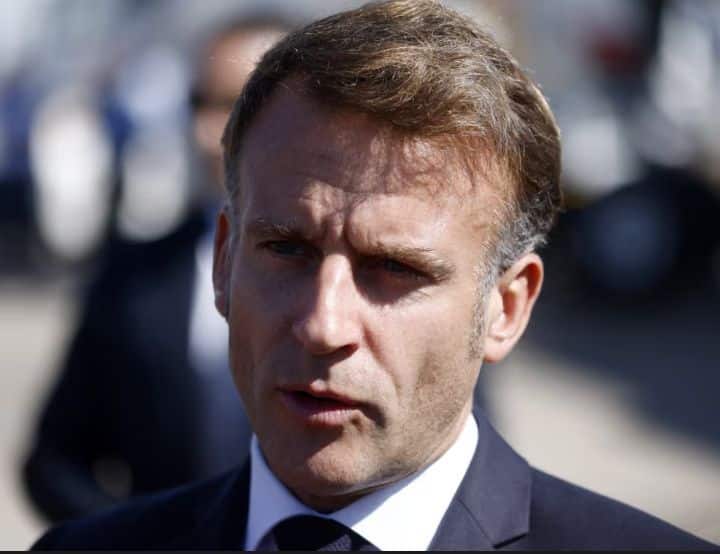
“France has endured instability before,” Macron said, “but never caused by those who should be defending democratic institutions. The current chaos stems from reckless political ambition.”
At the heart of the latest storm lies Sébastien Lecornu, the recently reappointed prime minister, whose first government collapsed within just 14 hours, a stunning blow to Macron leadership credibility.
Lecornu’s dramatic resignation last week triggered a frenzy in Paris, exposing deep fractures within Macron’s centrist movement and underscoring the fragility of the Emmanuel Macron government’s authority in parliament.
Despite this setback, Macron swiftly reappointed Lecornu, describing him as “a man of conviction and calm,” determined to stabilize France’s shaken institutions and restore public trust amid the ongoing France political crisis.
The new cabinet, assembled hastily over the weekend, blends Macron loyalists with technocrats and respected figures from civil society, reflecting a desperate bid for political balance and continuity.
Among the notable additions is Jean-Pierre Farandou, the former head of the state railway SNCF, now labour minister, symbolizing a pragmatic turn toward administrative competence over partisan loyalty.
Lecornu also appointed Laurent Nuñez, the ex-Paris police chief who oversaw the 2024 Olympics, as interior minister — a move interpreted as Macron’s attempt to bolster law-and-order credentials.
For Macron leadership, these appointments represent a calculated gamble: preserving experience while countering accusations of stagnation and elitism that have eroded the Emmanuel Macron government’s popularity.
France’s divided parliament — split between the left, far right, and the centrist bloc — continues to paralyze decision-making, leaving the government struggling to pass vital legislation and maintain legitimacy.
Macron’s 2024 snap election gamble backfired spectacularly, producing an inconclusive result that left no coalition capable of governing effectively, plunging France deeper into its constitutional and political malaise.
Opposition parties, emboldened by Macron’s declining approval ratings, have intensified calls for his resignation, framing the president as increasingly detached from public sentiment and parliamentary realities.
“Never forget that the mandate given by the French people is to serve,” Macron responded, emphasizing that he would not yield to “political hysteria or opportunism” amid the France political crisis.
His comments were aimed squarely at both Jean-Luc Mélenchon’s left-wing La France Insoumise and Marine Le Pen’s far-right National Rally — parties he accused of exploiting public frustration for partisan gain.
Macron’s defenders argue that France’s volatile coalition politics leave him little room to maneuver, forcing him to balance competing demands in a fractured National Assembly that mirrors a divided nation.
Yet even allies within the Emmanuel Macron government admit privately that the president’s top-down governing style, once seen as efficient, now appears rigid and disconnected from France’s economic and social anxieties.
Sébastien Lecornu now faces an uphill battle to deliver a 2026 budget before year’s end — a task made nearly impossible by political gridlock and widespread public disillusionment.
Addressing his ministers, Lecornu declared: “Our only task is to surpass the political crisis,” calling for unity, humility, and compromise to restore faith in Macron leadership.
He warned that continued division “exasperates not only the French people but also observers worldwide who once looked to France as a model of political stability and reason.”
Several newspapers, including La République du Centre and La Provence, have questioned how long Lecornu’s second administration can survive, with editorials warning of “fragile stability and exhausted authority.”
Macron, for his part, dismissed speculation of a parliamentary dissolution, saying, “I will not gamble with France’s future again. The goal now is progress, not provocation.”
Nevertheless, tensions are mounting ahead of Lecornu’s scheduled policy speech before parliament, where his survival hinges on persuading skeptical lawmakers across ideological divides.
Both La France Insoumise and the National Rally have announced intentions to file no-confidence motions, potentially uniting disparate opposition forces against the Emmanuel Macron government.
The Socialist Party, however, remains undecided, awaiting Lecornu’s speech before committing to a stance, though insiders suggest they could join a coalition to topple the government if pension reforms remain intact.
That reform — raising the retirement age from 62 to 64 — remains one of Macron leadership’s most controversial decisions, symbolizing his determination to impose fiscal discipline despite widespread protests.
Labour unions have vowed renewed strikes if the government refuses to revisit the pension law, warning that “the social contract of France cannot be rewritten by executive decree.”
Public patience appears thin. After months of political turbulence and economic uncertainty, Macron’s approval ratings have slipped to historic lows, hovering below 30 percent, according to national polling institutes.
“The president no longer listens,” said opposition MP Manon Aubry. “France needs democratic renewal, not technocratic recycling.” Her words echoed a broader sentiment of fatigue among voters.
Still, Macron maintains an air of defiance. “The only thing that matters is the independence and stability of France,” he told reporters in Cairo, framing his leadership as a bulwark against chaos.
Observers note that Macron’s international engagements — from Gaza peace talks to EU defense initiatives — contrast sharply with domestic paralysis, exposing the widening gap between his global stature and homegrown struggles.
The Emmanuel Macron government now faces the constitutional challenge of passing a balanced budget within 70 days, or risk a fiscal showdown that could further paralyze governance.
Nicolas Forissier, the new commerce minister, underscored the stakes: “We must give this country a budget, or we’re heading for catastrophe,” he warned during a televised interview.
The upcoming parliamentary session is expected to be among the most contentious in recent history, with Macron leadership fighting on multiple fronts — economic, political, and symbolic.
In the streets, simmering discontent remains visible. Trade unions, students, and civil servants continue mobilizing under the banner of “social justice and democratic renewal,” challenging Macron’s vision of reform.
Critics argue that Macron’s heavy reliance on executive decrees, especially during his pension overhaul, eroded public trust and contributed to the perception of an aloof presidency.
Political analysts describe the current impasse as the culmination of “hyper-presidentialism gone wrong,” where centralized decision-making alienated allies and empowered radical opposition movements.
Meanwhile, Lecornu’s appeal for “collegial governance” may prove insufficient to calm the turbulence, as ideological rigidity continues to dominate parliamentary debate, preventing meaningful consensus.
“France is tired of crisis,” said sociologist Jérôme Fourquet. “People want stability, but they no longer believe Macron leadership can deliver it without fresh ideas or renewed legitimacy.”
As Macron’s presidency enters its final years, speculation swirls about whether he might attempt one last political gamble — perhaps a coalition reshuffle or even a managed transition before 2027.
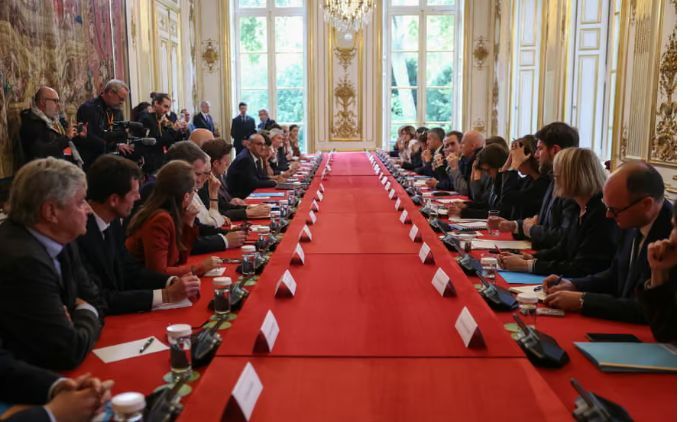
However, the president insists he remains committed to his constitutional term, vowing to “see through the reforms necessary to keep France competitive and sovereign.”
For now, the Emmanuel Macron government walks a perilous tightrope between reform and revolt, as the fragile balance of power in Paris tests the endurance of a presidency under siege.
What began as a crisis of parliamentary arithmetic has evolved into a broader question about leadership, legitimacy, and the limits of executive power in modern France.
The coming months will determine whether Macron leadership can adapt — or whether the French Fifth Republic’s most ambitious reformer becomes another casualty of the instability he sought to overcome.