Naira gains in black market after CBN cuts interest rate as mid-week FX volatility persists
The naira staged a modest recovery in the parallel market on Wednesday, offering a measure of relief to currency traders and import-dependent businesses, even as pressure lingers in the official window.
The rebound followed the decision by the Central Bank of Nigeria (CBN) to reduce its benchmark interest rate, a move analysts say signals cautious confidence in improving macroeconomic fundamentals.
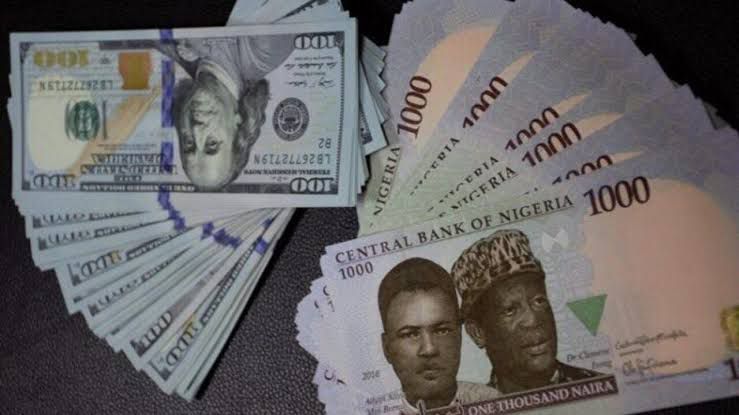
Mid-week data from foreign exchange dealers across key commercial hubs showed the dollar trading at N1,390 in the black market, representing a N10 appreciation from N1,400 quoted on Tuesday.
The 0.7 percent gain marks the first recovery in three sessions in the parallel segment and comes amid shifting investor sentiment after the Monetary Policy Committee (MPC) announced a 50-basis-point cut in the Monetary Policy Rate (MPR).
Official window weakens despite parallel rebound
While the naira gained in the informal market, it weakened at the Nigerian Foreign Exchange Market (NFEM) window. The local currency depreciated by N6.13 to close at N1,355.37 per dollar on Tuesday, compared to N1,349.24 recorded on Monday.
This represents a 0.5 percent loss, underscoring the persistent supply-demand imbalance in the formal segment.
The divergence between both markets reflects structural liquidity constraints, as foreign exchange inflows remain uneven. Oil receipts — Nigeria’s primary FX source — continue to fluctuate amid softer global demand and price volatility, limiting the central bank’s intervention capacity.
CBN Governor Olayemi Cardoso said the MPC’s decision to reduce the MPR to 26.5 percent followed sustained moderation in inflationary pressures and improvements in external reserves.
According to him, tighter monetary conditions over the past year have helped stabilise key indicators, creating room for a “measured and data-driven” easing cycle.
Market watchers interpret the policy shift as an attempt to strike a balance between price stability and growth support, particularly as businesses grapple with elevated borrowing costs.
Cross-currency snapshot: euro, pound and yuan
Beyond the dollar, the naira’s performance against other major currencies remained mixed at mid-week.
In the parallel market:
- The euro traded around N1,505, reflecting slight pressure from broader euro-dollar movements.
- The British pound hovered near N1,750 amid continued strength in the UK currency.
- The Chinese yuan exchanged at approximately N190–N195, supported by steady trade flows between Nigeria and China.
At the official window, cross rates are largely influenced by the dollar’s performance, meaning depreciation in the NFEM segment indirectly impacts euro and pound conversions for formal sector transactions.
Currency analysts note that sustained stability in the naira will depend not only on domestic policy adjustments but also on global monetary trends, particularly signals from the U.S. Federal Reserve and commodity price movements.
Investor sentiment and capital flows
Lukman Otunuga, senior market analyst at FXTM, said the rate cut could ultimately reinforce foreign investor confidence if supported by credible FX reforms and consistent liquidity injections.
He noted that despite the 50-basis-point reduction, Nigeria’s real interest rates remain relatively high when adjusted for inflation.
“The yield environment is still attractive compared to several frontier and emerging markets,” he said, adding that this could sustain foreign portfolio inflows into fixed income instruments.
Year-to-date, the naira has appreciated by roughly 6 percent across segments, reflecting improved reserves and a tightening of speculative activities in late 2025. However, analysts caution that short-term gains in the black market do not necessarily indicate structural stability.
Adebowale Funmi, head of Research at Parthian Securities, said the fixed income market had largely priced in the easing move, limiting its immediate impact on bond yields. She warned that developments in the global oil market remain a critical variable.
“A prolonged bearish oil environment could widen Nigeria’s fiscal deficit and elevate borrowing requirements. That dynamic may require rates to stay sufficiently competitive to attract capital,” she said.
Structural challenges remain
Despite the headline that the naira gains in black market after CBN cuts interest rate, structural FX challenges persist. Nigeria’s import dependency, limited non-oil export diversification and dollar demand for fuel and machinery continue to exert pressure on reserves.
Economic analysts argue that sustained currency stability will require:
- Expanded non-oil export earnings
- Transparent FX allocation mechanisms
- Improved diaspora remittance channels
- Stronger investor confidence through policy consistency
The central bank has emphasised that reforms in the FX market are ongoing, including measures aimed at unifying exchange rates and clearing outstanding FX backlogs.
Outlook for the rest of the week
Mid-week sentiment suggests cautious optimism. If foreign inflows remain steady and speculative demand eases, the naira could consolidate its gains in the parallel market. However, traders remain alert to oil price swings and external financing signals.
For households and small businesses, exchange rate volatility continues to affect import costs, school fees, travel expenses and online payments denominated in foreign currencies. For corporates, planning remains complex as forward pricing must factor in both official and parallel rates.
As the week progresses, market participants will monitor reserve data releases and interbank liquidity trends to determine whether the narrative that the naira gains in black market after CBN cuts interest rate translates into broader, sustained currency stability.
About The Author