Nigeria’s exporters pivot toward Beijing as US trade climate turns volatile
As global trade tensions resurface and policy unpredictability clouds long-standing commercial routes, Nigerian businesses are recalibrating their export strategies. A new zero-tariff window offered by China is prompting a strategic rethink among producers who have historically relied on the United States as a primary destination.
From May 1, Beijing will eliminate duties on a broad range of African agricultural and mineral commodities, effectively lowering market entry barriers for exporters across the continent.
For Nigerian firms grappling with rising uncertainty in the US market, the policy shift presents both an opportunity and a test of competitiveness.
Nigeria’s exporters eye China as US market uncertainty grows
The decision by China to scrap tariffs on selected African goods comes at a delicate time for global commerce. In Washington, President Donald Trump has introduced a sweeping tariff adjustment, increasing baseline import duties from 10 percent to 15 percent within 24 hours, invoking emergency trade authorities after a Supreme Court ruling nullified earlier measures.
For Nigerian exporters, the implications are immediate. Trade data from the U.S. Census Bureau show that Nigeria’s exports to the US declined by 14 percent in 2025 to $4.9 billion, down from $5.7 billion a year earlier. That contraction erased gains recorded in 2023 and reinforced concerns about overdependence on a single, policy-sensitive market.
Energy products still account for more than 90 percent of Nigeria’s shipments to the US, leaving non-oil exporters vulnerable to regulatory swings and price volatility. Smaller export categories — including fertilisers, lead, oil seeds and cocoa beans — have also felt the strain of rising tariffs and compliance hurdles.
By contrast, Nigeria’s trade relationship with China has deepened steadily. Data from China’s General Administration of Customs indicate that Nigerian exports to China climbed 81 percent over three years, reaching $3.17 billion in 2025 from roughly $1.6 billion in 2022.
Analysts suggest the true figure may be higher, given longstanding practices of routing goods through neighbouring countries to take advantage of tariff differentials.
Industry leaders argue that the new zero-duty framework could reverse that pattern. Kola Awe, chairman of the Export Group of the Nigerian Association of Chambers of Commerce, Industry, Mines and Agriculture (NACCIMMA), noted that as much as 80 percent of Nigeria’s sesame exports were previously shipped via Niger Republic due to lower tariff access to China.
With tariffs removed, exporters can now trade directly from Nigerian ports, potentially improving traceability, revenue reporting and foreign exchange inflows. Products such as sesame, tiger nuts and baobab — which require cleaning and sorting before processing — may find stronger demand in China, where labour-intensive pre-processing can be completed at lower cost before final manufacturing.
However, market access does not automatically translate into market share. Segun Ajayi, secretary general of the Manufacturers Association of Nigeria, cautioned that Chinese consumer preferences differ significantly from Western markets. Exporters must adapt packaging, branding and quality standards to compete effectively.
“It is not enough that tariffs are low,” Ajayi said in an industry forum discussion. “You must understand the distribution channels, certification requirements and price sensitivities of that market.”
The broader policy context in the US remains fluid. Nigeria still benefits from preferential access under the African Growth and Opportunity Act (AGOA), a scheme enacted by the US Congress that allows eligible African goods to enter duty-free. AGOA is scheduled to run until December 2026, but its long-term future is uncertain amid shifting trade priorities in Washington.
Muda Yusuf, chief executive of the Centre for the Promotion of Private Enterprise (CPPE), argued that AGOA’s legislative backing makes it less susceptible to executive override. Nonetheless, broader visa restrictions and administrative constraints could dampen trade engagement.
The US recently suspended visa issuance to nationals of 19 countries, including Nigeria, complicating travel for business negotiations and trade fairs.
Against this backdrop, the pivot toward China appears pragmatic rather than ideological. Obiora Madu, an exports analyst, described the shift as commercially inevitable.
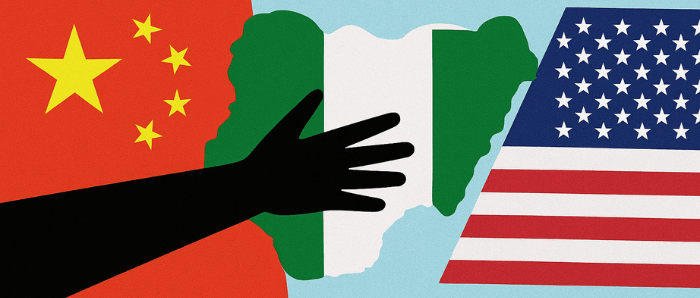
“If the opportunity is stronger in one direction, trade flows will follow,” he said, adding that exporters are ultimately guided by margin optimisation and market stability.
Yet structural bottlenecks at home could limit Nigeria’s ability to capitalise on the opening. Logistics inefficiencies, port congestion, inconsistent power supply and limited access to export finance continue to constrain supply capacity. If demand from China accelerates rapidly, scaling production without compromising quality will be critical.
The Nigerian Export Promotion Council (NEPC) and related agencies are under pressure to strengthen quality infrastructure, certification processes and traceability systems. Analysts warn that any surge in substandard shipments could damage Nigeria’s reputation in a highly competitive Chinese market.
There is also the question of diversification within diversification. While China offers scale and manufacturing depth, overreliance on any single market exposes exporters to geopolitical and currency risks. Trade experts advocate a balanced portfolio approach that includes Asia, Europe and intra-African markets under the African Continental Free Trade Area (AfCFTA).
For now, Nigeria’s exporters are weighing their options in a rapidly evolving trade landscape. The elimination of tariffs by China provides breathing space at a time when US policy appears less predictable. But success will depend less on tariff arithmetic and more on strategic execution — from product differentiation to supply chain resilience.
As global commerce enters another cycle of realignment, Nigerian exporters face a defining question: can they convert shifting trade winds into sustainable growth, or will structural constraints blunt the advantage of zero-duty access? The answer will shape the trajectory of the country’s non-oil export ambitions in the years ahead.
About The Author