Acting Inspector-General of Police Tunji Disu assumes office amid leadership transition
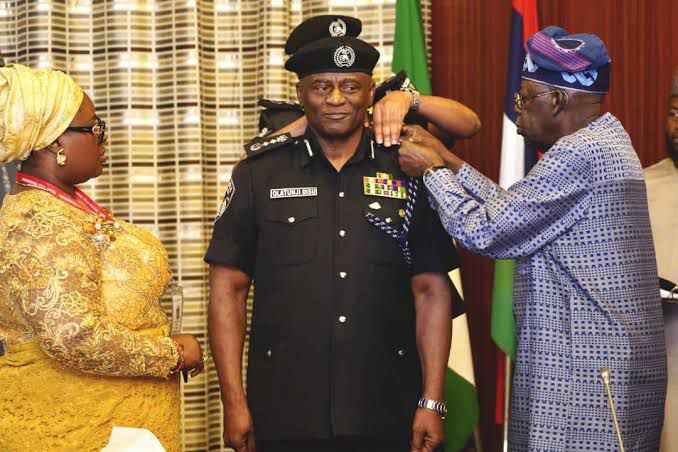
Nigeria’s policing architecture entered a new phase on Wednesday as Acting Inspector-General of Police Tunji Disu formally assumed duty at the Force Headquarters in Abuja, following his decoration by President Bola Ahmed Tinubu at the Presidential Villa.
The leadership transition came on the heels of the resignation of Kayode Egbetokun, who stepped down citing family reasons after serving since June 2023.
Within hours of the announcement, Disu was confirmed and ceremonially elevated to the rank of acting Inspector-General, setting the stage for a new command structure at the apex of the Nigeria Police Force.
Formal assumption of duty
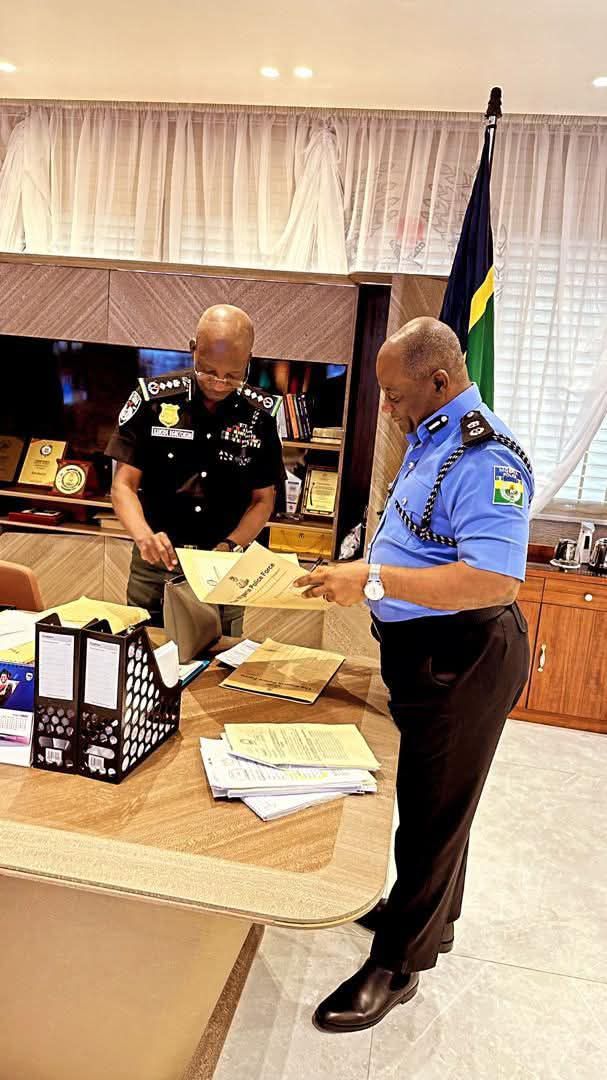
After the decoration ceremony at the Villa, Disu returned to the Force Headquarters at approximately 4:25 p.m., where he took his first official salute as acting Inspector-General from members of the Quarter Guard. The symbolic moment underscored the constitutional transfer of authority and operational command to the new police chief.
Senior officers, including Deputy Inspectors-General of Police, were present for the handover process, marking a swift and orderly transition. Egbetokun, dressed in a blue suit, white shirt and tie, participated in the formal handover, reinforcing institutional continuity.
Security analysts say the seamless succession signals stability within the Force at a time when Nigeria faces mounting internal security challenges ranging from banditry and kidnapping to urban crime and cross-border trafficking.
A new era for the Force
The appointment of Acting Inspector-General of Police Tunji Disu comes at a pivotal moment for law enforcement in Nigeria. The police hierarchy has in recent years grappled with reform pressures, public trust deficits and demands for improved intelligence-led policing.
Disu, a career officer with experience in investigative and operational commands, is expected to prioritise professional standards, discipline and anti-corruption measures within the Force. Although he has yet to unveil a detailed policy roadmap, close observers anticipate continuity in ongoing reforms, alongside renewed emphasis on internal accountability.
His immediate task will include consolidating gains in community policing initiatives while strengthening coordination with other security agencies. The Nigeria Police Force has been under increasing scrutiny to improve response times, modernise investigative tools and address allegations of misconduct.
Leadership change amid broader security debate
The leadership reshuffle also comes amid wider national conversations about policing reforms, decentralisation and the evolving role of state-level security outfits. With the federal structure under constant debate, the Acting Inspector-General of Police Tunji Disu will have to navigate institutional expectations alongside political realities.
President Tinubu’s decision to appoint Disu swiftly after Egbetokun’s resignation reflects the administration’s desire to avoid uncertainty at the top of the security chain. The Presidency has repeatedly stressed the importance of stable leadership within the armed forces and police to combat insecurity effectively.
For many stakeholders, the change in command represents both an opportunity and a test. Analysts argue that the acting IG must balance operational toughness with strategic diplomacy, particularly in engaging civil society and rebuilding confidence in law enforcement institutions.
Expectations from stakeholders
Security experts have identified three priority areas likely to shape Disu’s tenure:
- Operational effectiveness: Enhancing intelligence gathering, inter-agency collaboration and rapid deployment capabilities.
- Institutional integrity: Addressing corruption allegations and strengthening internal disciplinary mechanisms.
- Public trust: Deepening community engagement to reduce tensions between officers and civilians.
The Nigeria Police Force remains one of the largest institutions in the country, with personnel deployed across diverse and often volatile regions. The Acting Inspector-General of Police Tunji Disu will therefore inherit both structural strengths and systemic constraints.
Manufacturers, business leaders and foreign investors often cite security stability as a key determinant of economic confidence. As such, Disu’s leadership will also be closely watched by economic stakeholders who view policing efficiency as critical to investment and trade.
Continuity and reform
While Egbetokun’s departure was described as voluntary, insiders note that leadership transitions at this level invariably reset institutional priorities. Disu’s experience in crime management and urban policing could influence the strategic direction of the Force.
Observers caution, however, that structural reform requires more than leadership change. Funding adequacy, welfare improvements for rank-and-file officers and technological upgrades remain central to long-term transformation.
The Acting Inspector-General of Police Tunji Disu is also expected to engage international partners, given Nigeria’s role in regional security frameworks and cross-border crime prevention.
As Disu settles into office, attention will turn to his initial directives and appointments within the police command structure. Early signals—such as redeployments or new operational task forces—may provide insight into his strategic priorities.
For now, the emphasis remains on stability and continuity. The smooth handover ceremony and formal assumption of duty suggest an institution keen to project order during transition.
The coming weeks will likely define the tone of Disu’s tenure. With security challenges persisting nationwide, expectations are high that the Acting Inspector-General of Police Tunji Disu will combine experience, discipline and reform-minded leadership to steer the Force through its next chapter.