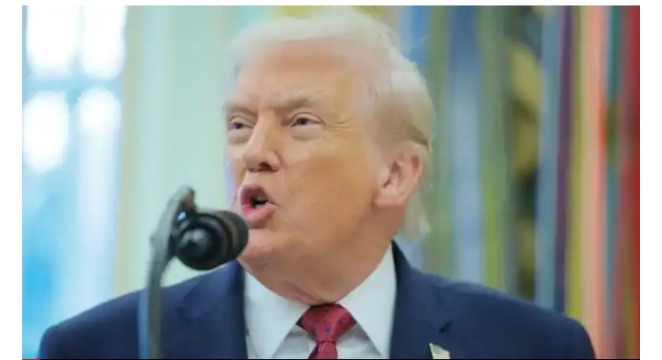
Iran protest crisis has intensified over the past two weeks, with Tehran reaching out to the United States to explore possible negotiations, US President Donald Trump confirmed on Sunday.
The unrest, initially sparked by rising living costs and economic hardships, has evolved into a broad challenge to Iran’s theocratic leadership, placing the government under unprecedented pressure.
“The leaders of Iran called yesterday,” Trump told reporters aboard Air Force One. “A meeting is being arranged… They want to negotiate.”
He added, however, that “we may have to act before a meeting,” signalling the possibility of urgent US action if the situation worsens.
The protests, which began as demonstrations against inflation and unemployment, have quickly grown into a wider display of dissatisfaction with the political system itself.
Large crowds have gathered across Tehran, Isfahan, Mashhad, and smaller towns, demanding accountability and reforms.
Despite government-imposed internet shutdowns, videos and eyewitness reports continue to reach international media, showing hundreds of demonstrators confronting security forces.
“The scale of these protests is unlike anything we’ve seen in recent years,” said Hadi Ghaemi, director of the US-based Centre for Human Rights in Iran.
“Eyewitness accounts indicate that hundreds, and possibly thousands, of people have been killed. This is a humanitarian crisis in the making.”
According to Norway-based Iran Human Rights (IHR), at least 192 deaths have been confirmed, with many more suspected. Arrests have been widespread, with more than 2,600 reported so far.
Life in Tehran has been heavily disrupted. Shops close early in the afternoon, streets are patrolled by security forces, and prices for meat and other essentials have doubled in some districts.
“People are afraid to leave their homes after 5 p.m.,” said one resident who requested anonymity. “The city feels like it’s on edge.”
Fewer videos of protests are circulating online, but analysts caution that this likely reflects the ongoing internet restrictions rather than a decline in unrest.
State media has attempted to portray normalcy, broadcasting images of smooth traffic and daily activities.
Tehran Governor Mohammad-Sadegh Motamedian told state television on Sunday that “the number of protests is decreasing,” yet journalists on the ground report that large gatherings remain common, especially in areas such as the Pounak district, where demonstrators have shouted slogans in favor of the ousted monarchy.
Iranian authorities have sought to frame the unrest as a response to external interference. Parliament Speaker Mohammad Bagher Ghalibaf warned that U.S. military and shipping assets could be considered legitimate targets if Washington threatened Iranian security.
President Masoud Pezeshkian called for a “national resistance march” on Monday, urging citizens to rally in support of the country’s security forces and government institutions.
In a separate statement, Reza Pahlavi, the US-based son of Iran’s former shah, positioned himself as a potential leader for democratic transition.
“I’m already planning on returning to Iran to help lead a peaceful transition,” he said. He urged members of the armed forces and government employees to support protesters, framing the choice as between aligning with the people or siding with authorities accused of violence.
“Employees of state institutions, as well as members of the armed and security forces, have a choice: stand with the people and become allies of the nation, or choose complicity with the murderers of the people,” Pahlavi added in a social media post.
The ceremonial pre-revolution flag has become a symbol of the movement, appearing in rallies around the world.
In London, demonstrators replaced the Iranian embassy flag with the tri-colored banner used under the last shah, signalling international solidarity with those protesting in Iran.
Experts say the Iran protest crisis is not only a domestic challenge but also a potential flashpoint in regional geopolitics.
“The combination of widespread public unrest and heightened US-Iran tensions creates a dangerous situation,” said Karim Sadjadpour, senior fellow at the Carnegie Endowment for International Peace. “Diplomatic engagement is urgent, but the risk of escalation remains high.”
The economic dimension of the protests has added to public frustration. Food prices have risen sharply, while unemployment remains high, particularly among young people.
“The youth in Iran feel they have no future under the current system,” said a Tehran-based economist who spoke on condition of anonymity. “This is why the protests have been sustained for weeks despite crackdowns.”
In response to Trump’s announcement of potential negotiations, the Iranian government has not provided official confirmation but has indicated openness to dialogue through unofficial channels.
Analysts note that Tehran’s approach reflects both concern over domestic instability and a desire to avoid direct confrontation with the United States.
The Iran protest crisis has drawn international attention, with human rights organizations and foreign governments calling for restraint and dialogue.
United Nations spokesperson Stephane Dujarric said, “We urge the Iranian authorities to respect the rights of peaceful protesters and allow access for humanitarian monitoring.”
Read also: One dead, 300 structures destroyed, 350,000 hectares burned as bushfire ravaged town in Australia
Meanwhile, Tehran’s security forces continue to maintain a strong presence in major cities. AFP journalists reported a near-paralysis in the capital, with most shops closing early and limited public movement. Yet, large-scale demonstrations persist, illustrating the depth of public anger and dissatisfaction.
As Iran reaches out to the US for talks, observers caution that the next days will be critical in determining whether diplomacy can de-escalate tensions or if the unrest will intensify further.
The situation underscores the intersection of domestic grievances, international pressure, and the fragile stability of the Iranian state.
The outcome of these negotiations and the government’s response to its citizens’ demands will likely shape Iran’s political trajectory for years to come.
For now, the Iran protest crisis remains unresolved, with citizens, opposition figures, and international observers watching closely as events continue to unfold.
About The Author